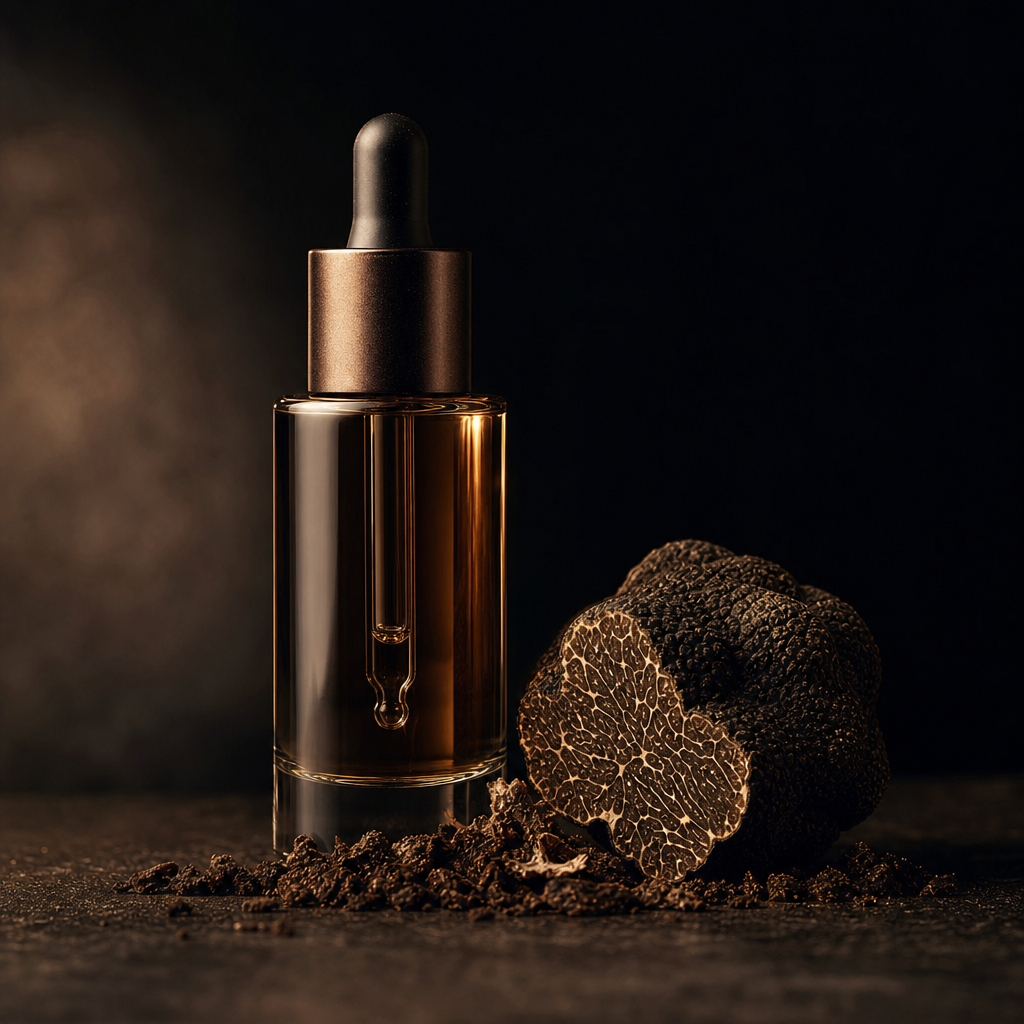
Truffle skincare suits sensitive skin because bio-fermented truffle peptides are reduced below 500 Daltons, small enough to cross the skin barrier without the fragrance loads, harsh delivery agents and photosensitising actives found in retinol and acid formulas. They work below the surface, supporting the skin's own repair rather than forcing turnover, so reactive skin gets visible anti-ageing results without stinging or peeling.
If you're over 40 and your skin has started flushing at the first hint of an active ingredient, you've probably been told to pick a lane: comfort or results. Retinol worked, until it didn't. The luxury serum promised everything and delivered a nice smell. You're not imagining the pattern. Most anti-ageing formulas were built for skin that can tolerate aggression, not skin that's thinning, drier and more reactive with age.
This article makes the case that the real problem isn't your skin's sensitivity. It's the formulation strategy behind most anti-ageing actives. We'll cover why sensitive skin reacts the way it does after 40, why conventional actives and premium creams both fall short, and how bio-fermented truffle peptides close that gap. You'll also get a practical way to introduce them without triggering a flare.
Key Takeaways
- Sensitive, reactive skin after 40 is usually a compromised barrier issue driven by hormonal change, not a fixed trait you're stuck with.
- Retinol, AHAs and vitamin C deliver results but carry real trade-offs: photosensitivity, purging, and in some mainstream formulas, synthetic compounds and endocrine disruptors.
- Most premium peptide creams fail sensitive skin too, because standard peptide molecules sit above the 500 Dalton threshold and can't reach the dermis.
- Bio-fermented truffle peptides are engineered small enough to cross the skin barrier, working at the dermis where collagen synthesis and lipid repair actually happen.
- Fewer, better-delivered actives tend to outperform long multi-step routines on reactive skin.
- Rosacea, eczema and active dermatitis need medical assessment, not a new serum, however gentle.
A face cream for daily moisture, a targeted eye cream, or both together. Compare the sizes, ingredients and prices before you choose.
Summary Table
| Factor | Retinol / AHA Serums | Standard Luxury Peptide Creams | Bio-Fermented Truffle Peptides |
|---|---|---|---|
| Primary mechanism | Forces cell turnover and exfoliation | Hydrates and coats the surface | Supports the skin's own repair below the surface |
| Molecular size vs skin barrier | Not the limiting factor; irritation comes from potency | Generally too large to cross the barrier | Reduced through fermentation to cross the barrier |
| Irritation risk for reactive skin | High: stinging, peeling, purging | Low, but low benefit too | Low, formulated for compromised barriers |
| Photosensitivity | Significant, sun protection essential | Minimal | Minimal |
| Typical result depth | Surface renewal, visible peeling as proof of "working" | Surface hydration only | Dermal-level support: collagen, elasticity, firmness |
| Best suited for | Resilient, non-reactive skin | Anyone wanting comfort over change | Sensitive, reactive, mature skin wanting both |
What Sensitive Skin Actually Is: A Compromised Barrier, Not a Personality Trait
Sensitive skin is a barrier problem, not a fixed identity. The stratum corneum's lipid matrix thins with age and hormonal change, letting moisture escape and irritants in. That's why skin that once tolerated anything starts reacting to everything, particularly from the mid-40s through perimenopause and beyond.
Oestrogen decline is the driver most people never hear about. Oestrogen supports collagen production, sebum output and skin thickness. As it falls, skin gets drier, thinner and more prone to flushing. The barrier that used to buffer against actives, fragrance and even weather now lets far more through, so the same serum that felt fine at 35 can sting at 48.
This is also why reactive skin isn't a permanent sentence. A compromised barrier can be rebuilt. That means restoring lipids, supporting the skin's microbiome and calming inflammation before you introduce anything with real anti-ageing intent. Skip that step and you're layering actives onto a structure that can't yet tolerate them, whatever the label promises.
Why Conventional Anti-Ageing Actives Cause Trouble
Retinol, AHAs and vitamin C are effective, but they carry trade-offs that reactive skin often can't absorb. Retinol increases photosensitivity and frequently triggers a "purging" phase of redness and peeling. Many mainstream formulas also rely on synthetic compounds, including some linked to endocrine disruption, to stabilise these actives.
Retinol works by accelerating cell turnover. On resilient skin that's manageable. On a thinned, oestrogen-depleted barrier, forced turnover reads as an assault. The skin responds with inflammation, which shows up as stinging, flaking and the redness that sends most reactive-skin users straight back to the shelf.
Most say retinol, AHAs and vitamin C are the gold standard for anti-ageing skincare, and for resilient skin they can be. I don't accept that they're the only route to results, particularly for skin over 40 that's already fighting a barrier deficit. These actives carry real drawbacks: photosensitivity, and in the case of many mainstream formulas, synthetic compounds and endocrine disruptors that reactive skin has to work harder to tolerate. Bio-fermented truffle peptides are built to deliver comparable structural change without asking a compromised barrier to absorb that load. According to the American Academy of Dermatology (aad.org), retinoids significantly increase sun sensitivity and require diligent SPF use, which is exactly the added burden that makes them a poor first choice for already-reactive skin.
Why Most Luxury Products Fail Both Camps
Most luxury creams fail sensitive skin and results-driven skin equally, because they were never engineered to penetrate. Standard peptide molecules sit above the 500 Dalton threshold, the recognised ceiling for meaningful skin penetration described by Bos and Meinardi in their well-known dermatology research. Without reducing that molecular size, even the most expensive jar coats the stratum corneum and stops there.
That's the uncomfortable truth behind a lot of premium skincare. The ingredient list looks impressive. The texture feels luxurious. But feel isn't function. A cream can hydrate beautifully for six hours and still do nothing for the collagen matrix sitting a few millimetres below. These are surface solutions dressed up as structural ones.
For sensitive skin this is a particular kind of frustration: you tolerate the product because it's gentle, but you see no change because gentle, in most formulations, also means it never reached the tissue that needed repairing. You end up with the worst of both outcomes: no irritation, and no result.
How Bio-Fermented Truffle Peptides Work Differently
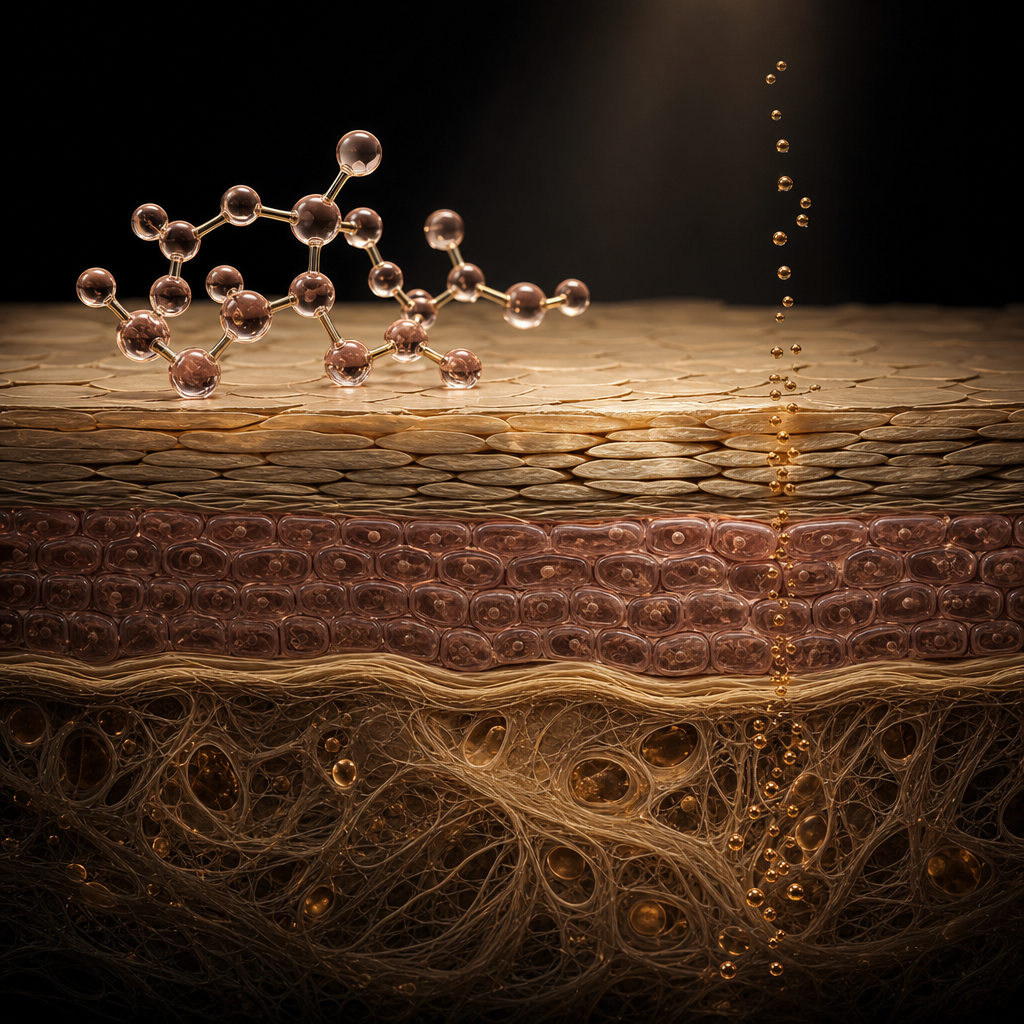
Bio-fermented truffle peptides work differently because fermentation breaks large truffle compounds down below the 500 Dalton threshold, the molecular gateway to the dermis. Instead of sitting on the surface, they reach the layer where collagen synthesis and lipid repair actually take place, supporting the skin's own processes rather than forcing turnover.
This is what Truffelle calls The Bio-Fermentation Process. Phase 01, The Harvest, hand-forages rare Barossa Valley Black Truffles at peak maturity from ancient meteor crater soil. Phase 02, The Fermentation, runs for 90 days, a biological breakdown that generates entirely new bioactive metabolites the raw truffle doesn't contain. Phase 03, The Activation, is the point where the bio-concentrate reaches its peak molecular zenith, small enough and stable enough for sub-500 Dalton penetration.
The delivery framework built on top of that process is what we call The Master Key. It has three components working together: Barrier Fortification, which restores the lipid matrix and supports ceramides to reduce water loss; Microbiome Harmony, prebiotic peptides that restore the skin's bacterial balance rather than disrupting it; and Dermal Delivery, the sub-500 Dalton penetration itself, carrying actives to the dermis where structural repair happens.
This is why the comparison to retinol matters. Retinol forces change by stripping and accelerating. Truffle peptides support change by delivering nutrients and signalling molecules to where the skin does its own rebuilding. Where other creams end, we begin.
The Results Without the Trade-Off
Bio-fermented truffle peptides produce measurable structural change, not just surface hydration, without the irritation profile of retinol. Independent truffle extract research and Truffelle's own clinical trials show gains in hydration, elasticity, collagen production and dermal thickness, alongside a measurable reduction in wrinkle depth over 42 days.
Source: Figures reflect Phenbiox / University of Bologna truffle extract studies and the Journal of Modern Human Research, 2023, as referenced in Truffelle's clinical data.
| Measured outcome | Result | Source |
|---|---|---|
| Hydration | +48% | Phenbiox / University of Bologna truffle extract studies |
| Skin elasticity | +35% | Phenbiox / University of Bologna truffle extract studies |
| Collagen production | +30% | Journal of Modern Human Research, 2023 |
| Wrinkle depth | -12.8% over 42 days | Phenbiox / University of Bologna truffle extract studies |
| Dermal thickness (ultrasound-measured) | +0.39mm over 42 days | Journal of Modern Human Research, 2023 |
These are the kind of numbers usually reserved for actives with a much rougher side-effect profile. The point isn't that truffle peptides are simply "gentler retinol". It's that structural repair and barrier comfort were never actually opposed. They only look opposed when the delivery system can't get the active where it needs to go without brute force.
Individual results vary, and these figures come from clinical and laboratory research rather than a guarantee for every user. Patch testing and realistic timelines still matter, which is exactly what the next section covers.
How to Introduce Truffle Skincare to Reactive Skin
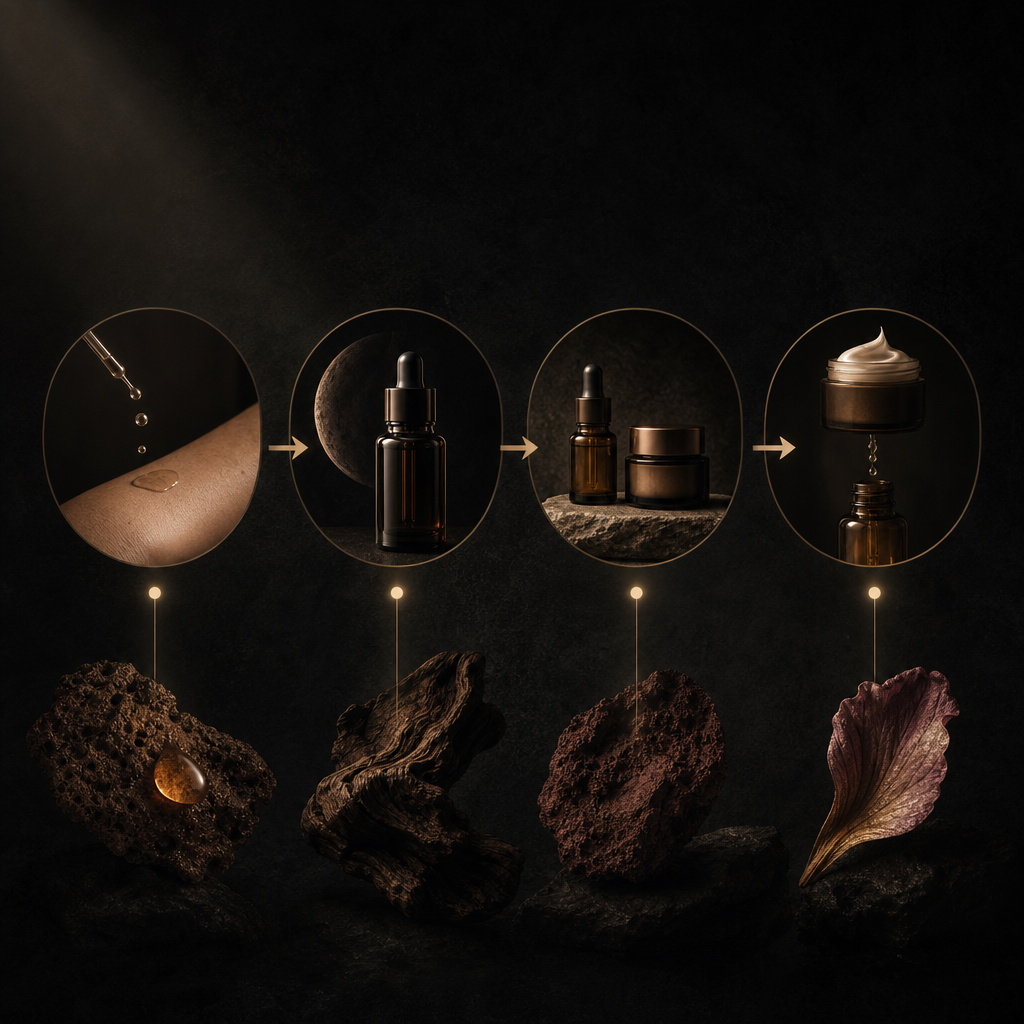
Introduce truffle peptides slowly: patch test for 48 hours, start at night only, and strip your routine back to essentials before adding anything new. Reactive skin responds better to one new active at a time than to a full regimen overhaul, however gentle each individual product claims to be.
Start with a patch test on the inner forearm or behind the ear. Wait a full 48 hours before applying anywhere near the face. This isn't a formality. It's the only way to know how your specific barrier responds before you commit your whole face to a new product.
Once patch testing is clear, apply at night first. Night application removes UV exposure from the equation entirely and lets you monitor your skin's response without makeup or sunscreen layered on top. If there's no reaction after a week of nightly use, you can consider moving to daytime application with SPF.
Simplify before you add. If you're currently running five or six products, strip back to a gentle cleanser and a barrier-supporting moisturiser for a week first. This calms the skin and removes confounding variables, so if a reaction does occur later, you know exactly what caused it.
Layering order matters. Apply a truffle peptide serum to clean, slightly damp skin, let it absorb for a minute or two, then follow with a truffle-based cream to seal it in and reinforce the barrier. Serum first for penetration, cream second for containment. This two-step sequence is also the logic behind why serum and cream are formulated as a duo rather than either product working equally well alone.
When to See a Professional
See a dermatologist before starting any new active if you have rosacea, eczema or active dermatitis. These are medical conditions requiring diagnosis and, often, prescription treatment. No skincare product, however well formulated, replaces that assessment.
Persistent redness, visible blood vessels, painful flares or skin that reacts to water and temperature as much as to products are signs of an underlying condition rather than general sensitivity. The Australasian College of Dermatologists notes that rosacea in particular is a chronic inflammatory condition that needs individualised medical management, not a one-size-fits-all serum swap.
If you've been diagnosed with one of these conditions and want to introduce a new product, do it alongside your dermatologist's guidance, not instead of it. Bio-fermented peptides are formulated for reactive skin in the general sense. They are not a substitute for medical treatment of a diagnosed inflammatory skin disease.
The Molecular Rethink That Built Truffelle
I didn't set out to build a skincare brand. I set out to solve a problem I was living through. In my 40s, every premium product I bought delivered the same thing: a beautiful jar, a lovely scent, and results that stopped at the surface. Collagen kept declining. Wrinkles kept deepening. Hydration never lasted. I'd spent enough on luxury skincare to know the issue wasn't effort or budget. It was molecular.
Standard peptide formulations, even from the most expensive brands, sit above the size a molecule needs to be to cross the skin barrier. That's not a marketing failure, it's a chemistry failure most of the industry doesn't talk about. So I started growing Australian Black Truffles myself, in a 35-million-year-old meteor crater in the Barossa Valley, and partnered with biochemical engineer Raniya M. Bodoci to find a way to make truffle compounds small enough to matter. What came out of years of research is a patented bio-fermentation process and, genuinely, world-first technology in how it delivers actives to the dermis.
I've watched what that shift means for the women it was built for. One verified customer, Eleanor M., had battled redness for years without finding a formulation her skin could tolerate. Within two weeks of using the Black Diamond Duo, that redness began to subside. She described it as feeling like medicine for her skin barrier, not another product sitting on top of the problem. Another customer, Victoria R., was running a six-step routine chasing results she wasn't getting. She replaced all six steps with Truffelle products and saw the fine lines around her eyes soften, with a bounce in her skin she hadn't seen since her twenties.
Neither of those outcomes came from a harsher active. They came from a smaller one, delivered properly. That's the whole argument this article is making: gentle and effective were never opposites. They were just never engineered to coexist, until someone changed the molecular gateway to the dermis rather than the strength of the active pushing against it.
If you're the woman who knows the difference between a product that feels expensive and one that actually works, start simple. Pick a single truffle peptide product rather than overhauling your whole routine at once. Patch test it properly. Read the full ingredient list before you buy, not just the marketing copy on the box, and look specifically at how the brand sources and ferments its actives. Truffelle's clean and ethical sourcing practices and full ingredient breakdowns are publicly documented for exactly this reason: batch-fresh potency only means something if you can verify what's actually in the bottle.
References
- Bos, J.D. and Meinardi, M.M.H.M., "The 500 Dalton rule for the skin penetration of chemical compounds and drugs," Experimental Dermatology, 2000.
- American Academy of Dermatology, guidance on retinoid use and photosensitivity, aad.org.
- Australasian College of Dermatologists, patient information on rosacea and inflammatory skin conditions, dermcoll.edu.au.
- Phenbiox / University of Bologna, truffle extract research (hydration, elasticity, wrinkle depth outcomes), as referenced in Truffelle's clinical data.
- Journal of Modern Human Research, 2023, collagen production and dermal thickness findings, as referenced in Truffelle's clinical data.