"Clinically proven." "Instant results." "Glass skin in seven days." Skincare has a language all of its own, and a fair bit of it is designed to sound more impressive than it is. Here is how to read the promises on the jar and on your feed, so your money goes on what actually works.
What dermatologists found on TikTok
At the 2026 congress of the European Academy of Dermatology and Venereology, researchers presented a study of 38 popular TikTok videos about Korean skincare and glass skin. Almost 95% contained at least one potentially misleading claim, and 84% didn't account for different skin types. Only one mentioned the risk of irritation, only two mentioned sun protection, and none suggested seeing a dermatologist. Not a single video was made by a dermatologist.
It was a small study, and the researchers were clear that Korean skincare itself isn't the problem. But it confirms what most of us suspected: the most confident voices aren't always the best informed.
The phrases, decoded
- "Clinically proven." There's no single standard. It can describe a large controlled trial, or ten people who said their skin felt nice. Look for the details: how many people, for how long, compared with what, and measured how.
- "Dermatologically tested." Usually means it was tested on skin under a dermatologist's supervision, most often for irritation. It doesn't mean it works, or that dermatologists recommend it.
- "Instant results." Anything you see straight away is hydration plumping the surface, or light reflecting off a shiny finish. Lovely, but temporary. Real change takes weeks.
- "Chemical free." Everything is a chemical, including water. This phrase tells you nothing.
- "Natural" or "clean". Neither has a legal definition, and natural ingredients can irritate too.
- "Contains an ingredient proven to..." The ingredient may have been studied at a strength, or in a form, that isn't what's in the jar. Ingredient research is not the same as the product working.
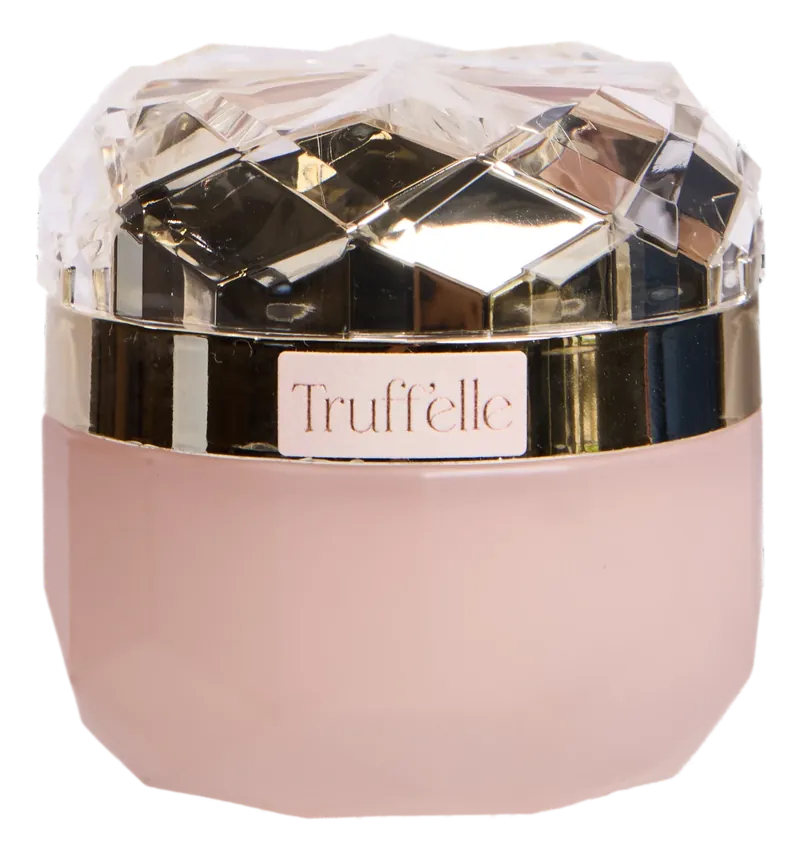
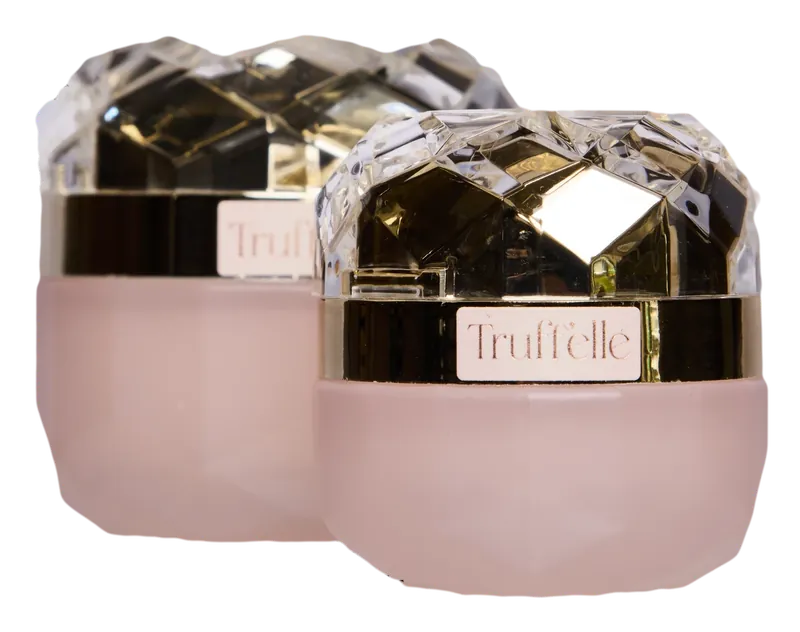
The Peptide Crème to renew, hydrate, strengthen and protect. The Eye Crème for fine lines and tired looking eyes. Or both together in the Black Diamond Duo.
How to judge a study in 30 seconds
Ask five questions:
- How many people? Ten is a pilot. Hundreds is more convincing.
- For how long? Skin renews slowly. Results after a week say little about wrinkles.
- Compared with what? The best studies compare the product with a plain cream or nothing at all.
- Measured how? By a machine, by an expert, or by asking people how they felt? All can be useful, but they're different.
- Who paid? Companies fund most product research. That's normal, but be more cautious when no one independent has repeated the result.
Before and after photos
Lighting, angle, makeup, a bit of weight change or a well timed tan can all transform a face without any help from a cream. Trust before and afters that are taken in the same light, from the same angle, with the brand clearly saying they're unretouched.
Holding ourselves to the same standard
It would be a bit rich to write all this and not show our own working. So, plainly:
- Our own results come from a consumer perception study: 20 women used The Peptide Crème and The Eye Crème daily for 90 days and told us what they saw and felt. 100% said their skin looked plumper and felt more hydrated, 94% noticed smoother skin, and 88% would recommend it. That's what women experienced, not a laboratory measurement, and we call it exactly that.
- Laboratory findings about black truffle extracts are labelled as laboratory findings on our Black Truffle Science page, never as results on your face.
- Our before and afters are real customers and our founder, unretouched.
- Our full ingredient lists are on every product page, with a plain English note for each ingredient.
And if it isn't right for you, there's a 60 day money back guarantee. That's a promise you can actually hold us to.