A skincare routine at 60 works best with four steps: a gentle cleanse, a comfortable moisturiser for face and neck, daily broad-spectrum sunscreen, and an optional eye product. Drop harsh foaming cleansers, frequent exfoliating acids and overlapping serums. Add anything new one product at a time, and judge it by how your skin feels.
Most women I talk to at this age are not short of products. They are short of a routine that feels calm. The bathroom cabinet still holds things bought in their forties, plus a few gifts and a half-used serum or two, and nobody is quite sure what is helping.
This article is an edit, not a shopping list. You will get clear keep and drop decisions, a way to add one new product at a time, specific guidance for the eye area, and a sample two-product core routine. It reflects Truff'elle's view that skin in the years beyond menopause is better served by fewer, well-chosen steps.
Key Takeaways
- At 60, the aim is comfort first. A routine that leaves skin feeling soft and settled beats a long one that leaves it tight or tingly.
- Keep four things: a gentle cleanse, a moisturiser for face and neck, daily sunscreen, and an eye step only if you want one.
- Pause harsh foaming cleansers, frequent exfoliating acids, overlapping serums and stacks of actives used together.
- Add one new product at a time, patch test first, and give your skin several weeks before deciding.
- If you use a retinol eye product, use it in the evening, start gradually, wear daily SPF and do not double up with other retinoids.
- See a GP or dermatologist for any irritation that does not settle.
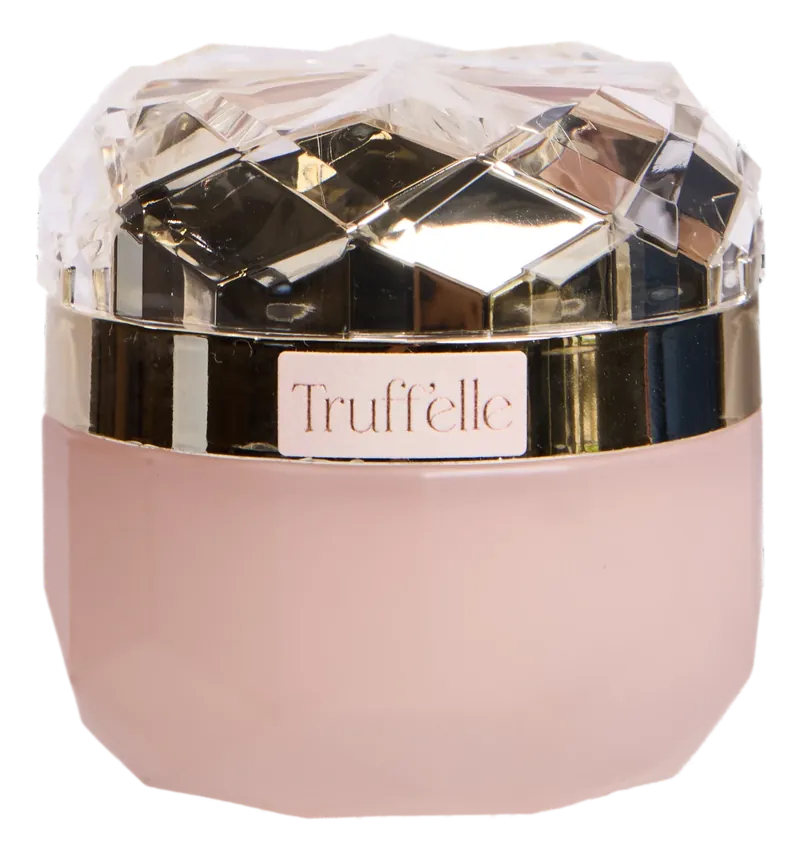
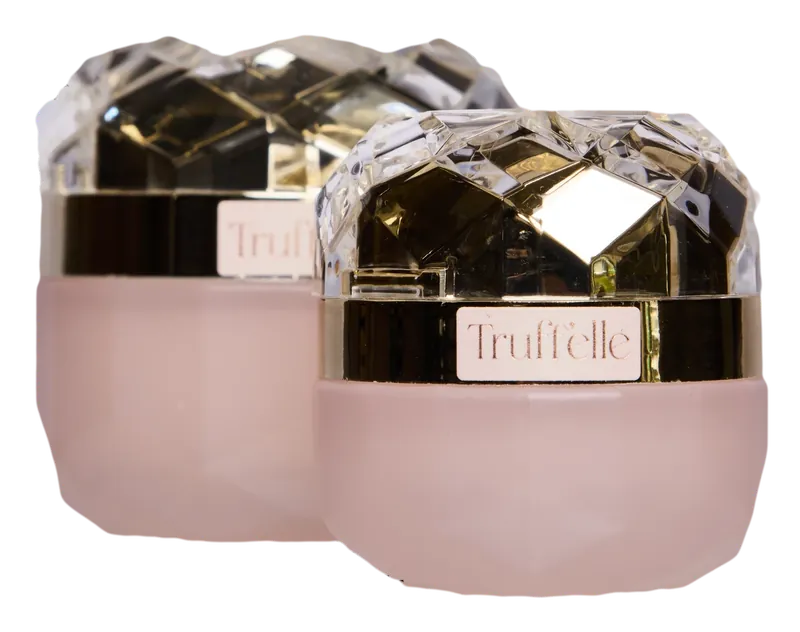
The Peptide Crème to renew, hydrate, strengthen and protect. The Eye Crème for fine lines and tired looking eyes. Or both together in the Black Diamond Duo.
Summary Table: Keep, Pause or Drop
| Step | Decision | Why |
|---|---|---|
| Gentle, lukewarm cleanse | Keep | Cleans without leaving skin tight |
| Moisturiser for face and neck | Keep | Supports comfort and a softer feel |
| Daily broad-spectrum sunscreen | Keep | Protection for Australian UV, every day it is needed |
| Targeted eye product | Optional | Worth it only if you want a dedicated eye step |
| Harsh foaming cleanser | Drop | Often leaves drier skin feeling stripped |
| Frequent exfoliating acids and scrubs | Pause | Can add irritation to skin that is already drier |
| Overlapping serums | Pause | Several products doing the same job rarely help |
| Multiple actives layered together | Pause | Raises the chance of irritation |
| Expired or very old products | Drop | Texture, smell and performance can change |
Why Does a Skincare Routine at 60 Need Editing?
Because skin at 60 is usually drier and can feel thinner than it did in your forties, while the routine on your shelf was built for different skin. Oestrogen falls through menopause, and many women notice more dryness and less comfort. Editing means removing steps that no longer help, not adding stronger ones.
By 60, most women are well past menopause. Healthdirect Australia has a plain-English overview of menopause and its symptoms if you want the background. We cover how skin differs across perimenopause, menopause and postmenopause in a separate stages comparison, and the early signs of a struggling skin barrier in another article, so I will not repeat either here. This piece is about the practical decision in front of you: what stays on the shelf.
Three habits tend to stop serving skin at this stage.
- Buying for an age, not a feeling. A jar labelled for a decade does not know how your skin feels today. Women move through menopause at different ages and with different skin changes.
- Treating tingle as proof. A product that stings is not necessarily working. On drier skin it is more often a sign to ease off.
- Adding without removing. A new serum arrives, and nothing leaves. Over a few years the routine gets longer while skin gets less comfortable.
That is the heart of the Truff'elle position: changing skin is usually better served by fewer, well-chosen steps, added one at a time. It is a point of view built on how skin behaves as oestrogen falls, not a clinical claim. Stacking new actives on drier, more reactive skin raises the chance of irritation, and a calmer routine lowers it.
What Should You Keep in a Skincare Routine at 60?
Keep four things: a gentle cleanse, a moisturiser that feels comfortable on face and neck, daily broad-spectrum sunscreen, and a targeted eye step only if you want one. Everything else has to earn its place. This is simple skincare for mature skin: a little more understanding, a little less complication.
A gentle cleanse
Use lukewarm water, not hot, and a mild cleanser that rinses off without that squeaky, tight feeling. Creamy, milky and balm-style formulas tend to suit drier skin. Many women find an evening cleanse is the one that matters most, because it removes sunscreen and the day. In the morning, some are comfortable with a rinse of water alone. Let how your skin feels guide you.
A moisturiser for face and neck
This is the step that does the most for comfort. Look for a texture you actually enjoy using, because you will only keep a routine you like. Apply it to the face, the neck and the upper chest, since those areas are often left out.
When women ask about a face and neck cream for women over 60, the real question is usually whether one product can do both jobs. It can. The Cream is Truff'elle's face and neck cream for morning and evening. Its formula includes bio-fermented Australian black truffle extract, Kakadu, Illawarra and Burdekin plum extracts, green tea, goji berry, sacha inchi and safflower oils, sodium hyaluronate and vitamin E. We describe what it offers in cosmetic terms only: moisture, comfort, a softer feel and the appearance of fine lines. It contains fragrance (Manuka honey), so patch test it first, particularly if you are sensitive to fragrance.
Daily sunscreen
This is the one step I would never edit out. According to SunSmart (https://www.sunsmart.com.au/), sun protection is recommended whenever the UV index reaches 3 or above. In much of Australia that covers a large part of the year. Check the UV forecast, and choose a broad-spectrum sunscreen of SPF 30 or higher, as Cancer Council advice recommends. Apply it as the last step of your morning routine.
Sunscreen matters even more if you use retinol anywhere on your face, which I cover in the eye area section below.
A targeted eye step, if you want one
The eye area has thinner-feeling skin, and many women like a dedicated product there. Plenty of women do not, and a good moisturiser used gently around the orbital bone is enough. Treat the eye step as a choice, not an obligation.
What Skincare Should You Stop Using After 60?
Pause or drop harsh foaming cleansers, frequent exfoliating acids, overlapping serums and any stack of actives used together. At 60 the problem is rarely too little product. It is usually too many steps competing on skin that is drier and less forgiving. You do not need to stop forever: pause, then reintroduce one at a time.
Harsh foaming cleansers
If your face feels tight, squeaky or hot after cleansing, the cleanser is doing too much. Foaming formulas built to remove oil are often a poor match for skin that now makes less of it. Swap to something creamy and see how skin feels over the next few weeks.
Frequent exfoliating acids and scrubs
Acids and physical scrubs have their place, but frequent use can add irritation to skin that is already drier. If you have been exfoliating on a fixed schedule for years out of habit, pause it. Many women find skin feels calmer and looks more even without it. If you want to return to it later, do so as a deliberate single change.
Overlapping serums
Count the serums on your shelf. If two or three promise the same thing (brightening, firming, hydrating), you are paying for duplication. Pick the one your skin seems to like best, and set the others aside. More layers also mean more chances for something to disagree with your skin.
Too many actives at once
Vitamin C, retinol, acids, peptides and niacinamide are each popular. Layered together, they can be a lot for changing skin. This is where I am most direct: if you are using several actives and your skin feels sore, dry or reactive, remove them all except sunscreen and a moisturiser, let skin settle, then rebuild slowly.
Old products from your forties
Check the open-jar symbol (period after opening) on packaging. If a product has changed in smell, colour or texture, let it go. Old products can irritate and are not worth the risk.
One caveat: if a dermatologist or GP prescribed a treatment, keep using it as directed and ask before changing it. This edit applies to the over-the-counter products on your shelf.
How Do You Add a New Skincare Product at 60?
Add one product at a time. Patch test first, use the new product on its own, and give your skin several weeks before judging it. Note how skin feels in the same light each morning. If irritation appears, stop and seek advice. Truff'elle calls this approach One change at a time.
- Patch test. Apply a small amount to a discreet area, such as the inner forearm or behind the ear, following the product's directions. Do not skip this because a product feels pleasant.
- Introduce one product. If you start two new things together and skin reacts, you will not know which one is responsible.
- Wait several weeks. Skin changes slowly. A few days tells you whether it irritates, not whether it suits.
- Check in the same light. Bathroom lighting varies. Look at your skin at the same time of day, by the same window, and note how it feels: comfortable, tight, soft, sore.
- Stop if irritation occurs. Redness, stinging or itching that does not settle is your cue to stop. Seek advice from your GP or a dermatologist for anything persistent.
This sounds slow, and it is. That is the point. A routine you have built one step at a time is a routine you understand, which is more useful than any product claim.
If you are cautious about committing to a full-size product before you know whether it suits you, a smaller size makes sense. The Cream is also available as a 20mL Discovery size ($79) with the same formula as the full size.
How Should You Care for the Eye Area at 60?
Keep eye care simple: use a targeted eye product in the evening, introduce it gradually, wear daily sunscreen, and do not double up with other retinoid products. The Eye Cream contains retinol, so it needs a slower start than a plain moisturiser. See a GP or dermatologist if irritation persists.
The Eye Cream contains retinol, acetyl hexapeptide-8, sodium hyaluronate, caffeine and black truffle extract. We describe its benefits as comfort, a softer feel and the appearance of fine lines around the eyes, not as measured results. Here is how to use any retinol eye product sensibly.
- Evening use. Retinol is generally used at night, and it is the sensible default for The Eye Cream.
- Go gradually. Start with a couple of evenings in the first week and build up only if the skin stays comfortable. If it feels dry or sore, step back.
- Wear SPF every day. Sunscreen by day is non-negotiable when you use retinol. Follow it with the SPF step above.
- Do not double up. If you already use a retinol serum, a retinal product or a prescription retinoid on your face, do not add another retinoid around the eyes without advice. Overlap is a common cause of irritation.
- Keep it to the orbital bone. Apply gently and keep it off the lash line and eyelids. Our eye cream application guide covers technique in detail.
- Know when to ask. Persistent redness, swelling, burning or itching around the eyes is a reason to stop and see your GP or a dermatologist.
If you want a dedicated eye step, introduce it after your moisturiser has settled into your routine, not at the same time.
What Does a Two-Product Core Skincare Routine at 60 Look Like?
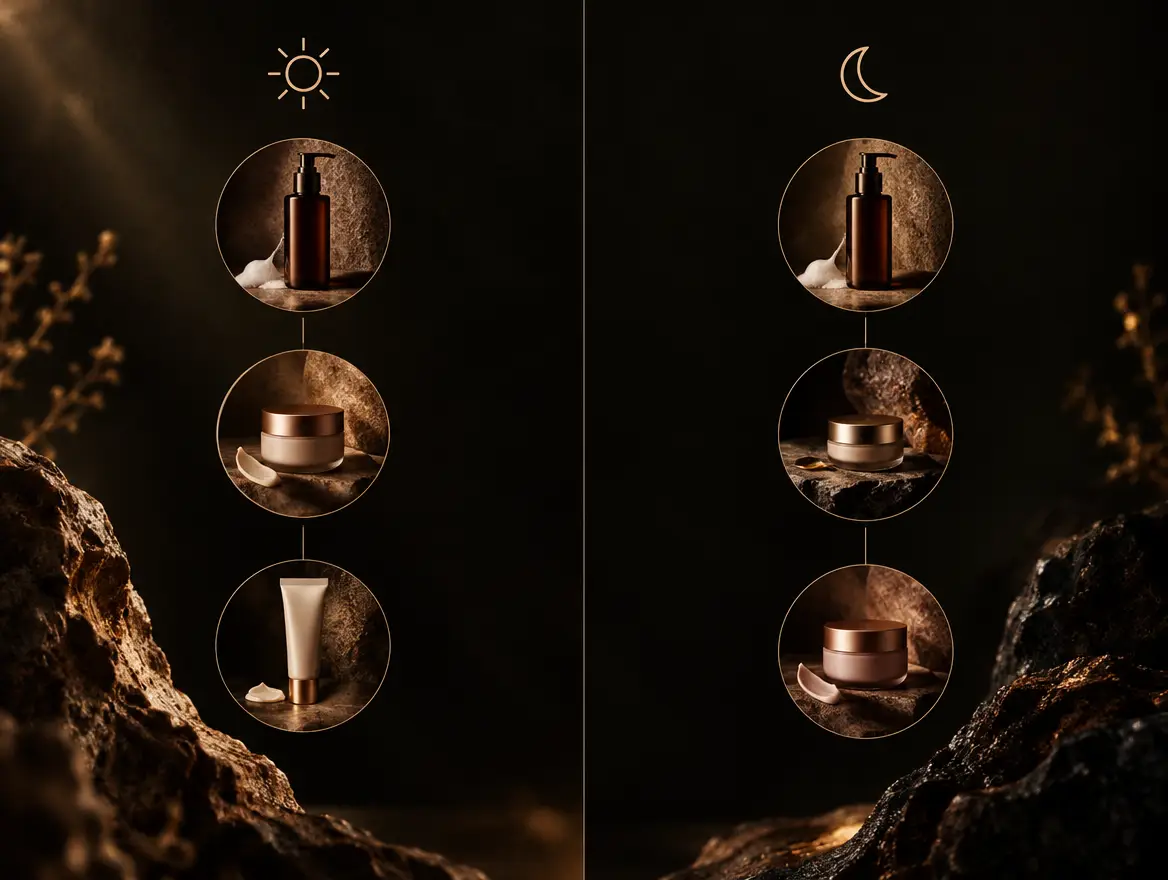
A two-product core routine uses The Cream morning and evening and The Eye Cream in the evening, supported by a gentle cleanser and daily sunscreen. That is four steps, and only two are Truff'elle products. Start with The Cream alone, then add The Eye Cream slowly if you want a dedicated eye step.
This is the shape of what we call a simple routine for changing skin: cleanse gently with lukewarm water, moisturise face and neck morning and evening, add targeted eye care if wanted, and protect daily with broad-spectrum sunscreen when the UV index is 3 or above.
| Time | Step | Notes |
|---|---|---|
| Morning | Rinse or gentle cleanse | Lukewarm water, mild cleanser if you use one |
| Morning | The Cream on face and neck | Include the upper chest if you like |
| Morning | Broad-spectrum sunscreen | Last step, whenever the UV index is 3 or above |
| Evening | Gentle cleanse | Removes sunscreen and the day |
| Evening | The Eye Cream (once introduced) | Gradual start, away from the lash line, no other retinoids |
| Evening | The Cream on face and neck | Final step of the evening |
A few notes on making this work.
- Weeks one to several: cleanser, The Cream and sunscreen only. Let skin settle and notice how it feels.
- Then, if you want it: add The Eye Cream in the evening, gradually, following the retinol guidance above.
- Cleanser and sunscreen: these do not have to be Truff'elle. Choose gentle, comfortable ones from any brand you trust.
That is the whole routine. It will take a few minutes, and there is little to remember.
The Shelf Audit: Three Piles and One Question
The simplest way to edit a skincare routine at 60 is a shelf audit. Take everything out of the cabinet, sort it into three piles (keep, pause, let go), and ask one question of each product: does this make my skin feel comfortable today? It is a rule built around how skin feels, not what a label promises.
Imagine a cabinet holding two cleansers, three serums, a scrub, an acid toner, a night cream from a decade ago and a sunscreen at the back. Most of that cabinet fails the one question. The cleanser that leaves skin tight goes. The serums overlap. The scrub and the acid get paused. The old night cream is let go. What is left is a gentle cleanser, a moisturiser and the sunscreen. That is already a good routine.
Two things inform how Truff'elle approaches this, and both go against common advice.
First, the founder's own experience. Sabina Kelley started Truff'elle because her skin changed in her forties. It became drier and less comfortable, and the luxury products she had relied on for years no longer felt right. Her experience matched what many women describe during perimenopause and menopause: a crowded shelf of products that did not seem made for changing skin. She worked with Melbourne cosmetic chemist Raniya M. Bodoci to build something deliberately small. The range centres on 1 hero ingredient, bio-fermented Australian black truffle, with 2 products in the core routine: a face and neck cream and an eye cream. No steps were added just to fill out a bigger collection.
Second, a different view of research. Most skincare marketing leans on ingredient-study numbers. Truff'elle does not. Research on an extract is a starting point for formulation, not a promise from the finished jar. Results depend on the whole formula, how it is used and the person using it. That is why the brand makes 0 clinical percentage claims, has published no clinical trial data, and describes results only by how skin feels and looks. Master Key is the name we give our formulation approach: ingredient choice, combination and the feel of the finished cream. It is an approach, not a proven mechanism.
A fair caveat: a brand telling you to buy fewer products has an interest to declare. My honest view is that the audit is worth doing whether or not you ever buy from us. A plain cleanser, a moisturiser you like and sunscreen will serve you better than a crowded shelf.
Start with how your skin feels today, not an age printed on a jar, and change one thing at a time.
Simplify Your Routine, One Step at a Time
If your cabinet feels crowded, start the edit tonight. Sort the shelf, keep a gentle cleanser and your sunscreen, and begin with The Cream for face and neck. Give it several weeks. If you would like a dedicated eye step after that, add The Eye Cream slowly, in the evening, with daily SPF.