A stressed menopause skin barrier usually shows up as tightness after cleansing, stinging from familiar products, flaking alongside oiliness, new redness and pilling. The answer is often fewer products, not more. Pause the non-essentials, keep a gentle cleanse, a comfortable moisturiser and daily SPF, then reintroduce one product at a time.
If your skin has suddenly turned tight, stingy or unpredictable, the instinct is to buy something new. A richer cream, a stronger serum, a repair treatment. Most of us do it. The shelf gets more crowded, and the skin gets less comfortable.
This guide explains what the skin barrier does in plain language, the seven signs that your routine has become too much, and how to strip back and rebuild. It is written for Australian women in perimenopause, menopause and beyond. It is cosmetic guidance only, not medical advice, and we cover when to see a doctor at the end.
Key Takeaways
- Your skin barrier is the outer layer that helps hold moisture in and keep irritants out. When it feels stressed, skin can feel tight, stingy or flaky.
- Many women find skin drier and more reactive through perimenopause and menopause, so products that once felt fine can suddenly sting.
- A crowded shelf and several active ingredients at once are common reasons skin feels uncomfortable.
- The way back is simple: pause non-essentials, then return to a gentle cleanse, a comfortable moisturiser and daily SPF.
- Reintroduce one product at a time, with a week or two between each, so you know what your skin likes.
- Persistent burning, rash or broken skin is a reason to see a GP or dermatologist, not to try another product.
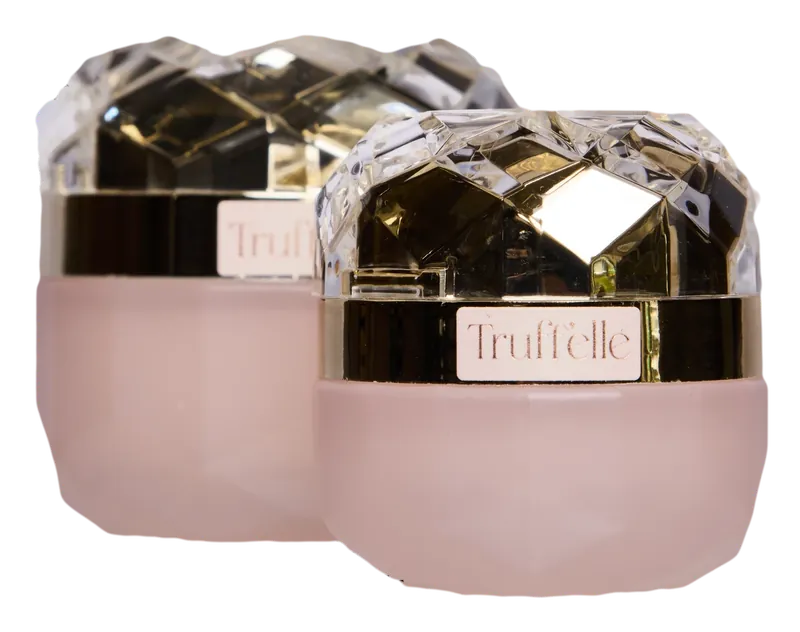
The Peptide Crème to renew, hydrate, strengthen and protect. The Eye Crème for fine lines and tired looking eyes. Or both together in the Black Diamond Duo.
Summary Table
| Sign | What it often means | What to try first |
|---|---|---|
| Tightness after cleansing | Cleanser may be too stripping | Lukewarm water, gentler cleanse |
| Stinging from old favourites | Skin is less tolerant right now | Pause the product, simplify |
| Flaking alongside oiliness | Skin is trying to compensate | Fewer exfoliating steps, one moisturiser |
| New redness | Skin is irritated or reactive | Remove actives, patch test anything new |
| Products pilling | Too many layers, or ingredients clashing | Cut layers, wait between steps |
| Never comfortable | Routine may be working against you | Strip back to basics |
| Several actives at once | Cumulative load on skin | One change at a time |
What is the menopause skin barrier, and why can skin feel less resilient?
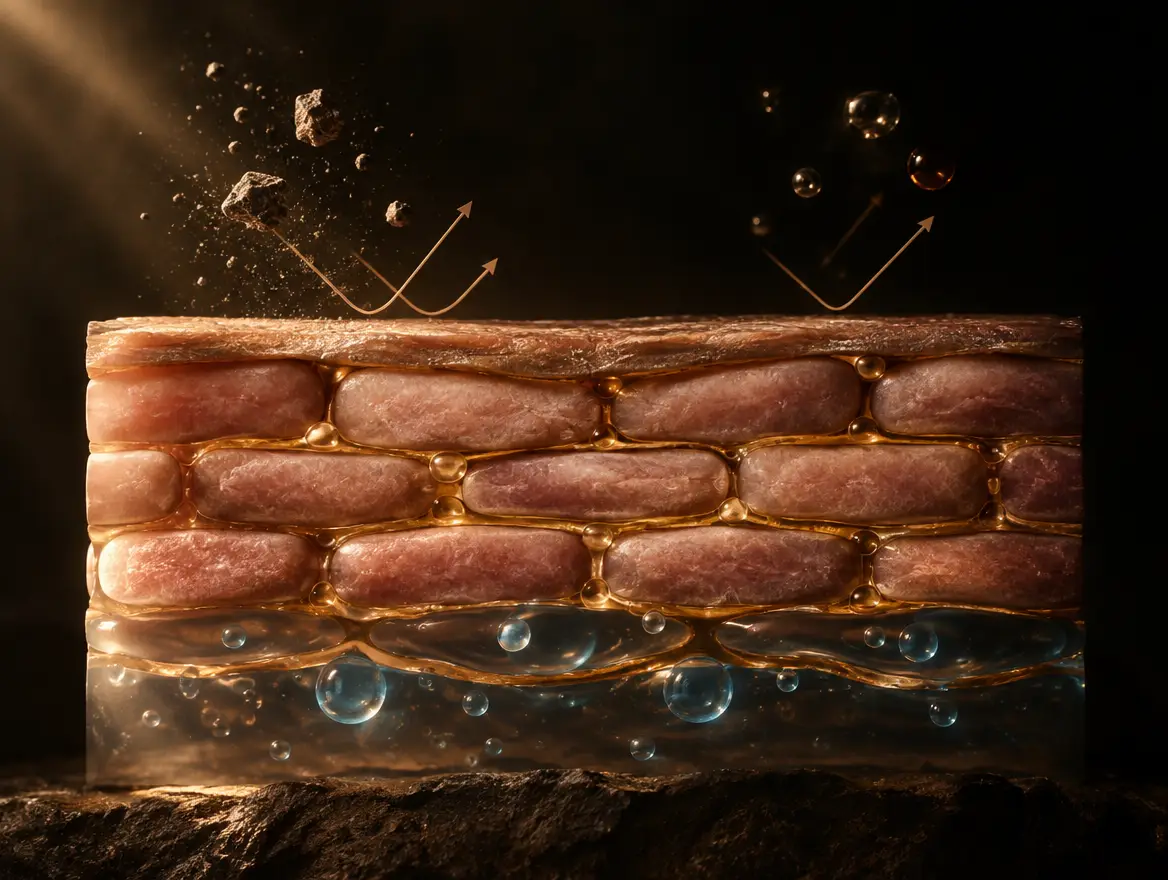
The skin barrier is the outermost layer of your skin. In cosmetic terms, it helps hold moisture in and keep everyday irritants out. When it feels well cared for, skin feels soft and comfortable. When it feels stressed, skin can feel tight, rough or reactive.
A simple way to picture it is a brick wall. The skin cells are the bricks, and the natural oils and moisture between them act like mortar. Skin that feels comfortable usually has a wall that is holding together well.
Through perimenopause and menopause, many women describe the same pattern. Skin feels drier. It can feel less cushioned and less forgiving. Products that worked for decades start to sting. Healthdirect Australia and the Australasian Menopause Society both describe skin dryness and changes in how skin feels as common during this life stage, and the timing and degree vary a great deal from woman to woman.
That variation is the point. Women move through perimenopause and menopause at different ages and with different skin changes. So start with how your skin feels today, not an age printed on a jar.
Our founder, Sabina Kelley, noticed this in her forties. Her skin became drier and less comfortable, and the luxury products she had relied on for years no longer felt right. She did not need more. She needed a routine made for changing skin.
A note on language: we use "skin barrier" as a cosmetic shorthand for how skin feels and behaves. We are not diagnosing a condition, and nothing here replaces advice from your doctor.
What are the 7 signs your skin needs a simpler routine?
The clearest signs are tightness after cleansing, stinging from products that used to feel fine, flaking alongside oiliness, new redness, products pilling, skin that never feels comfortable, and layering several actives at once. One sign on its own is worth noticing. Two or three together suggest the routine itself is the problem.
1. Tightness after cleansing
If your face feels tight, squeaky or pulled the moment you dry it, your cleanse may be doing too much. That clean, tight feeling was once marketed as a good sign. For dry, changing skin, it is usually a warning.
Try lukewarm water, a gentler cleanser and a lighter touch. Then notice how your skin feels ten minutes later, not just straight after.
2. Stinging from products that used to feel fine
This is the sign that surprises women most. The vitamin C you have used for years suddenly prickles. The toner you loved now stings. Nothing about the product has changed, but your skin has.
Do not push through. Stinging is information. Pause the product and see whether skin feels calmer without it.
3. Flaking alongside oiliness
Dry flakes and an oily shine can sit on the same face. It looks contradictory, so women often respond with a mattifying product and a heavy moisturiser at the same time. Skin that is losing comfort can look both flaky and shiny.
The answer is rarely another treatment. It is fewer steps and one moisturiser you tolerate well.
4. New redness
Redness that appears or becomes more noticeable can mean skin is irritated. Many women in perimenopause also see changes in how their skin reacts to heat, stress and products. If redness is new, take away actives first and add nothing new until skin settles.
If it comes with burning, rash or persistent discomfort, see a GP or dermatologist. That is not a skincare problem to solve with a product.
5. Products pilling
When serums and creams ball up into little rolls on your skin, you are layering more than the surface can comfortably take. Pilling can come from too many layers, from applying the next step too soon, or from ingredients that do not sit well together.
The cosmetic fix is simple. Remove a layer. If your routine needs a ten-minute wait between steps to behave, it is too complicated.
6. Skin that never feels comfortable
This one is subtle. Nothing stings and nothing is flaking, but your skin never feels quite right. It is always a bit tight, a bit dull or a bit on edge. Women often add products hoping to find the one that fixes it.
Consider the opposite. If you have been adjusting your routine for months and comfort has not arrived, the adjusting may be the problem.
7. Layering several actives at once
A retinoid, an exfoliating acid, a vitamin C and a peeling mask in the same week is a lot for any skin. For skin that is already feeling less resilient, it is more again. Stacking new actives raises the chance of irritation, and when something goes wrong you cannot tell which product caused it.
If you recognise this one, you do not need a better active. You need fewer of them.
Why does adding more products often make a stressed barrier worse?
Every new product adds ingredients your skin has to tolerate. When skin is already less forgiving, the cumulative load matters more than any single product. A crowded shelf also makes it impossible to tell what is helping and what is causing trouble.
There are three problems with the "more" approach.
You cannot read the result. If you add three products in one week and skin stings, you do not know which one to blame. Skincare becomes guesswork.
Actives compete. Exfoliating acids, retinoids and other strong ingredients all ask something of the skin. Used together, they can leave it feeling raw even when each one is used as directed.
The marketing pushes you. Most skincare for mature skin is sold on age and promises. Women are told that changing skin needs stronger actives and more steps. Our view is the opposite. Perimenopausal and menopausal skin is usually better served by fewer, well-chosen steps, added one at a time.
This is a position, not a clinical finding. It comes from how skin tends to feel through this life stage and from Sabina's own experience. But it is easy to test on yourself, and the test costs you nothing.
How do you simplify your routine for menopausal skin?
Pause everything that is not essential, then return to three steps: a gentle cleanse, a comfortable moisturiser and daily SPF. Once skin feels settled, add one product at a time, leaving a week or two between each. This is a simple routine for changing skin.
Step 1: Pause the non-essentials
Set aside exfoliating acids, retinoids, peels, scrubs, strong vitamin C and any new product from the past few weeks. You are not throwing them away. You are putting them in a drawer.
If that feels drastic, remember it is temporary. Most women find the break itself tells them something about which products were helping and which were just there.
Step 2: Return to three steps
- Cleanse gently. Use lukewarm water, not hot. Choose a cleanser that leaves skin comfortable, not squeaky.
- Moisturise. Use one comfortable moisturiser on face and neck, morning and evening.
- Protect. Apply broad-spectrum sunscreen daily. SunSmart, run by Cancer Council, recommends sun protection when the UV index is 3 or above, which is most days across much of Australia, including through winter in the northern states.
That is it. Give skin a little time at this level. Notice how it feels in the same light, at the same time of day.
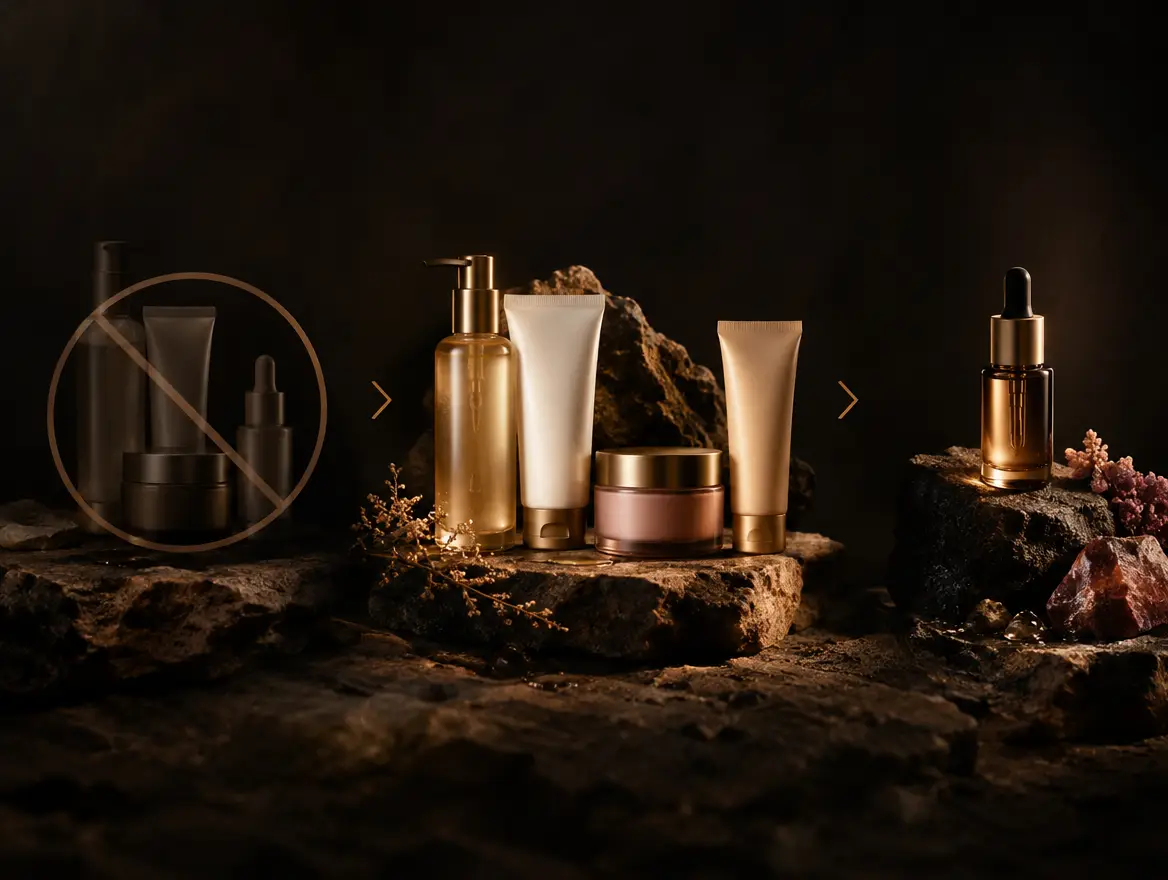
Step 3: Reintroduce one change at a time
Once skin feels calmer, you can decide what, if anything, to bring back. The rule is simple:
- Patch test before first use.
- Introduce one new product at a time.
- Leave a week or two before the next one, and note how skin feels in the same light.
- Stop if irritation occurs, and seek advice for anything persistent.
This is slower than adding three things on a Sunday night. It is also the only way to learn what your changing skin actually likes. It is one change at a time, and it works because you can finally read the result.
For context on how needs differ between stages, we cover that in our guide to Perimenopause vs Menopause vs Postmenopause Skincare. If breakouts are part of your picture, our Perimenopause Breakouts guide covers it. And if you are wondering about hydrating ingredients, see our Hyaluronic Acid for Menopausal Skin article.
Where does Truff'elle fit in a simpler routine?
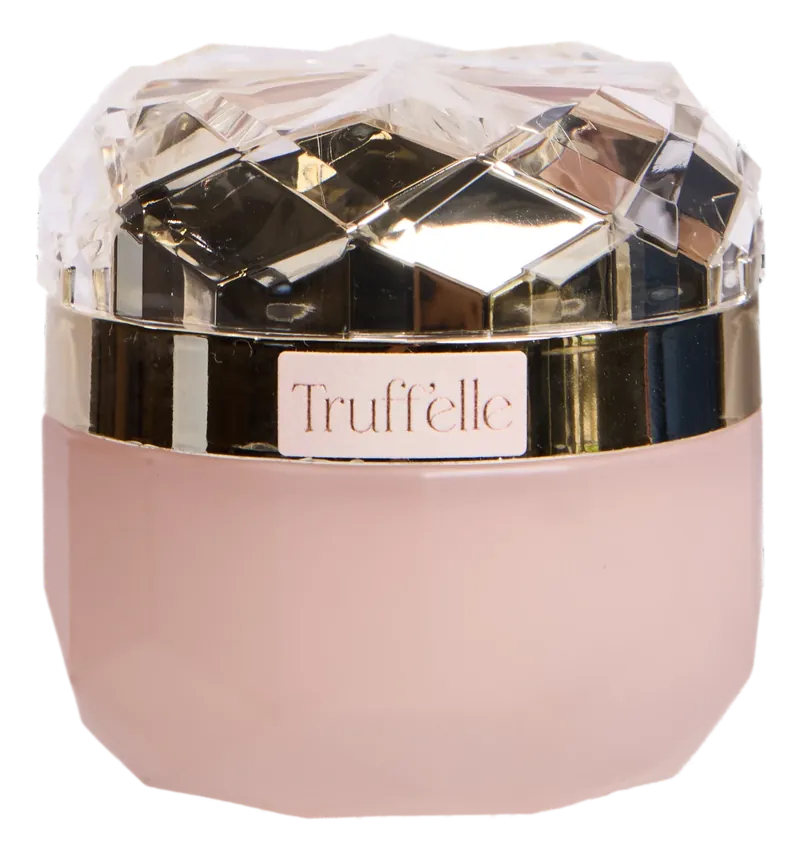
The core Truff'elle routine is 2 products, built around 1 hero ingredient: bio-fermented Australian black truffle. The Cream is the comfortable face and neck step, for morning and evening. The Eye Cream is optional, and contains retinol, so it comes later.
Sabina built the range this way on purpose. Working with Melbourne cosmetic chemist Raniya M. Bodoci, she kept it to one face and neck cream and one eye cream, with no extra steps added for the sake of a bigger collection.
The Cream: your one comfortable daily step
The Cream is designed to be the moisturiser step in the routine above. Its formula centres on bio-fermented Australian black truffle, alongside Australian botanical extracts including Kakadu, Illawarra and Burdekin plum, plus sodium hyaluronate and vitamin E. We describe it in terms of how skin feels and looks: moisture, comfort and a softer feel.
We make 0 clinical percentage improvement claims. No clinical trial data has been published for the range, so we do not imply any.
One honest caveat: The Cream contains fragrance (Manuka honey). If your skin is very reactive right now, patch test first. A 20mL Discovery size at $79 lets you try the texture and feel on your own skin before committing to the full 50mL.
The Eye Cream: once skin feels settled
The Eye Cream contains retinol, along with acetyl hexapeptide-8, sodium hyaluronate, caffeine and black truffle extract. Because it contains retinol, it is not where you start.
Introduce it only once your skin feels settled. Patch test first, begin gradually, and use sunscreen by day. If you want more context on how retinol and truffle-based skincare compare, see our Truffle Skincare vs Retinol article.
If stinging or redness returns, stop and go back to the three-step routine.
When should you see a GP or dermatologist?
See a GP or dermatologist if you have persistent burning, a rash or broken skin. Those are not signs of a routine that needs tweaking. Skincare cannot diagnose or treat a skin condition, and the Australasian College of Dermatologists is a good starting point for finding a specialist.
Specifically, get advice if:
- Burning or stinging continues after you have stripped your routine back.
- You develop a rash, swelling or weeping skin.
- Skin is cracked, broken or bleeding.
- Redness is persistent, or comes with other symptoms you are worried about.
- You are unsure whether what you are seeing is a skin reaction or something else.
If menopause symptoms more broadly are affecting you, your GP can discuss them. Jean Hailes for Women's Health and the Australasian Menopause Society both publish plain-English information for Australian women.
Why a crowded shelf is a promise problem, not just a skin problem
Most women do not end up with a crowded shelf by accident. Each product came with a promise, usually backed by a study number on an ingredient. Add enough promises together and you get a routine no skin can keep up with.
Here is our view, and it is not the consensus. Research on an extract is a starting point for formulation, not a promise from a finished jar. An ingredient study tells you something interesting about one ingredient, under one set of conditions. It does not tell you what a finished product will do on your face. Results depend on the whole formula, how it is used and the person using it.
That is why Truff'elle does not present ingredient-study percentages as results from our products. Our approach to formulation, which we call Master Key, is about ingredient choice, how ingredients are combined and the feel of the finished cream. It is an approach, not a proven mechanism or a result.
It also changes how you can shop. If a brand leads with a percentage, ask what it is a percentage of, and whether it was measured on the product in the jar. If the answer is a single ingredient in a lab, treat it as a starting point.
The practical version for your bathroom is below. Count your products. Count how many carry a bold promise. Then ask which ones make your skin feel better today, in the mirror and on the skin, not on the label. Most women who try this find the list of products that earn their place is much shorter than the list on the shelf.
There is a quieter benefit, too. A smaller routine takes less decision-making. A little more understanding, a little less complication. For the years it changes, that is worth having.
References
- Healthdirect Australia, Menopause
- Australasian Menopause Society, Information for women
- SunSmart (Cancer Council), Sun protection and the UV index
- Jean Hailes for Women's Health, Menopause
- Australasian College of Dermatologists, A to Z of Skin
Ready to simplify? Rebuild your routine around The Cream as one comfortable daily step. Once your skin feels calm, you can decide whether The Eye Cream suits you.