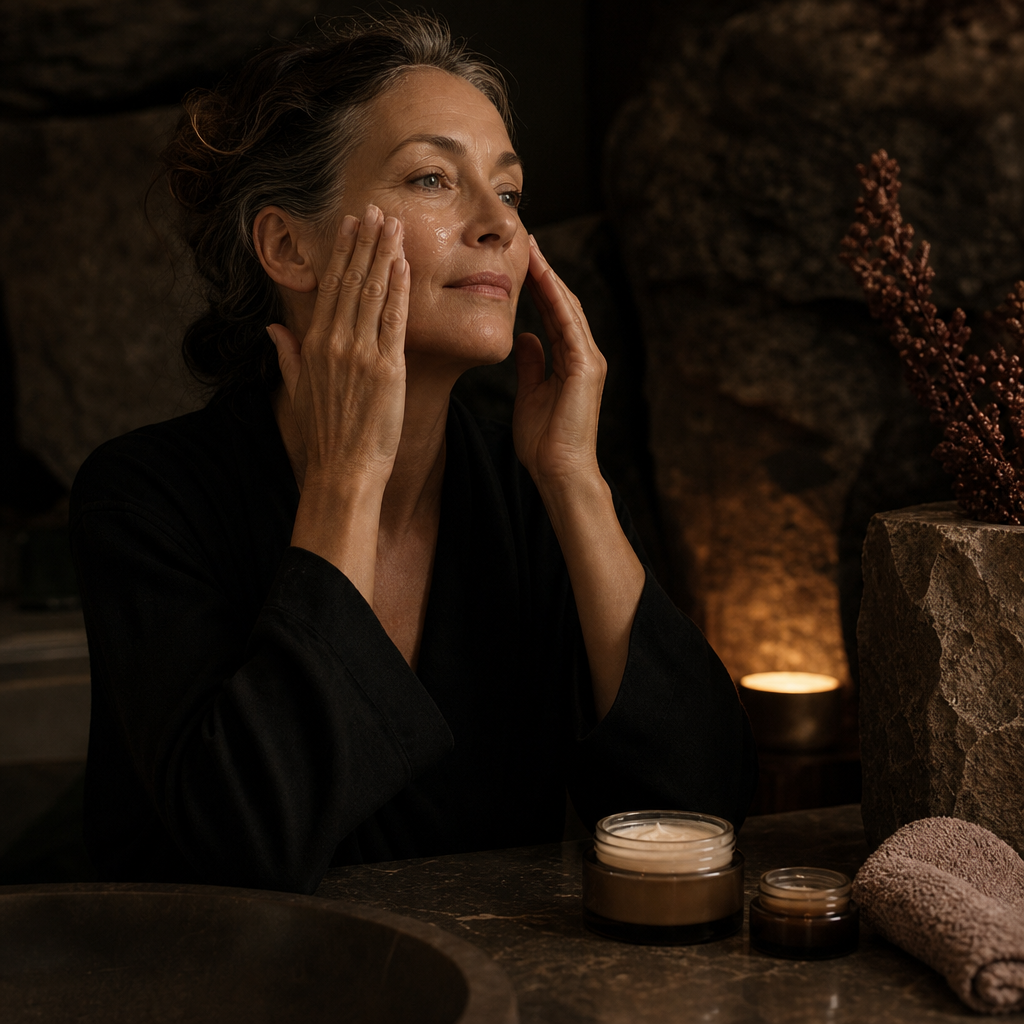
Hyaluronic acid is a humectant that draws water into the surface layers of skin, so menopausal skin can feel plumper, softer and more comfortable. It works best on slightly damp skin, sealed in with a moisturiser. It is one hydrating step, not a full routine, and it does not replace a moisturiser or sunscreen.
If you search for hyaluronic acid and menopause, you will find plenty of advice to add it to your shelf. Less of it explains what the ingredient does, what it cannot do, and whether you need another bottle at all. That is what this guide covers, in plain language.
We write this from Truff'elle's point of view: changing skin is usually better served by fewer, well-chosen steps, added one at a time. By the end you will know how to use hyaluronic acid well, where it sits in a simple routine, and how to decide whether it earns a place in yours.
Key Takeaways
- Skin often feels tighter and duller in perimenopause and menopause. Hormone shifts, including falling oestrogen, are part of the picture.
- Hyaluronic acid is a humectant. Cosmetically, it draws water into the skin's surface so skin feels plumper and more comfortable.
- Apply it to slightly damp skin, then follow with a comfortable moisturiser to help hold the hydration in.
- Without a moisturiser on top, it can feel tight in very dry air.
- A simple routine is gentle cleanse, hydrate, moisturise, eye care if you want it, and daily sunscreen. Add one new product at a time.
A face cream for daily moisture, a targeted eye cream, or both together. Compare the sizes, ingredients and prices before you choose.
Summary Table
This table shows where each step sits and what job it does. It is qualitative, because skin varies and so does timing.
| Step | Its one job | What you may notice | When |
|---|---|---|---|
| Gentle cleanse | Remove the day without stripping skin | Skin feels clean, not tight | Morning and evening |
| Hydrate (hyaluronic acid, optional) | Draw water into the surface layers | Plumper, more comfortable feel | On slightly damp skin |
| Moisturise | Help hold hydration in and keep skin comfortable | Softer, more cushioned feel | Morning and evening |
| Eye care (optional) | Targeted care for a delicate area | Smoother look over time | Introduced gradually |
| Sunscreen | Daily protection from UV | No visible change, which is the point | Every day the UV index is 3 or above |
Why does skin feel drier during perimenopause and menopause?
Skin often feels drier in perimenopause and menopause because hormone levels, especially oestrogen, shift and fall, and skin can hold less water and make less oil. The result is tightness, dullness and a face that stops responding to your old routine. Cosmetically, it is a comfort problem first and an ageing problem second.
We cover the stages in our separate guide to perimenopause, menopause and postmenopause, so we will not repeat it here. What matters for skincare is this: women move through these stages at different ages and with different skin changes. An age printed on a jar tells you very little. How your skin feels today tells you far more.
Common signs of dryness include:
- Skin that feels tight after cleansing
- Makeup that settles into lines or looks patchy
- A duller, flatter look in daylight
- Rough or flaky patches, often around the cheeks and eyes
- Products that used to feel fine now stinging or tingling
Environment adds to it. Air conditioning, winter heating, wind and Australian sun all pull moisture from the skin's surface. So a routine that worked at thirty-five can feel inadequate at fifty-two, even if you have changed nothing.
One caveat. Persistent itching, a rash, or a sudden change in your skin is worth raising with your GP. Skincare can improve comfort, but it is not a diagnosis. The Australian Menopause Society and Healthdirect both offer reliable background on menopause symptoms in general.
What does hyaluronic acid actually do on menopausal skin?
Hyaluronic acid is a humectant, meaning it attracts and holds water. Applied to the skin, it draws moisture into the outer layers, so skin looks plumper and feels more supple for a while. It is a cosmetic hydration step. It does not rebuild skin structure or replace the oils that keep water in.
Hyaluronic acid is also found naturally in skin, where it binds water. A 2012 review by Papakonstantinou, Roth and Karakiulakis in Dermato-Endocrinology describes it as a key molecule in skin and discusses how it changes with ageing. That is useful background. It does not mean a topical product will behave the same way as the skin's own supply.
On an ingredient list you will often see it as sodium hyaluronate, which is its salt form. Products can use different sizes of the molecule. Brands make various claims about how deep each size goes. The honest position is that surface hydration is what you can reliably judge, and you judge it by feel.
What it does for how skin feels and looks
When the outer layers hold more water, three things tend to happen. Skin feels less tight. It looks a little smoother and more even. Fine lines can look softer, because hydrated skin reflects light more evenly. These effects are temporary and cosmetic. They are real, and they are worth having, but they are not permanent.
What it does not do
Hyaluronic acid does not treat menopause. It does not replace hormonal care that your doctor may discuss with you. It does not protect skin from the sun. And it does not seal itself in. That last point is why the next section matters.
How do you use hyaluronic acid?
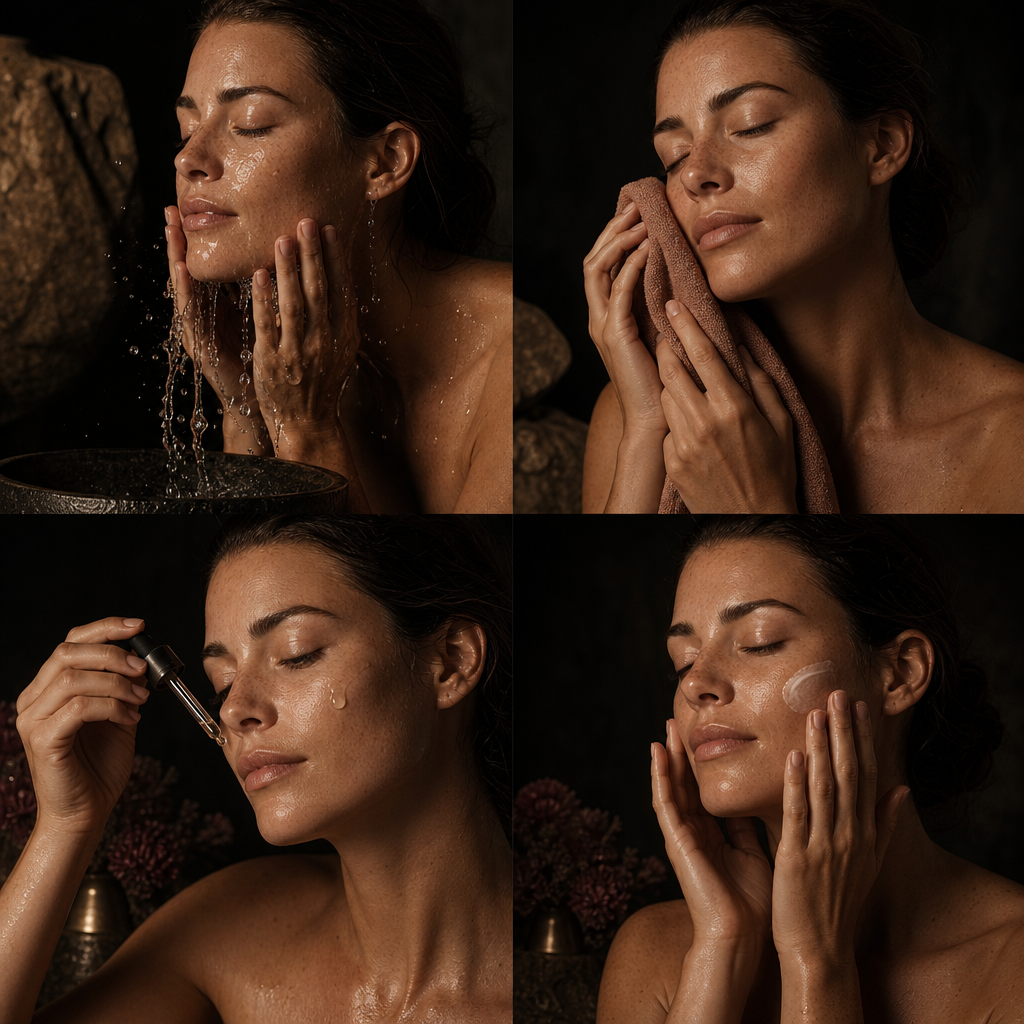
Apply hyaluronic acid to slightly damp skin, then smooth a moisturiser over the top within a minute or so. The damp skin gives the ingredient water to hold, and the moisturiser helps keep that hydration from evaporating. Use a small amount, once or twice a day, and start with the evening if your skin is reactive.
Here is the simple method:
- Cleanse gently with lukewarm water. Hot water strips skin and makes dryness worse.
- Pat your face so it is slightly damp, not dripping and not dry.
- Apply a small amount of your hyaluronic acid product to face and neck.
- While skin still feels slightly damp, apply your moisturiser.
- In the morning, finish with sunscreen.
The damp-skin step is the one most people skip. Applying a humectant to completely dry skin gives it less water to draw in. Applying it to skin that is wet but then leaving it uncovered gives that water an easy way out.
Why can hyaluronic acid feel tight in dry air?
Hyaluronic acid can feel tight in very dry air because a humectant draws water from wherever it can find it. If the air is dry and nothing seals the surface, water can leave the skin instead. A comfortable moisturiser on top solves most of this.
This is the most common complaint we hear about hyaluronic acid, and it is rarely the ingredient's fault. It usually means one of three things:
- The product went on to dry skin, or skin that then dried off
- There was no moisturiser over the top
- The air around you is very dry, such as in an air-conditioned office or a heated room in winter
If your skin feels tight after hyaluronic acid, add or increase your moisturiser first. Only then consider changing the hydrating product itself.
How much and how often
Start small. A little goes a long way, and more product does not mean more hydration. If skin feels comfortable, stay there. If it feels sticky, tacky or tight, use less.
Where does hyaluronic acid fit in a simple routine?
In a simple routine, hyaluronic acid sits after cleansing and before moisturiser. The order is gentle cleanse, hydrate, moisturise, eye care, then daily sunscreen in the morning. Each step has one job. If your moisturiser already feels comfortable, you may not need a separate hydrating step at all.
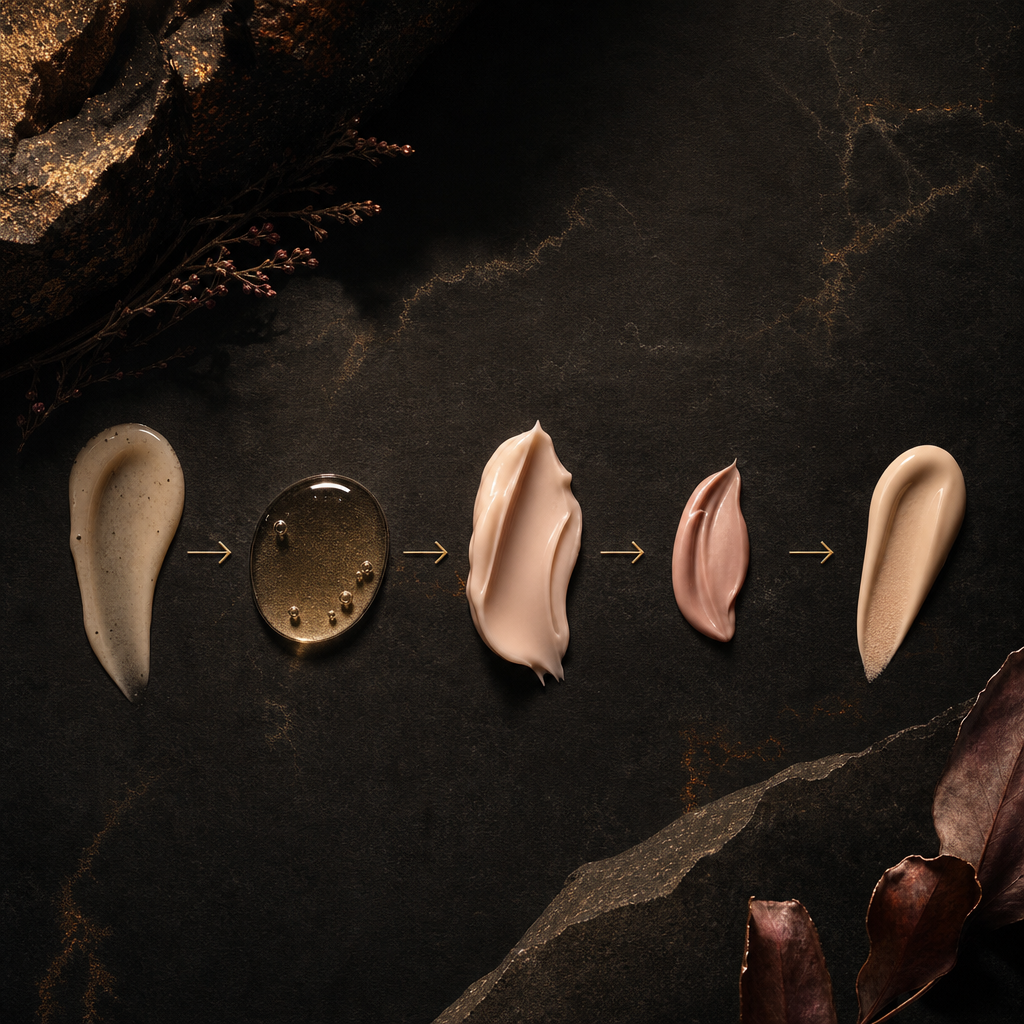
We call this A simple routine for changing skin. It has four parts, and hyaluronic acid is an optional addition to the second:
- Cleanse gently, with lukewarm water.
- Moisturise face and neck, morning and evening. A hydrating step can sit just before this.
- Targeted eye care, if you want it.
- Protect daily with broad-spectrum sunscreen.
On the moisturising step, comfort is the test. The Cream is Truff'elle's face and neck cream for morning and evening. Note that it contains fragrance (Manuka honey), so if your skin is reactive, patch test first. Whatever moisturiser you choose, it should leave skin feeling cushioned and calm, not greasy or tight.
On sunscreen, SunSmart (Cancer Council) recommends sun protection when the UV index is 3 or above. In much of Australia that is most days for much of the year. A hydrating step and a moisturiser do not protect against UV, so sunscreen stays non-negotiable.
One change at a time
This is where most routines go wrong. A new serum arrives, then a new acid, then a new cream, and within a fortnight nobody knows what is helping and what is stinging. We recommend a simple method we call One change at a time:
- Patch test before first use, such as on the inner forearm or behind the ear
- Introduce one new product at a time
- Give it several weeks and note how your skin feels in the same light
- Stop if irritation occurs, and seek advice for anything persistent
Skin can become drier and more reactive as oestrogen falls. So stacking several new products raises the chance of irritation, and makes it impossible to tell which one caused it.
Can you pair hyaluronic acid with eye care?
Yes, hyaluronic acid pairs well with eye care, because both aim at comfort and a smoother look. The Eye Cream contains retinol, so introduce it gradually, wear sunscreen by day and patch test first if your skin is reactive. Add it after your hydrating and moisturising steps feel settled.
The skin around the eyes is thin and often the first place dryness shows. That makes eye care appealing. It also makes it the place where irritation shows up fastest, so go slowly.
A sensible way to add The Eye Cream:
- Patch test first, especially if your skin tends to react
- Start with a few evenings a week rather than every night
- Increase only if your skin stays comfortable
- Use sunscreen every morning, because retinol-containing products call for sun care by day
- Stop and seek advice if you notice persistent redness, stinging or peeling
If your skin is very sensitive, or you are unsure how it will cope with retinol, hold off until your core steps have been steady for several weeks. There is no prize for adding it sooner.
Do you need a separate hyaluronic acid serum?
Not always. If your skin feels tight between cleansing and moisturiser, a hydrating step can help. If your moisturiser already leaves skin comfortable, a serum may add a step without adding much. Decide by how your skin feels today, and change one thing at a time.
Here is a quick test. For two weeks, cleanse gently, apply your moisturiser to slightly damp skin, and use sunscreen in the morning. If your skin feels comfortable by midday, you probably do not need another step. If it still feels tight or dull, a hydrating layer is a reasonable single addition.
If you do add one, check the ingredient list for hyaluronic acid or sodium hyaluronate, choose a simple formula, and patch test. Then leave everything else alone for several weeks.
The two-product core routine
Truff'elle's core routine is deliberately small: 2 products (a face and neck cream, and an eye cream), built around 1 hero ingredient, bio-fermented Australian black truffle. That is a range specification, not a clinical result. The brand makes 0 clinical percentage claims, and describes results only in terms of how skin feels and looks.
If you want a calm place to start, build the routine in two steps:
- Begin with The Cream as your morning and evening moisturising step. Use it for several weeks and notice how your skin feels in the same light.
- Once that feels settled, add The Eye Cream gradually, with sunscreen by day.
Two steps, added one at a time. A little more understanding, a little less complication.
Why a hydrating step is rarely the missing piece
Our view is that most women reaching for hyaluronic acid do not have a hydration problem on its own. They have a crowded shelf, a moisturiser that no longer feels right, and a skin that has changed faster than the routine did. Adding another serum rarely fixes that.
This is close to how Truff'elle began. Founder Sabina Kelley reached her forties and found her skin changing: drier, less comfortable, and no longer happy with the routine and luxury products she had relied on for years. Her experience matched what many women describe in perimenopause and menopause: shelves full of products that did not seem made for changing skin.
Her answer was to take things out, not add more. She worked with cosmetic chemist Raniya M. Bodoci to build a small range around bio-fermented Australian black truffle: one face and neck cream and one eye cream, with no extra steps added for the sake of a bigger collection. The result is judged by how skin feels and looks, such as comfort and softness, not by clinical percentages. No numerical result is claimed.
That last point is a position we hold firmly. Most skincare marketing leans on ingredient-study numbers, as if they tell you what a jar will do. We think that is misleading. Research on an extract is a starting point for formulation, not a promise from a finished jar. Results depend on the whole formula, how you use it and the person using it. So we do not present ingredient-study percentages as results from our products.
The same thinking applies to hyaluronic acid. A bold figure on a serum label tells you what happened in a particular test. It does not tell you how your skin will feel in a heated room in July. Your own skin, over several weeks, is the better trial.
It is also why a smaller Discovery size of The Cream exists. Women in perimenopause and beyond are often asked to commit to full-size, premium skincare before they know whether it suits their skin. A smaller size lets you try the texture, feel and routine first. We make no sales claims about it. It simply respects that changing skin can be unpredictable.
And our view on age labels is the same. Start with how your skin feels today, not a number on a jar, and change one thing at a time.
References
- Papakonstantinou E, Roth M, Karakiulakis G, Hyaluronic acid: A key molecule in skin aging, Dermato-Endocrinology (2012)
- Healio, Hyaluronic acid, estrogen yield similar improvements for vaginal atrophy (August 2024)
- SunSmart (Cancer Council), Sun protection and the UV Index
- Australian Menopause Society, Information for women about menopause
- Healthdirect Australia, Menopause