HRT can be linked with changes in how skin feels for some women, but responses vary and it is a medical decision for you and your GP. Skincare cannot replace that conversation. Take your skin concerns, product list and questions to your appointment, and keep your routine simple while you decide.
Truff'elle founder Sabina Kelley noticed it in her forties. Her skin felt drier and less comfortable, and the luxury products she had relied on for years no longer felt right. Nothing dramatic had happened. Her skin had simply changed, and her routine had not caught up.
Many Australian women reach the same point, then hear that hormone therapy might be part of the picture. This guide does not tell you what to do about HRT. It explains how skin can feel different through perimenopause and menopause, what can and cannot be said about HRT and skin, and which questions are worth taking to your doctor. For a broader overview, see our menopause skincare guide for Australian women.
Key Takeaways
- Skin can feel drier, tighter and more reactive through perimenopause and menopause, and the pattern differs from woman to woman.
- HRT is a prescribed medical treatment. Whether to start, continue or change it is a decision for you and your doctor, not your skincare brand.
- Research on hormones is not a skincare promise, and research on a skincare ingredient is not a promise from a finished product either.
- A written list of questions, plus a note of your current products and medications, makes a short GP appointment far more useful.
- A steady routine of a gentle cleanse, a comfortable moisturiser and daily sunscreen, with anything new added one change at a time, suits changing skin.
- Retinol can irritate dry skin. Introduce it gradually, wear sunscreen by day and mention it to your GP or pharmacist.
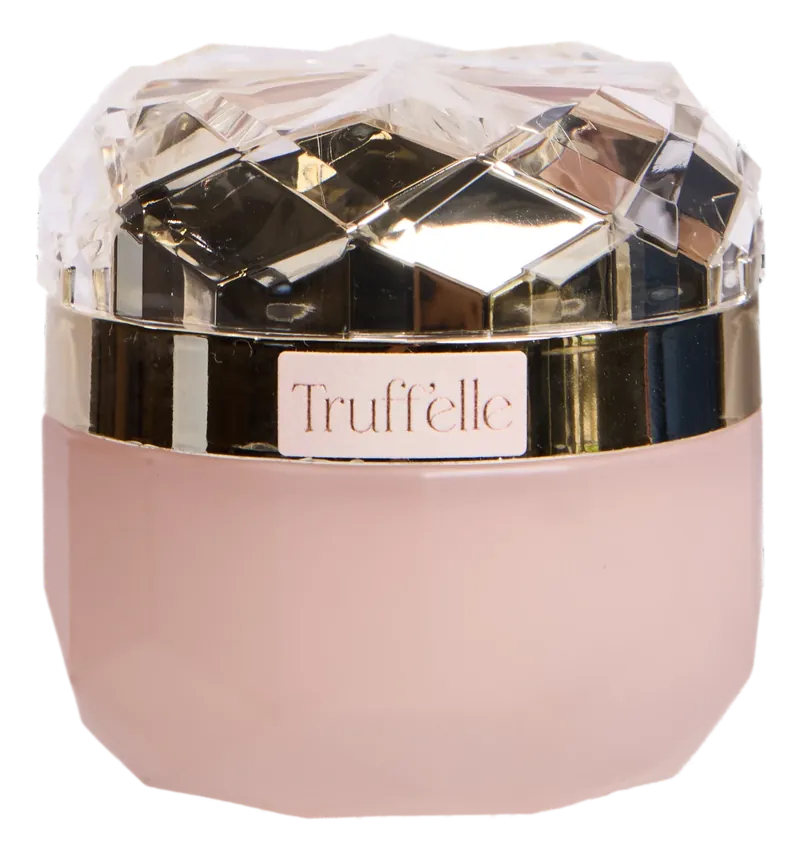
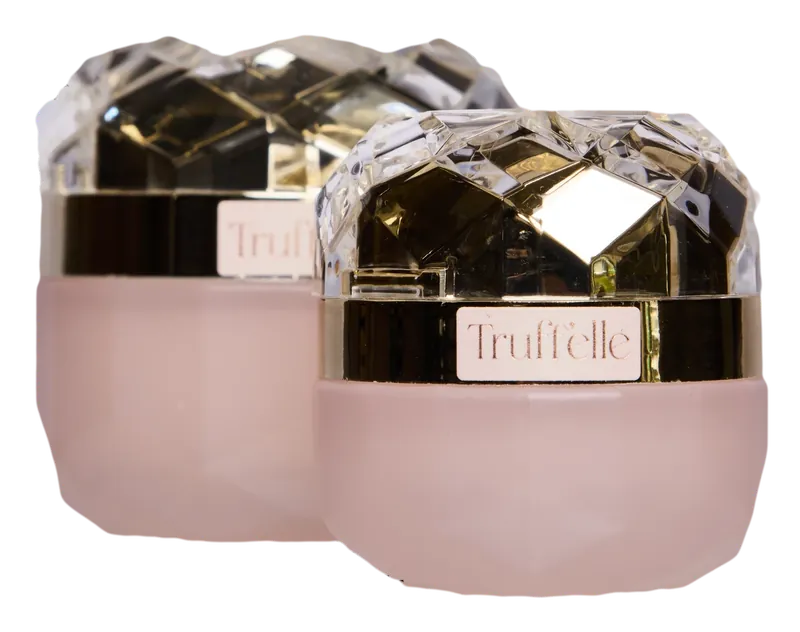
The Peptide Crème to renew, hydrate, strengthen and protect. The Eye Crème for fine lines and tired looking eyes. Or both together in the Black Diamond Duo.
Summary Table
| Topic | What to know | Who to ask |
|---|---|---|
| Dryness, tightness, sensitivity | Common descriptions of changing skin, with many possible causes | Your GP, to rule out other conditions |
| HRT and skin | Responses vary, and it is a medical decision | Your GP or menopause-informed doctor |
| Prescription creams and medicines | May affect which skincare actives suit you | Your GP or pharmacist |
| Retinol products | Can irritate dry or reactive skin, so introduce slowly | Your GP or pharmacist |
| Daily routine | Fewer steps, added one at a time | You, based on how skin feels today |
| Sun protection | Matters whatever you decide about treatment | You, using local UV information |
Why can skin feel different in perimenopause and menopause?
Skin often feels drier, tighter and more easily irritated through perimenopause and menopause. Changing oestrogen levels are widely thought to play a part, but sleep, stress, sun exposure, medications and genetics also matter. Everyone's pattern differs, so describe your own skin rather than expecting a standard list.
The most common descriptions are about feel before look. Skin may feel tight after cleansing, even with a cleanser that never bothered you before. A moisturiser that was once plenty may feel thin by mid-afternoon. The surface can look duller or rougher, and fine lines can seem more visible when skin is short on moisture.
Some women also notice that products they used for years now sting or leave the skin red. Others notice flushing or breakouts they did not have before. None of this is a verdict on your skin. It is information about what your skin needs today.
Perimenopause: when changes can start
Perimenopause is the transition before periods stop, and it can begin years earlier than many women expect. Hormone levels fluctuate rather than fall in a straight line, so skin can feel fine one month and unsettled the next. That unpredictability is one reason a settled, simple routine helps. If your skin keeps changing, your shelf should not be changing with it every week.
Menopausal dry skin: what it tends to feel like
Women often describe menopausal dry skin as a persistent tightness rather than occasional flakiness. It can show up on the face, neck and body. It may be worse in winter, in air-conditioned offices or after a hot shower. Itchiness, rough patches and a feeling that nothing quite sinks in are common descriptions.
When it might not be hormones
Dry or reactive skin has many causes. Eczema, dermatitis, rosacea, thyroid conditions, certain medications and simple product irritation can all look similar. That is the best reason to raise skin changes with your GP rather than assuming menopause is the only explanation. If something is persistent, painful, weeping, or a mole or spot is changing, book an appointment rather than waiting.
What can we say about HRT and skin, and what can't we?
HRT is a prescribed medical treatment, so whether to start, continue or change it is a decision for you and your doctor. Some women notice changes in how their skin feels while using it, and others notice little. Research on hormones is not a skincare promise, and we do not make one.
Here is the honest position. HRT is usually discussed for menopausal symptoms and wider health considerations, and skin is one part of a much bigger conversation. Whether it suits you depends on your health history, your symptoms and your preferences. Truff'elle never advises starting, stopping or changing HRT. That belongs to you and your GP.
Why responses vary
Women move through perimenopause and menopause at different ages and with different skin changes. Sun exposure over a lifetime, genetics, skin type, stress, sleep, other health conditions and the products you use all shape how your skin looks and feels. Two women on the same treatment can describe quite different skin experiences. That is why a headline about hormones and skin cannot tell you what will happen to yours.
How to read a headline about hormones and skin
When you see a claim linking hormone therapy to skin, a few questions help. Who was studied, and do they resemble you? What exactly was measured: how skin looks, how it feels, or something in a laboratory? Was it a medicine or a cosmetic product? A finding about one thing does not carry over neatly to another.
The same logic applies to skincare. Research on an extract is a starting point for formulation, not a promise from a finished jar. Results depend on the whole formula, how it is used and the person using it. That is why Truff'elle describes cosmetic benefits only, such as moisture, comfort, a softer feel and the appearance of fine lines.
What skincare can and cannot do
A good cosmetic routine can help skin feel more comfortable, supported and looked after. It cannot do the job of a medicine, and it should not be expected to. If you are using or considering HRT, think of skincare as the steady daily layer that keeps your skin comfortable whatever you and your doctor decide.
Questions to ask your GP about HRT and your skin
Bring specific questions and a short note of what you have noticed. Useful questions cover whether hormones are the cause, how a treatment might affect your skin, which symptoms to report, and whether your current medications and creams suit retinol skincare. A written list keeps a short appointment on track.

A little preparation helps. Before you go, jot down when you first noticed the changes and what bothers you most. Take photos in the same light, ideally near a window, so you can show rather than describe. List every product you use, including prescription creams, and every medicine or supplement you take. You can screenshot or print the lists below.
Is it hormones, or something else?
- Could my skin changes be linked to hormones, or could something else be causing them?
- Are there other conditions, such as eczema, dermatitis or rosacea, that we should rule out?
- Could any of my current medicines or supplements be affecting my skin?
- Is it worth checking anything else, such as thyroid function, given my symptoms?
If you are considering, using or reviewing HRT
- How might a treatment I am considering affect my skin, and how might it not?
- If I am already using HRT, how will we review whether it is still right for me?
- What are the benefits and risks for me personally, given my health history?
- What should I expect over the first few months, and when should we check in?
Which skin symptoms should I report?
- Which skin changes should I tell you about straight away?
- What counts as ordinary dryness, and what should prompt a review?
- Should I report changes in moles, new spots, persistent redness, itching or rashes?
- Do you want to see photos or a record of my symptoms at follow-up visits?
Are my medicines and creams compatible with retinol skincare?
- Are any of my prescription creams or medications compatible with retinol skincare?
- Should I avoid retinol, or introduce it more slowly, given what I use now?
- Would you prefer I check with my pharmacist before adding a retinol product?
- Is there anything on my current product list you would suggest I pause?
Keeping a record
- Would a simple symptom diary be useful, and what should I track?
- When should I book a follow-up to discuss how things are going?
If you want more background on common symptoms and support in Australia, Jean Hailes for Women's Health and Healthdirect both publish plain-language menopause information, listed in the references below.
How do you keep your skincare routine steady while you decide?
Keep it to a gentle cleanse, a comfortable moisturiser and daily sunscreen, then add anything new one at a time. A simple routine gives your skin stable ground while you and your GP work things out. It also makes it easier to tell what is helping and what is irritating.
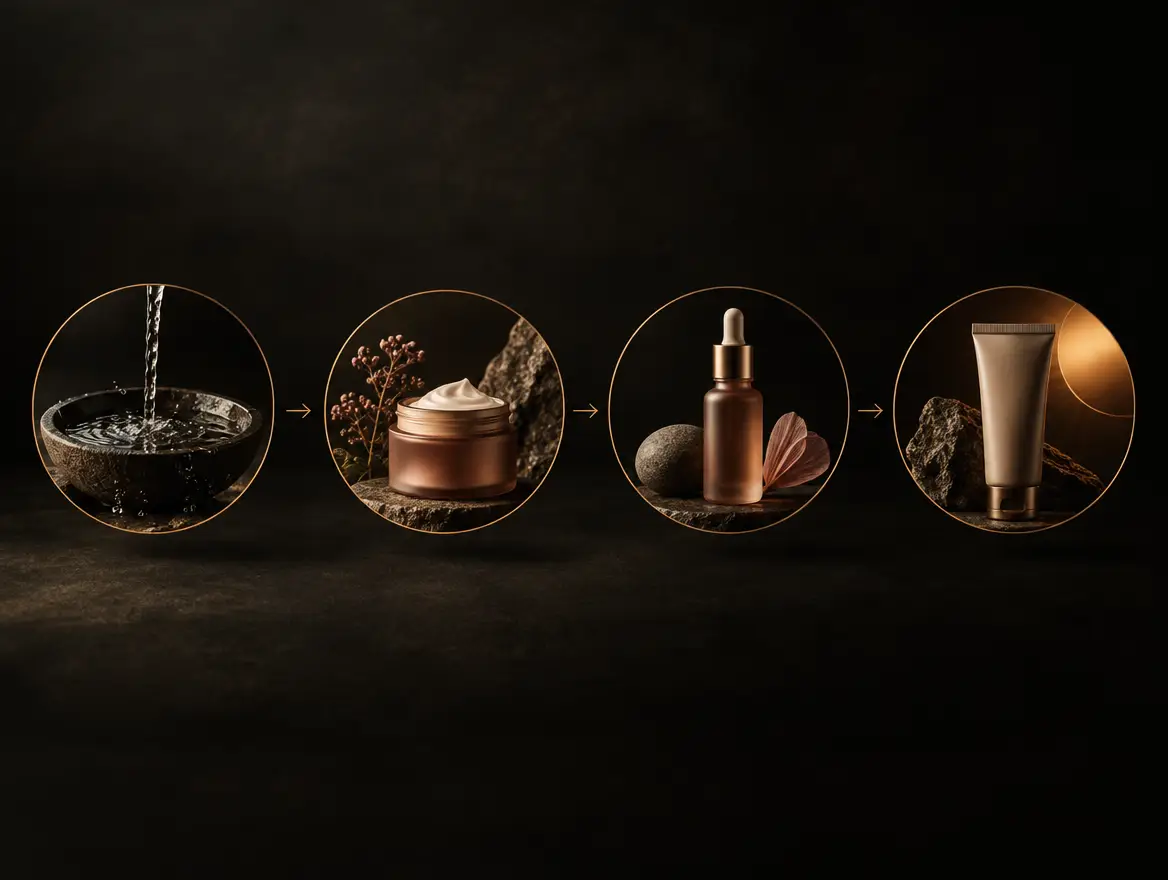
This is the approach behind what we call a simple routine for changing skin. It has four parts:
- Cleanse gently, with lukewarm water. Hot water strips moisture. Pat dry rather than rubbing.
- Moisturise face and neck, morning and evening. Choose a texture that feels comfortable, and apply while skin is still slightly damp.
- Add targeted eye care if you want it. This is optional, and it is where retinol questions come in (more on that below).
- Protect daily with broad-spectrum sunscreen when the UV index is 3 or above. SunSmart (https://www.sunsmart.com.au/) advises sun protection at that level, and across much of Australia that is most days for much of the year.
One change at a time
If you do want to try something new, the rule is simple: one change at a time.
- Patch test before first use.
- Introduce one new product at a time.
- Give it several weeks and note how your skin feels in the same light.
- Stop if irritation occurs, and seek advice for anything persistent.
This matters more in perimenopause and menopause because skin can be more reactive than it used to be. Stacking several new actives at once raises the chance of irritation, and then you cannot tell which one caused it. Imagine adding a new exfoliating acid, a new retinol and a new moisturiser all in the same week. If your skin stings, you have learned nothing except that something is wrong.
A perimenopause skincare routine, in practice
In the morning, rinse or cleanse gently, moisturise face and neck, and finish with sunscreen. In the evening, cleanse if you have worn sunscreen or make-up, then moisturise again. That is the whole routine, and for many women it is plenty. If your skin is very dry, look at the basics before the extras: shorter, cooler showers, a humidifier in dry rooms, and avoiding strongly fragranced or foaming products on the face.
If you want to dig further into signs your routine has become too much, our article Menopause Skin Barrier Care: 7 Signs Your Skin Needs a Simpler Routine covers it in more detail.
Retinol eye cream in menopause: what should you know first?
Retinol can support the look of fine lines, but it can also irritate skin that is already dry or reactive. If you are considering a retinol eye cream during menopause, patch test, introduce it gradually, wear sunscreen by day and mention it to your GP or pharmacist, especially if you use prescription creams.
The skin around the eyes is thin and sensitive, so it tends to show irritation first. A few sensible habits make a difference:
- Start with a small amount, and begin on fewer evenings than you eventually plan to use it.
- Avoid starting retinol in the same week as any other new active.
- Keep it to the orbital bone area rather than close to the lash line.
- Wear broad-spectrum sunscreen every day, because retinol use and sun exposure do not mix well.
- Stop and seek advice if you notice persistent redness, stinging or swelling.
Whether you need an eye cream at all is a fair question. If you are weighing it up, see our article Do I Need an Eye Cream? Face Cream vs Eye Cream. And if you use prescription topical treatments or take medicines that affect skin, ask your GP or pharmacist whether retinol suits you. That is one of the questions on the list above.
Where does Truff'elle fit?
Truff'elle is a two-product routine: a Face and Neck Cream and an Eye Cream, both built around one hero ingredient, bio-fermented Australian black truffle. It is designed for comfort and a softer feel. It is not a treatment for hormonal change, and it sits alongside whatever you and your GP decide.
Those numbers are the range specification, not a clinical result: 2 products in the core routine, 1 hero ingredient and 0 clinical percentage claims. The brand deliberately keeps the routine to a few well-chosen steps. It is formulated in Melbourne with Raniya M. Bodoci, Principal Cosmetic Chemist at Bodoci Biophysics Research & Development Group, and poured in small seasonal batches.
Master Key: our formulation approach
Master Key is Truff'elle's name for its formulation approach. It means building around bio-fermented Australian black truffle, then choosing and combining other ingredients with the feel of the finished cream in mind. It is an approach, not a proven mechanism or a guaranteed result.
Research on an extract is a starting point for formulation, not a promise from a finished jar. So we describe cosmetic benefits only: moisture, comfort, a softer feel and the appearance of fine lines. We do not present ingredient-study percentages as results from our products, and no clinical trial data has been published for the range.
What to check before you try it
- The Eye Cream contains retinol. Introduce it gradually, wear sunscreen by day and mention it to your GP or pharmacist, particularly if you use prescription creams.
- The Face and Neck Cream contains fragrance (Manuka honey). If you have reactive or fragrance-sensitive skin, check the full ingredient list and patch test first.
- A smaller Discovery size is available for the Face and Neck Cream, with the same formula. That lets you judge the texture and feel on your own skin before committing to a full size.
Then follow the same rule as with any product: one change at a time. Give it several weeks and note how your skin feels in the same light.
Why we think a calmer shelf is the better question
Most skincare advice for women in midlife says changing skin needs more products and stronger actives. We hold the opposite view. Perimenopausal and menopausal skin is usually better served by fewer, well-chosen steps, added one at a time, because skin can become drier and more reactive as oestrogen falls. Stacking new actives raises the chance of irritation.
This is not only a marketing position. It is how Sabina Kelley arrived at the range. When her skin changed in her forties, the crowded shelf of products she owned did not seem to have been made for changing skin. She worked with cosmetic chemist Raniya M. Bodoci to build something deliberately small: one face and neck cream and one eye cream, with no extra steps added just to make a bigger collection. The result is judged by how skin feels and looks, such as comfort and softness, not by clinical percentages. No numerical result is claimed for that story.
Here is the practical idea we would add to what other guides say. When you see your GP, bring your actual shelf, or a phone photo of it. Most appointments focus on symptoms and medicines. Few include a quick look at what you put on your skin every day. A doctor or pharmacist who can see that you use several exfoliating acids, a retinol and a fragranced cleanser can spot a likely cause of irritation in seconds. A simpler shelf also makes that conversation shorter.
The same thinking applies to age labels. Start with how your skin feels today, not an age printed on a jar. Women reach these changes at different times, and a number on the packaging says very little about what your skin needs this month. A little more understanding, a little less complication.
Your next step
Take your questions to your GP, then explore the two-step Truff'elle routine, the Face and Neck Cream and the Eye Cream, for skin that feels comfortable while you decide what is right for you. If you are unsure about the Eye Cream, begin with the Face and Neck Cream and add eye care later, once your skin is settled.
References
- Jean Hailes for Women's Health, Menopause
- Healthdirect Australia, Menopause
- Australasian Menopause Society, Information for women
- Cancer Council Australia, SunSmart sun protection information
This article is general information only and is not medical advice. Talk to your GP or pharmacist about HRT, prescription medicines and any skin concerns that are persistent or changing.