Makeup for menopausal skin sits best on a calm, well-prepped base. Cleanse gently with lukewarm water, apply a comfortable face and neck cream, wait a few minutes, then add sunscreen and a light layer of makeup. Fewer, simpler layers usually beat another primer, because dryness, not your foundation, is often the problem.
If your usual makeup suddenly looks dry, patchy or heavy, you are not imagining it, and you do not need to start again with a bigger collection. Skin changes through perimenopause and menopause, and the base underneath your makeup changes with it. The fix is usually quieter than you expect.
This guide walks through a simple prep routine, step by step, then covers the small makeup adjustments that help most. It is written for the years skin changes, when you want practical steps and a little more understanding, a little less complication.
Key Takeaways
- Cakey makeup in perimenopause and menopause is usually a skin comfort problem first and a product problem second.
- A gentle morning cleanse matters. Skin that feels tight after washing tends to show it under foundation later.
- A comfortable face and neck cream, given a few minutes to settle, is the smoothing base. A new primer is rarely the first fix.
- Layer in a simple order: cleanse, moisturise, wait, sunscreen, then makeup. Fewer layers means less to settle into lines.
- Choose lighter coverage and cream textures, powder only where needed, and refresh dry patches rather than adding more product.
- Add one change at a time, so you can tell what is actually helping.
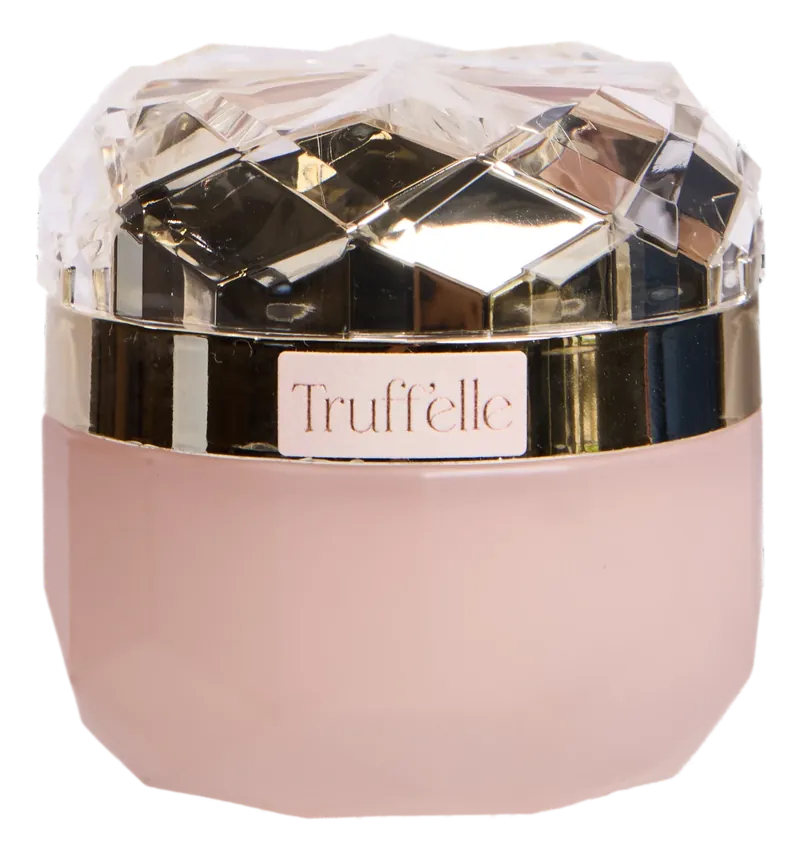
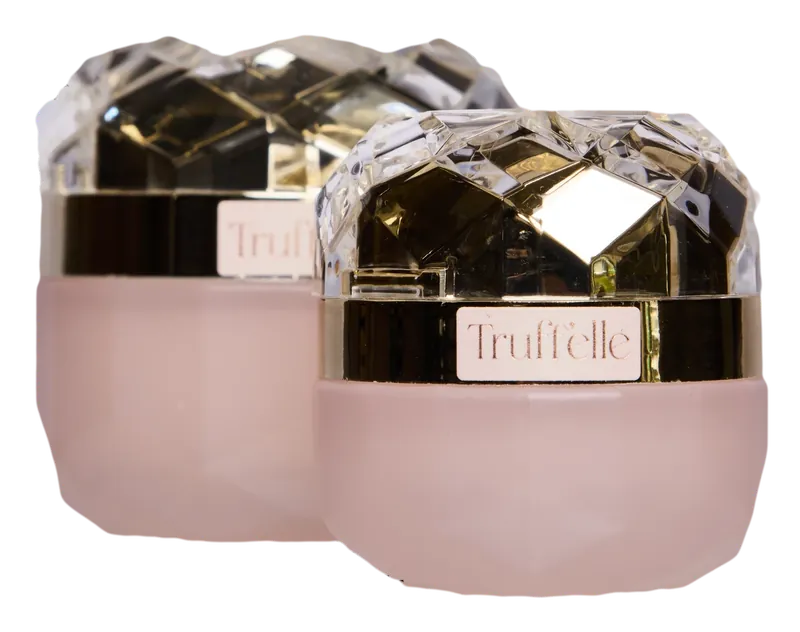
The Peptide Crème to renew, hydrate, strengthen and protect. The Eye Crème for fine lines and tired looking eyes. Or both together in the Black Diamond Duo.
Summary Table
| Step | What it does for makeup | What to watch |
|---|---|---|
| Gentle cleanse | Leaves skin comfortable rather than tight, so foundation has an even surface | Hot water and harsh foaming washes |
| Moisturise, then wait | Smooths and softens the surface so product glides | Rushing straight to foundation |
| Eye area care | Reduces the dry, crepey look that makes concealer crease | Heavy concealer layers; introduce retinol gradually and follow the label |
| Sunscreen | Daily protection that also forms part of the base | Too many layers piling up |
| Lighter makeup | Lets skin look like skin | Powder everywhere, full coverage by default |
Why makeup sits differently on menopausal skin
Makeup sits differently on menopausal skin because the surface often feels drier, looks rougher and holds product unevenly. Foundation clings to dry patches, settles into fine lines and can look flat by lunchtime. In cosmetic terms, the skin is asking for more comfort underneath, not more coverage on top.
Jean Hailes for Women's Health, an Australian organisation, lists skin changes among the things women report around menopause, and dryness is one of the most common complaints I hear described. Falling oestrogen is part of that picture, and it does not arrive on a schedule. Some women notice a change in their early forties. Others notice it later. That is why we say: start with how your skin feels today, not an age printed on a jar.
Here is why makeup looks cakey in menopause, in plain cosmetic terms:
- Dry patches grab product. Foundation clings to rough areas and leaves them looking heavier than the rest of the face.
- A less even surface shows. When skin feels rougher, any thick layer sits on top of it rather than blending in.
- Lines catch pigment. Fine lines hold onto product, especially around the eyes and mouth, and powder makes this more obvious.
- Layers multiply. Many of us respond to dryness by adding a primer, a richer foundation and a setting spray. Each layer gives makeup another chance to separate.
This is not a flaw in your technique. It is the base changing. Founder Sabina Kelley noticed exactly this in her forties: her skin became drier and less comfortable, and the routine and luxury products she had relied on for years no longer felt right. She did not respond by adding more. She went the other way, and so should your makeup prep.
Start with a gentle cleanse
Cleanse with lukewarm water and a mild cleanser, and keep it brief. A morning wash that leaves skin tight tends to show up later as dry patches and cling under foundation. If your face feels squeaky or tight after cleansing, that is the feel to change first.
It is tempting to scrub in the morning to get a fresh surface for makeup. With drier, changing skin, the opposite works better. Stripping the surface leaves skin feeling tight within the hour, and tight skin is exactly where foundation starts to drag.
A few practical points:
- Use lukewarm water. Hot water feels lovely on a cold Melbourne morning, but it tends to leave skin feeling drier.
- Be gentle with your hands. Use your fingertips, not a cloth or brush, and pat dry with a soft towel.
- Consider a lighter morning cleanse. Many women with dry skin find that a splash of lukewarm water, or a very gentle wash, is enough in the morning, with the proper cleanse at night. Go with what feels comfortable.
- Check how your skin feels at 10 minutes. If it feels tight or looks dull, the cleanse is too strong for you right now.
This is the first step in what we call a simple routine for changing skin: cleanse gently, moisturise, add targeted eye care if you want it, and protect daily. It is deliberately short.
Moisturise, then wait
A comfortable face and neck cream acts as the smoothing base under makeup, and waiting a few minutes lets it settle so foundation glides rather than drags. Apply it to clean skin, press it in gently, then do something else before any makeup goes on.
This is the step most people rush, and it is where moisturiser before makeup for menopausal skin makes the biggest difference. If you apply cream and foundation within seconds of each other, the two mix on the surface. The foundation slides, pills or looks patchy. Give the cream a few minutes and the surface feels softer and more even, so the makeup has something calm to sit on.
What to look for in a moisturiser for this job:
- It feels comfortable, not heavy. You should be able to forget it is there.
- It absorbs without a sticky film. Tacky skin is the enemy of smooth foundation.
- You can use it morning and evening. One cream for both keeps the routine short.
- You can cover the neck. Makeup edges often look harsh where the face meets a drier neck, so treating them as one area helps.
Our own option is The Cream, Truff'elle's face and neck cream for morning and evening. It is built around bio-fermented Australian black truffle, along with Australian plum extracts, hyaluronic acid (as sodium hyaluronate) and nourishing plant oils, and it is designed for how skin feels and looks: moisture, comfort and a softer feel. It contains fragrance (Manuka honey), so patch test first, and a 20mL Discovery size is there if you want to try the texture before committing to full size.
We describe results only by how skin feels and looks. Truff'elle makes 0 clinical percentage claims. Research on an ingredient is a starting point for formulation, not a promise from a finished jar, so the best test is your own mirror, in the same light, over several weeks.
Our approach to formulation, which we call Master Key, is about ingredient choice, combination and the feel of the finished cream. It is an approach, not a guarantee, and your skin has the final say.
The eye area and concealer
For the eye area, think hydration first and concealer second. Dry skin under the eyes makes concealer crease and look heavy, so a little eye care and a lighter hand usually help more than extra coverage. Keep it simple and add only what your skin tolerates.
The skin around the eyes is thin, and it is often the first place makeup looks tired. Heavy concealer on dry skin settles into lines within an hour. Before reaching for a different concealer, look at the surface underneath.
- Hydrate the area. Soft, comfortable skin takes concealer far better than dry skin.
- Use less concealer. Dot it only where you need it, then blend with a fingertip. The warmth helps cream textures melt in.
- Skip loose powder under the eyes. If you need to set, press a tiny amount only where creasing starts.
If you want extra care here, The Eye Cream is our option. It contains retinol, so introduce it gradually, follow the label directions on timing, and always wear sunscreen during the day. Patch test first. We have covered the application in detail in our guide on whether you need an eye cream, so we will not repeat it here. The point for makeup is simple: a more comfortable eye area is a better base for concealer.
Sunscreen, then makeup: a simple layering order
The simplest layering order is cleanse, moisturise, wait, sunscreen, then makeup. Each layer should be thin and given a moment to settle. Fewer layers overall means less to cake, so skip anything that does not make your skin feel more comfortable by midday.
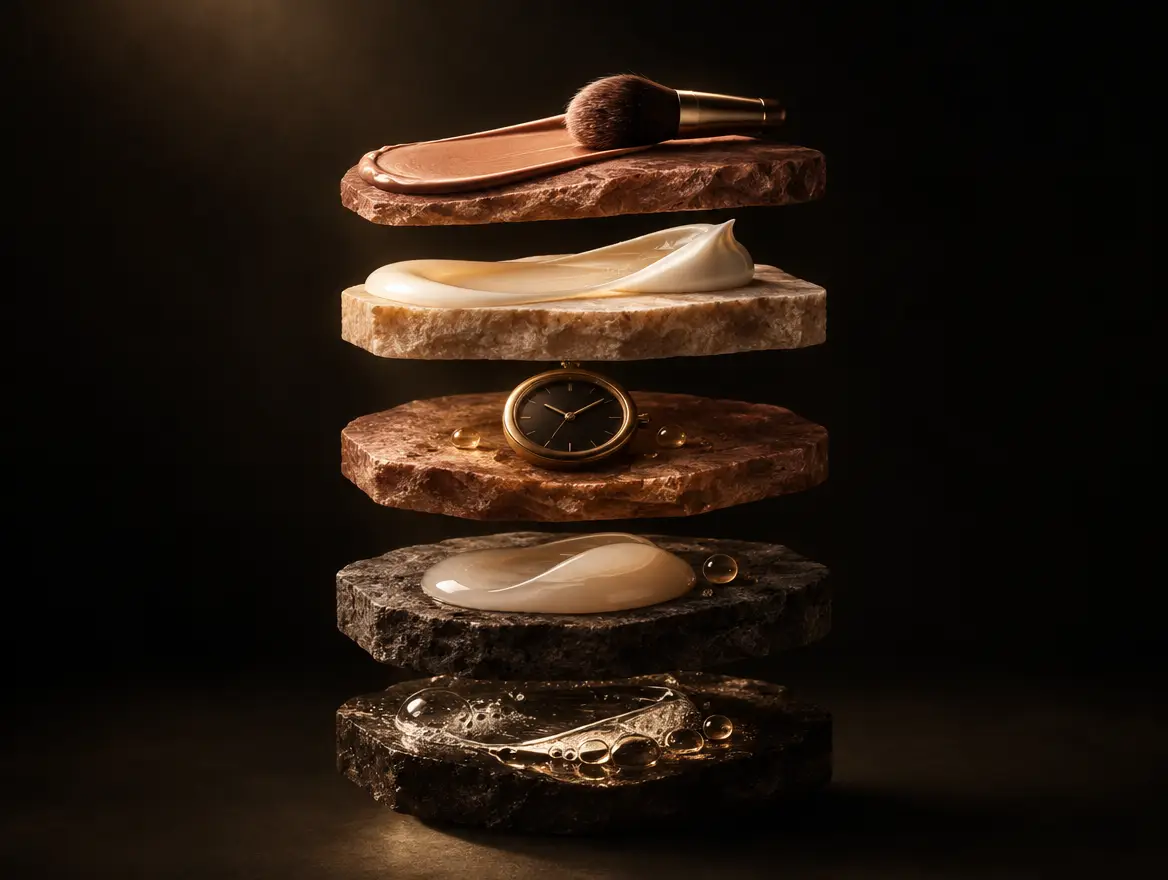
Here is the order, from the bottom up:
- Cleanse gently with lukewarm water.
- Moisturise face and neck with a comfortable cream.
- Wait a few minutes. Make a coffee. Get dressed.
- Apply sunscreen. Use a broad-spectrum sunscreen and let it settle too.
- Apply makeup in thin layers, starting where you need it most.
On sunscreen: SunSmart, the Cancer Council's Australian sun protection programme, recommends sun protection when the UV index is 3 or above. Many Australian cities reach that level most of the year, so for most of us this is a daily habit rather than a summer one. If you are not sure, check the UV index in your weather app. It also matters more when you use a retinol eye cream, as above.
A note on makeup with SPF: it can be a pleasant bonus, but foundation is generally applied far more thinly than sunscreen is tested for, so it is better to treat it as an extra rather than your protection. Use a proper sunscreen first, then let your makeup be lighter.
If you want more detail on how sun protection fits into a changing routine, our article on menopause skincare in summer covers the warmer months, and our guide to menopause skin barrier care covers the comfort side in more depth.
The point of this order is restraint. Every extra layer between your skin and the air is another chance for makeup to separate, so you only want layers that earn their place.
Easy makeup adjustments for dry mature skin
The easiest makeup adjustments are lighter coverage, cream textures, powder only where you need it and a plan for refreshing dry patches. These are texture choices, not brand choices. You do not need a new collection, just a lighter hand and slightly different tools.
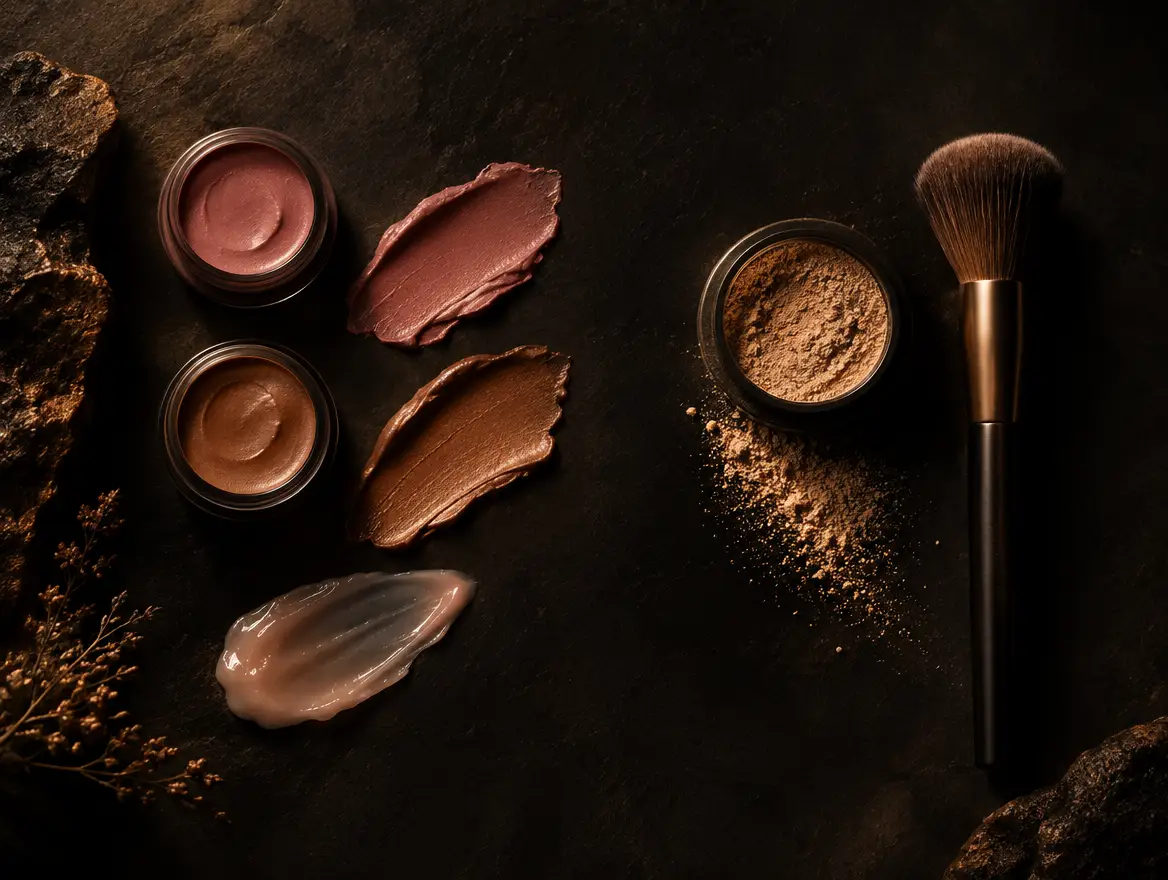
These perimenopause makeup tips are general by design, because the principle matters more than the product:
- Go lighter on coverage. A sheer or light-coverage base lets skin look like skin. You can build in the areas that need it, such as around the nose, rather than covering the whole face.
- Choose cream over powder. Cream textures (cream blush, cream bronzer, cream highlighter) tend to melt into skin rather than sit on it. Powder textures are the ones most likely to catch on dry patches and lines.
- Spot powder only. If you need to control shine, press a small amount of powder on the centre of the face (the T-zone, if you have one) and leave drier areas alone.
- Use your fingers. Fingertips warm cream products and press them in, which usually looks softer than a brush on dry skin.
- Apply less, then add. Start with a small amount of foundation, blend, and only add more if you need it. It is much easier to add than to remove.
- Refresh, do not re-layer. If a dry patch appears by lunchtime, do not add more foundation. Press a tiny amount of face cream over the patch with a clean fingertip, let it settle, then lightly dab a little product over the top if needed. You may also find a gentle pat with a clean, slightly damp fingertip is enough.
None of this needs a new shopping list. Most women find they already own the right products and are simply using too much of them, or in the wrong order.
Why a bigger shelf is rarely the answer
My view, and Truff'elle's, is that most women do not need a new primer, setting spray and serum all at once. They need one calmer step underneath. When makeup looks wrong, the instinct is to buy something to fix it, and the market is very happy to oblige. But stacking several new products at once makes it impossible to tell which one helped and which one irritated.
Consider a woman in her early fifties whose foundation has started to cling. She buys a hydrating primer, a new foundation and a setting spray in the same week. Her skin looks different, but she cannot say why. If it looks better, she does not know which product to keep. If it looks worse, she does not know which to stop. Skin can become drier and more reactive as oestrogen falls, so a pile of new products also raises the chance of irritation.
The alternative is what we call one change at a time:
- Patch test before first use.
- Introduce one new product at a time.
- Give it several weeks and note how your skin feels in the same light.
- Stop if irritation occurs, and seek advice for anything persistent.
That is also why the Truff'elle range is small by design. The core routine is 2 products (a face and neck cream and an eye cream) built around 1 hero ingredient, bio-fermented Australian black truffle. Sabina Kelley built it that way because, in her own forties, she found that the crowded shelf was part of the problem. These are range specifications, not clinical results.
If you do one thing after reading this, start with the base. Cleanse gently, moisturise, wait, and add sunscreen. Wear your usual makeup, lighter, for a couple of weeks. Then decide whether you need anything else.
When you are ready, build a calm, makeup-ready base with The Cream, and add The Eye Cream later if you want extra care for the eye area. One change at a time, and let how your skin feels guide the next step.