Standing in front of a wall of jars, it is hard to know what "for mature skin" actually means. Many of us arrive at menopause with a moisturiser we have used for years, and it no longer feels quite right: a bit thin by lunchtime, or a bit much on a warm night.
This guide covers what to look for on a moisturiser label when your skin runs drier, how to read an ingredient list without a chemistry degree, and a walk through one real label (ours) so you can see the method applied.
Why the moisturiser you used at 35 may not suit you now
The American Academy of Dermatology notes that in menopause skin loses some of its ability to hold water, so it can feel quite dry, especially when the air is dry. That is why the same cream can start to feel different on the same face.
If you want the bigger picture first, our menopause skincare guide and the piece on what changes in perimenopause are good places to start. For tight, itchy skin in particular, see menopause dry skin.
What a moisturiser actually does
You do not need to memorise ingredient names. It helps to know the jobs, because most good moisturisers do a bit of each.
- Humectants pull water towards the skin. Glycerin and sodium hyaluronate are common examples, and the AAD singles out hyaluronic acid and glycerin as useful for dry menopausal skin.
- Emollients soften and smooth. Plant oils and shea butter sit here.
- Occlusives form a thin layer that slows water leaving the skin. Heavier ointments do this most strongly.
A lighter lotion leans on humectants. A richer cream adds emollients. If your skin feels tight an hour after applying, you probably want more of the second and third jobs, not simply a different brand.
A face cream for daily moisture, a targeted eye cream, or both together. Compare the sizes, ingredients and prices before you choose.
How to read an ingredient list
Ingredient lists (often called the INCI list) are written from the most concentrated ingredient to the least, with some small-amount ingredients allowed in any order near the end. In practice, the first several lines tell you most of what the product is made of.
A few habits help:
- Check the first lines for water, oils or butters and a humectant. That tells you the basic type of formula.
- Look for fragrance, which may appear as "Parfum" or "Fragrance" and sometimes names its source.
- Note anything you already know bothers your skin and match it against the list.
Latin names are usually plant extracts. "Aqua" is water. "Tocopherol" is vitamin E, often there to protect the formula. The order does not guarantee how a product will feel on you, but it is the most honest information on the jar.
A worked example: The Peptide Cream
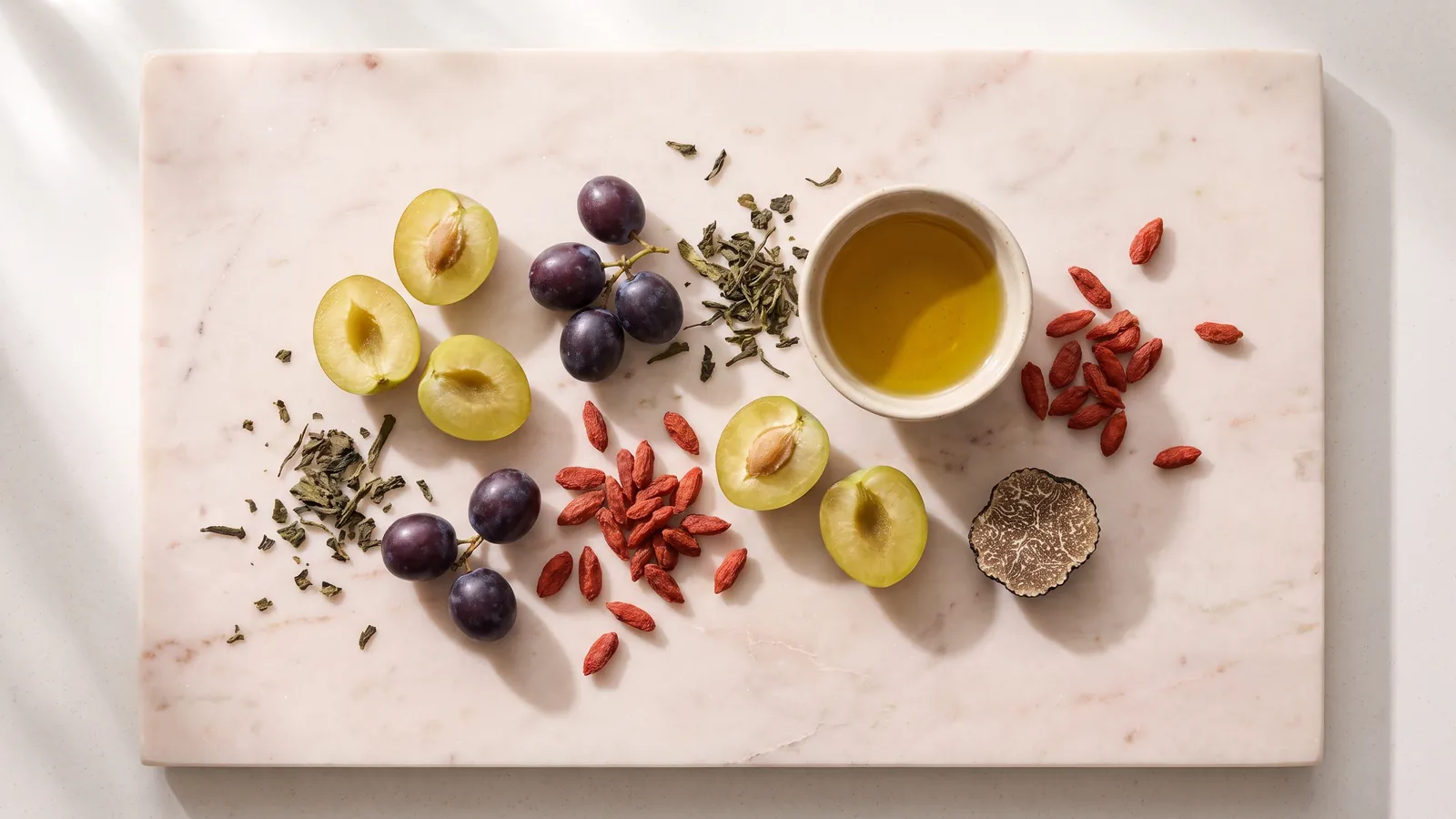
Here is the label for The Peptide Cream, explained the way we would to a friend. The list reads: Aqua, Caprylic/Capric Triglyceride, Stearalkonium Hectorite, Polyglyceryl-3 Diisostearate, Polyglyceryl-3 Polyricinoleate, Propanediol, Tuber Melanosporum Extract, Terminalia Ferdinandiana Fruit Extract, Podocarpus Elatus Fruit Extract, Pleiogynium Timoriense Fruit Extract, Camellia Sinensis Leaf Extract, Lycium Barbarum Fruit Extract, Plukenetia Volubilis Seed Oil, Carthamus Tinctorius Seed Oil, Sodium Hyaluronate, Gluconolactone, Sodium Benzoate, Tocopherol, Fragrance, Aminomethyl Propanol and Lactic Acid.
- Aqua is water, the base of the cream.
- Caprylic/Capric Triglyceride is an MCT oil, a light emollient.
- Stearalkonium Hectorite and the two polyglyceryl ingredients help the water and oil stay blended.
- Propanediol is a humectant, and so is Sodium Hyaluronate.
- Tuber Melanosporum Extract is Australian black truffle, the ingredient the formula is built around.
- The plum extracts (Kakadu, Illawarra and Burdekin), green tea and goji berry are plant extracts.
- Sacha inchi oil and safflower oil are the plant oils.
- Tocopherol is vitamin E.
- Fragrance here comes from Manuka honey.
That last line matters. The Peptide Cream contains fragrance. If fragrance tends to bother your skin, patch test before first use, as the directions advise, and stop if irritation occurs. If you have no trouble with it, it is simply part of how the cream smells.
Ingredient research tells us what an ingredient is generally known for in skincare. It does not promise a particular result for every person using the finished cream, and we would rather be honest about that.
The directions are short: after cleansing, massage a small amount into face and neck with gentle upward strokes, morning and evening. Let it absorb before the next layer, and finish the morning routine with sunscreen.
Fit the moisturiser to your routine
Moisturiser works best on skin that is still slightly damp. The AAD suggests applying it right after washing, when skin still holds a little water, and patting dry rather than rubbing. Lukewarm water and a mild cleanser instead of soap help too.
If you also use an eye cream or a treatment step, add one change at a time so you can tell what is helping. Our guides to the morning routine and the evening routine show where a moisturiser sits in each, and skincare layering covers the order.
A moisturiser is not a sunscreen. The AAD recommends a broad-spectrum sunscreen of SPF 30 or higher every day, applied to any skin clothing will not cover.
Why a 20mL jar is a sensible first step
A new cream takes a few weeks to judge. A smaller jar lets you do that without paying for a full size you might not finish. The Peptide Cream 20mL Discovery is the same formula as the full size in a smaller jar, at A$79, and it travels well. The 50mL full size is A$227 and ships free worldwide, while the Discovery ships free in Australia.
If anything on a label worries you, or your skin has become very reactive, ask a pharmacist or GP. Persistent dryness, itch or redness deserves a proper look rather than another new product.
Your next step
Pick one moisturiser, read its label using the jobs above, patch test, and give it a few weeks before you decide. If you would like a hand reading a label, our team will happily help at hello@truffelleaustralia.com.au.