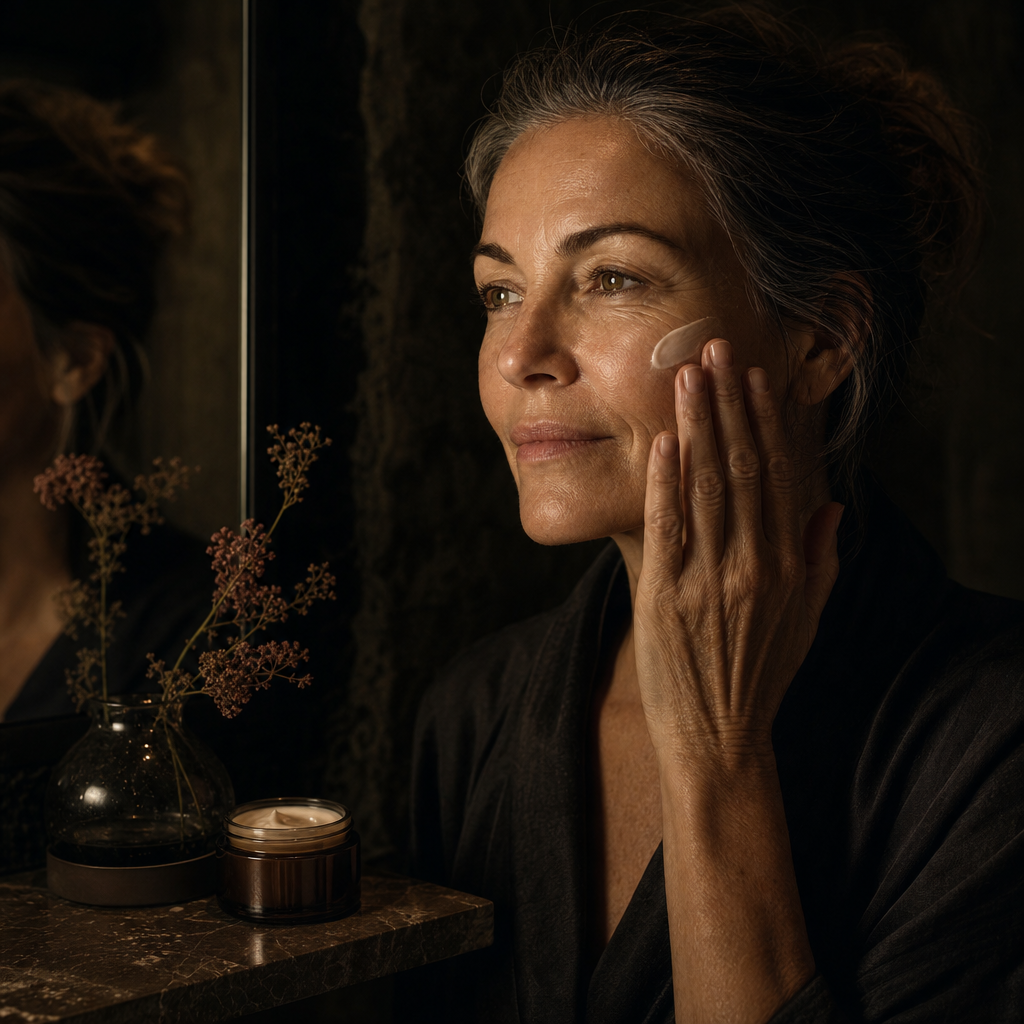
Start with a small, pea-sized amount of face cream for your face and neck together, warm it between your fingertips and press it in. Add a little more only if skin still feels tight. Judge by comfort, not rules: skin should feel soft without a lingering film, and stay comfortable for hours.
If your skin has started to feel tighter or drier, it is easy to land at one of two extremes. Some of us make a jar last as long as possible because it feels precious. Others pile it on, hoping more cream will settle new dryness. Neither is quite right, and neither is your fault.
I am Sabina Kelley, founder of Truff'elle. My own skin changed in my forties, and the routine I knew no longer felt right. This guide is what I wish I had read then: a practical, reassuring way to judge the amount by how your skin feels and looks, not by a rule or a promise.
Key Takeaways
- Start small, roughly a pea-sized amount for face and neck together, and add a little more only if skin still feels tight.
- Your neck is part of the routine. Bring the cream down from the jaw rather than stopping at the chin.
- Lingering slip or pilling under makeup suggests too much. Tightness returning within hours suggests too little.
- Press and sweep upward on clean, slightly damp skin, morning and night.
- Keep face cream out of the eye area. The Eye Cream contains retinol, so introduce it gradually and wear sunscreen daily.
- Fewer, well-chosen steps added one change at a time usually suit changing skin better than a crowded shelf.
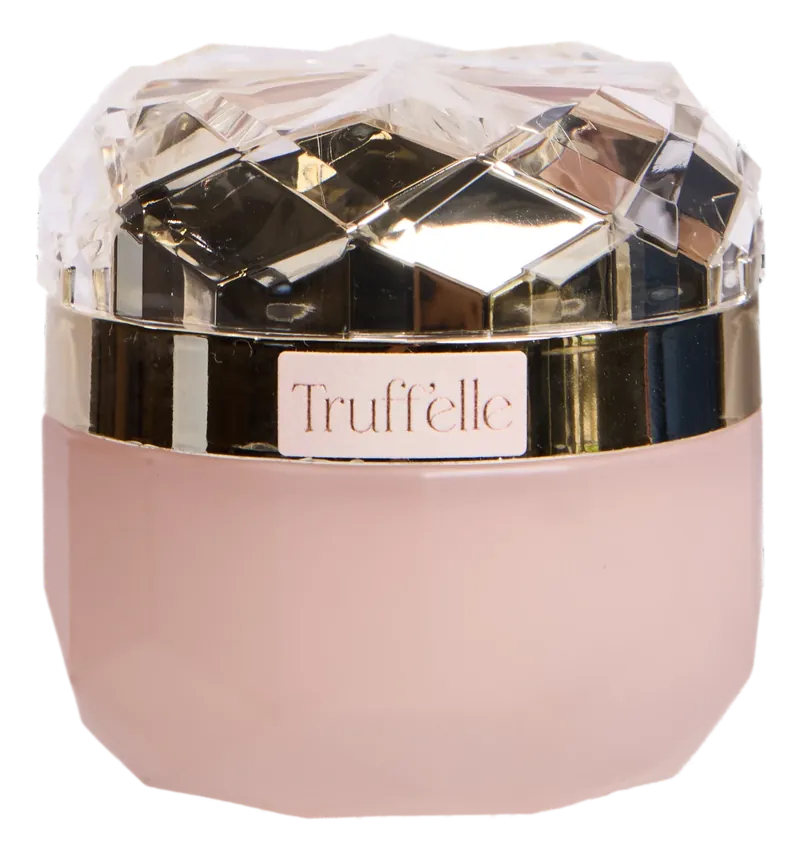
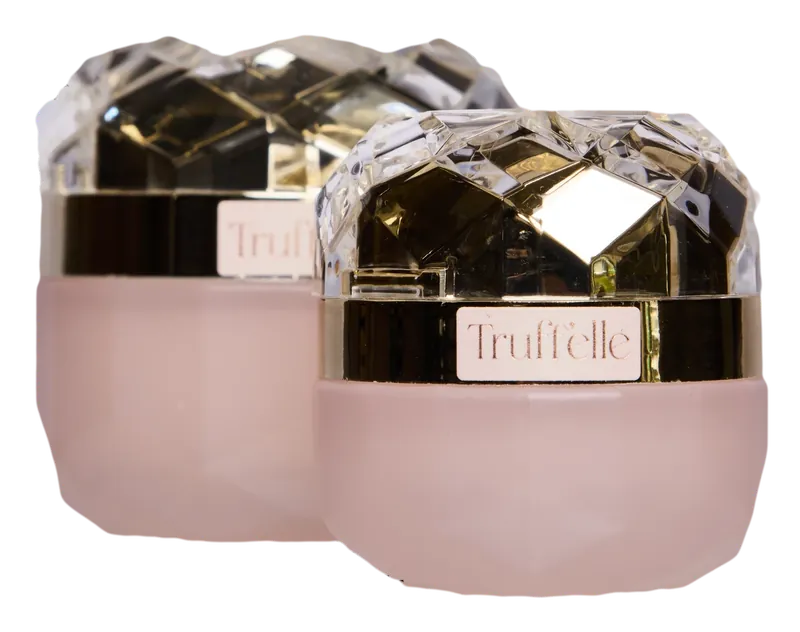
The Peptide Crème to renew, hydrate, strengthen and protect. The Eye Crème for fine lines and tired looking eyes. Or both together in the Black Diamond Duo.
Summary Table
| Question | Short answer | What to watch for |
|---|---|---|
| How much to begin with? | A small, pea-sized amount for face and neck | Skin feels comfortable, not coated |
| What if skin still feels tight? | Add a little more, in small steps | Tightness returning within hours |
| What if it feels greasy? | Use less next time | Lingering slip, pilling under makeup |
| How to apply? | Press gently, then sweep upward | Clean, slightly damp skin, morning and night |
| What about the eyes? | Use a dedicated eye cream instead | Introduce retinol gradually, wear sunscreen |
| How to adjust? | By season and skin day, one change at a time | Note what you changed and how skin feels |
Why Does the Amount Question Come Up in Perimenopause?
The amount question comes up because changing skin is not consistent. During perimenopause, hormone levels shift unevenly, so skin can feel tight and thirsty one week and perfectly comfortable the next. A fixed amount every day rarely suits skin that changes this way, which is why judging by feel works better.
Many women describe the same pattern. A cream that felt generous last month suddenly feels thin. Then a few weeks later, the same amount feels like too much. It is natural to wonder whether the product has stopped working, or whether you are doing something wrong.
Usually, neither is true. Skin is responding to a body in transition. Jean Hailes for Women's Health and the Better Health Channel both describe menopause as a gradual process with varied symptoms from woman to woman, and skin is part of that picture. Some women notice dryness early. Others notice it years later.
This is also why I am wary of age printed on a jar. Women move through perimenopause and menopause at different ages and with different skin changes. Start with how your skin feels today, then decide how much to use.
The real question is not "what is the correct amount?" It is "what amount leaves my skin comfortable today?" That question can have a different answer in July than in January, and that is fine.
How Much Face Cream Should You Use on Your Face and Neck?
Begin with a small, roughly pea-sized amount for your whole face and neck. Warm it between your fingertips, press it onto skin, and give it a moment. If skin still feels tight, add a little more. It is easier to add a second small amount than to remove too much.
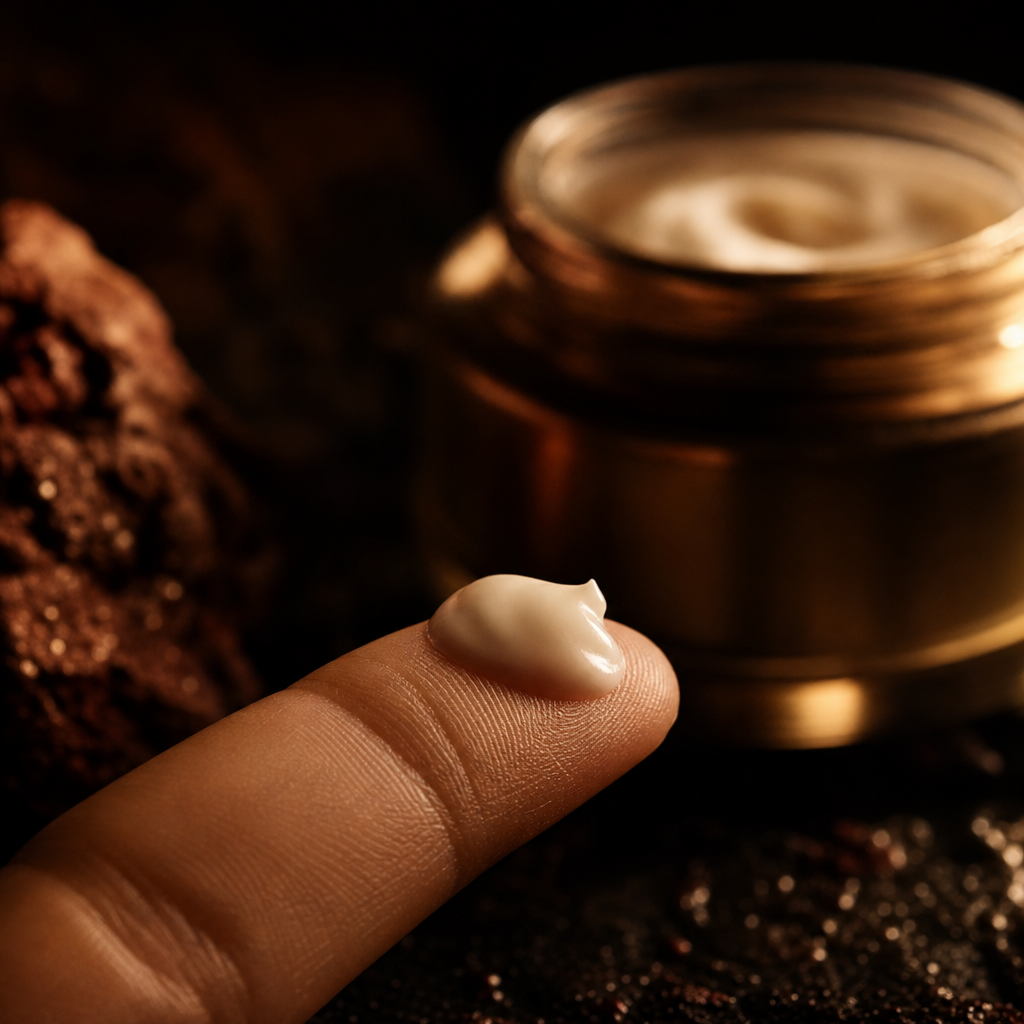
A pea-sized amount is a starting point, not a rule. Faces differ, and so do necks. What matters is how your skin feels once the cream has settled in.
A simple way to find your amount
- Take a small amount on your fingertips. Think pea-sized.
- Rub your fingertips together gently so the cream warms and softens.
- Press it across your cheeks, forehead and chin, then bring what is left down your neck.
- Wait until the cream has settled in, and notice how skin feels.
- If tightness is still there, add a little more and press it into the driest areas.
By the end you will have a sense of your own amount. Some women find they need a touch more across the cheeks. Others find the neck is the thirstier area. Neither is unusual.
Do not forget the neck
The neck is part of the routine, not an afterthought. Skin there often feels dry and less comfortable, yet it is the first place we skip when a jar feels precious. If you are using a face and neck cream, use it on both. A face and neck cream amount that stops at the jawline leaves the neck without comfort.
Bring your hands up from the collarbone towards the jaw. Include the sides of the neck as well, and the area just under the chin.
The same amount morning and night?
Not necessarily. In the morning, you may want a lighter touch, because sunscreen and perhaps makeup go over the top. At night, there is nothing layered above, so a little more is often comfortable. Let your skin guide you.
Why a small first jar helps
When my skin changed, I did not want to commit to a full-size, premium-priced product before knowing whether it suited me. That is why Truff'elle offers a 20mL Discovery size of The Cream, with the same formula as the full size, at $79. It gives you room to learn your own amount, over several weeks, before deciding on anything bigger.
How Can You Tell If You Are Using Too Much or Too Little?
Too much cream tends to show as a slip that lingers on the surface, or as small rolls of product (pilling) when you layer sunscreen or makeup. Too little shows as tightness returning within hours. Both are useful signals, because they tell you which direction to adjust, and you can adjust in small steps.
Signs you may be using too much
- A slip that lingers. Skin still feels slippery or coated well after you have applied the cream.
- Pilling. Small crumbs or rolls appear when you apply sunscreen or makeup on top.
- A heavy, covered feeling. Skin feels like it is wearing something rather than feeling comfortable.
- Makeup sliding. Foundation or concealer moves around by midday.
If you see any of these, use a little less next time. Press the cream in rather than rubbing, and let it settle before the next layer goes on.
Signs you may be using too little
- Tightness returning within hours. Skin feels comfortable after applying, then drawn or tight by mid-morning or mid-afternoon.
- A dull, dry look. Skin looks less soft in the light, especially around the cheeks and jaw.
- Rough patches. Dry areas catch under your fingertips.
- The neck feels thirsty. Often the first place to notice it.
If you notice these, add a little more, a small amount at a time.
What if you cannot tell?
That is common. Try this: apply your usual amount at night, then notice how your skin feels in the morning in the same light and before you apply anything else. Soft and comfortable is a good sign. Tight is a prompt to add a little more. Coated or greasy is a prompt to use less.
More cream is not always the answer
If skin is still dry and uncomfortable despite a sensible amount, the answer is rarely to keep adding. Look at the rest of your routine first: how hot your water is, how harsh your cleanser is, whether you are using sunscreen daily. I cover this in more depth in our recent post, Menopause Skin Barrier Care: 7 Signs Your Skin Needs a Simpler Routine. If dryness is severe, painful or persistent, see your GP or a dermatologist.
How Do You Apply Face Cream Properly?
Apply face cream to clean, slightly damp skin, morning and night. Press it gently into the skin with your palms, then sweep upward from the neck towards the jaw and across the cheeks. Pressing helps the cream sit comfortably, and upward sweeps keep the touch light rather than dragging at skin.

Start with clean, slightly damp skin
Cleanse gently with lukewarm water, then pat your face so it is slightly damp, not dripping. Cream applied to slightly damp skin tends to spread more easily and feel more comfortable. Very hot water can leave skin feeling tighter, so lukewarm is kinder.
Warm the cream first
Take your amount and warm it between your fingertips. This softens the cream so it glides rather than tugs. It also stops you from dabbing cold, thick product onto skin that is already feeling fragile.
Press, then sweep
- Dot or press. Place small touches of cream on the cheeks, forehead, nose and chin.
- Press with your palms. Cup your hands lightly over your face and hold for a moment.
- Sweep upward. From the base of your neck, use gentle upward strokes towards the jaw. Then move from the centre of the face outwards and up across the cheeks.
- Finish on the neck and jawline. Bring any remaining cream down the neck.
Keep the pressure light. Skin that feels fragile does not need to be worked hard.
Morning and night
The simple routine I use for changing skin has four parts: cleanse gently with lukewarm water, moisturise face and neck morning and evening, add targeted eye care if you want it, and protect daily with broad-spectrum sunscreen. In the morning, let your cream settle before sunscreen goes on. SunSmart recommends sun protection when the UV index is 3 or above, which is most days across much of Australia for a large part of the year. At night, you can skip the sunscreen and give the cream a little longer to settle.
Wait between layers
If you are layering, give each product a moment to settle. Pilling usually comes from layering too quickly, or from too much product, rather than from the products themselves.
Why Should Face Cream Stay Out of the Eye Area?
Keep face cream out of the eye area because the skin there is thinner and more sensitive, and a rich cream can migrate into the eyes or sit heavily on the lids. An eye cream is made for that delicate area, with a lighter feel and a formula chosen for it.
Stop just short of the orbital bone, the ridge you can feel around your eye socket. If a little cream wanders close, that is not a disaster, but make it a habit to leave the immediate eye area to a product designed for it.
Why a dedicated eye cream exists
The skin around the eyes behaves differently from the cheeks. It is often the first area to show tiredness and the first to feel uncomfortable when skin dries. A rich face cream can feel too heavy there, or can irritate. A dedicated eye cream is formulated with that in mind. If you are wondering whether you need one at all, read our recent post, Do I Need an Eye Cream? Face Cream vs Eye Cream. The honest answer is that it is optional. Targeted eye care is something to add if you want it, not something you must have.
A note on The Eye Cream and retinol
Truff'elle's The Eye Cream contains retinol, along with acetyl hexapeptide-8, sodium hyaluronate, caffeine and black truffle extract. Because it contains retinol, introduce it gradually. A few points:
- Patch test first. Try a small amount on your inner arm or behind the ear before using it near your eyes.
- Start slowly. Use it a few evenings a week at first, and build up only if skin stays comfortable.
- Use a small amount. A tiny dot per eye is plenty. Pat it gently along the orbital bone, not on the lid.
- Wear sunscreen by day. Retinol can make skin more sensitive to sun, so daily broad-spectrum sunscreen matters.
- Stop if irritated. If you notice persistent redness, stinging or soreness, stop and seek advice.
- Check if unsure. Retinol is generally avoided in pregnancy and breastfeeding, and if you have a skin condition or take medication, ask your doctor or pharmacist first.
This is the same approach I use for anything new: one change at a time. Patch test, add one product, give it several weeks, and notice how skin feels in the same light.
How Do You Adjust Your Amount Through Seasons and Skin Days?
Adjust the amount by season and by how your skin feels that day, and change only one thing at a time. A little more in dry, cold or air-conditioned conditions, a little less in humid weather. Keep a note of what you changed so you can tell what helped.
Australia gives us plenty of reasons to adjust. Winter heating, summer air-conditioning, coastal humidity, dry inland air and long flights can all change how skin feels from one week to the next.
Skin days, not just seasons
Changing skin has good days and thirsty days. After a poor night's sleep, a long day in air-conditioning, or a hot shower, skin may want a little more. On a mild, humid day, it may be perfectly happy with less. Treat the amount as flexible.
One change at a time
When skin feels off, the temptation is to change everything at once: a new cleanser, a new serum, a bigger amount of cream. Then you cannot tell what helped, or what caused irritation. Here is the approach I follow:
- Patch test anything new before first use.
- Introduce one product at a time, or change one thing, such as the amount of cream.
- Give it several weeks. Note how your skin feels in the same light.
- Stop if irritation occurs, and seek advice for anything persistent.
If you want to adjust your cream amount, change only that for a couple of weeks. If you want to try an eye cream, add only that. It is slower, but you learn what suits your skin.
A small note on fragrance
The Cream contains fragrance (Manuka honey). If your skin is reactive, patch test before using it on your face, and keep an eye on how skin feels over the first few uses.
Why a Precious Jar Is the Real Problem, Not the Amount
Most advice about how much face cream to use treats the amount as a measuring problem. In my experience, it is a confidence problem. When a product feels precious or expensive, we ration it. When skin feels uncomfortable, we overcorrect. Both come from not trusting how skin feels today.
Most of the beauty industry says changing skin needs more products and stronger actives. I disagree. As oestrogen falls, skin can become drier and more reactive, so stacking new actives raises the chance of irritation. In my view, perimenopausal and menopausal skin is usually better served by fewer, well-chosen steps, added one at a time.
That is the thinking behind Truff'elle. When my skin changed in my forties, it became drier and less comfortable, and the luxury products I had relied on for years no longer suited it. I could have added more steps. Instead, working with cosmetic chemist Raniya M. Bodoci in Melbourne, I built a deliberately small range:
- 2 products in the core routine: a face and neck cream, and an eye cream.
- 1 hero ingredient at the centre of the range: bio-fermented Australian black truffle.
- 0 clinical percentage claims. We describe results only as how skin feels and looks, such as comfort and a softer feel. No clinical trial data has been published, and I do not want to imply any.
Those are range specifications, not results. I mention them because the same logic applies to your amount. A simple routine is easier to read. If you use two products, you can tell which one is helping, which one is too much, and whether you have the amount right. On a crowded shelf of eight or nine products, you cannot.
I also do not think ingredient-study numbers tell you what a finished jar will do. Research on an extract is a starting point for formulation, not a promise. Results depend on the whole formula, how you use it, and you. That is why I keep the language to how skin feels and looks, and why I want you to judge The Cream by your own skin, in your own light, over several weeks.
So my advice is this: stop treating the jar as precious. Use a small, sensible amount. Notice how skin feels. Adjust. The jar is there to be used, and a little more understanding, a little less complication, is usually what changing skin is asking for.
Try The Cream as the centre of a simple routine
If you would like to try a simple routine for the years it changes, The Cream is the comfortable centre of it. Start with a small amount on clean, slightly damp skin, press it in, and adjust to how your skin feels. The 20mL Discovery size is a gentle way to begin before choosing the full 50mL.