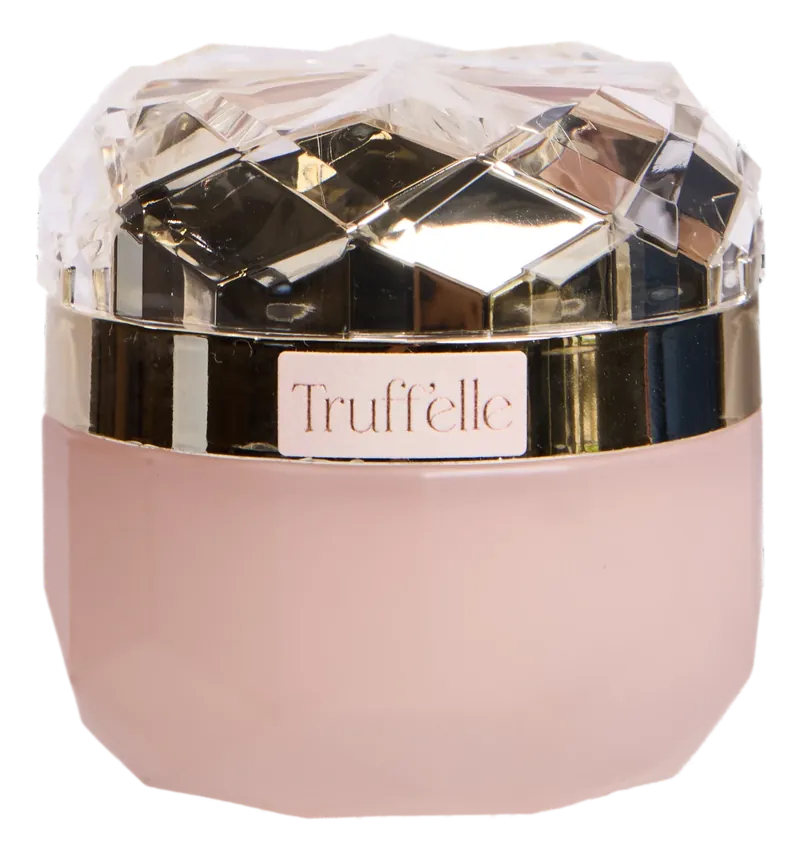
Acetyl hexapeptide-8, often sold as Argireline, is a short-chain peptide used in eye creams for cosmetic purposes: to help the skin look smoother and feel more comfortable. Lab research is interesting but is not a promise from a finished jar. Realistic expectations are a fresher, softer-looking eye area over weeks of steady use.
If you are in your forties, fifties or sixties and have started reading eye cream labels more closely, you have probably seen this ingredient. It sounds technical, it is often surrounded by big claims, and it is hard to tell whether it deserves a place in your routine.
This guide explains what acetyl hexapeptide-8 is, what the research can and cannot tell you, why the eye area changes in perimenopause and menopause, and how to introduce a peptide and retinol eye cream without upsetting your skin. We keep it plain, because changing skin needs a little more understanding and a little less complication.
Key Takeaways
- Acetyl hexapeptide-8 is a synthetic six-amino-acid peptide, sold under the trade name Argireline, used in eye products for the look of smoother skin.
- Research on an ingredient is a starting point for formulation, not a guarantee of the same outcome from a finished jar.
- Truff'elle makes zero clinical percentage claims. We describe results in terms of how skin feels and looks.
- The eye area often looks drier and crepier in perimenopause and menopause, so comfort matters as much as lines.
- The Eye Crème contains retinol, so start with a few evenings a week, patch test, avoid the lash line and wear sunscreen by day.
- Consistency over several weeks matters more than layering extra products.
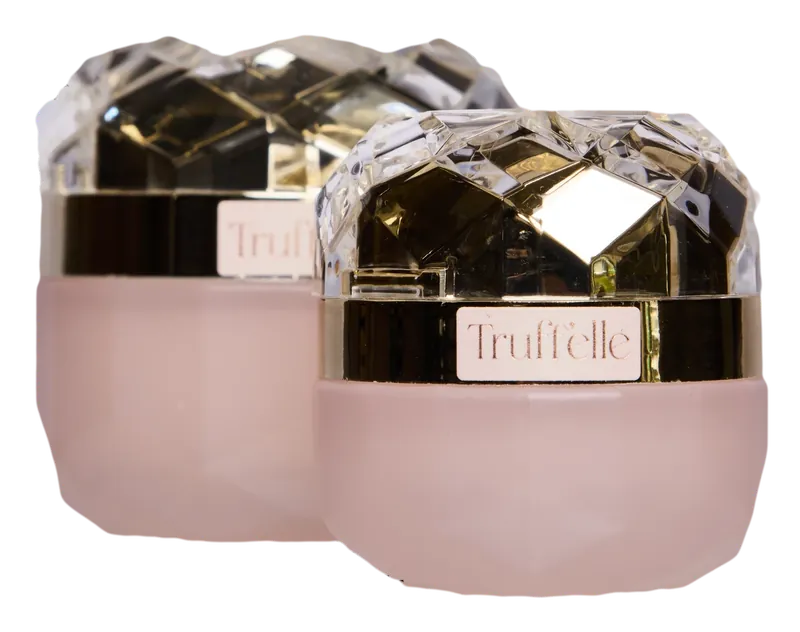
The Peptide Crème to renew, hydrate, strengthen and protect. The Eye Crème for fine lines and tired looking eyes. Or both together in the Black Diamond Duo.
Summary Table
| Question | Short answer | What it means for you |
|---|---|---|
| What is it? | A short synthetic peptide, known as Argireline | One of many peptides used in cosmetics |
| Why is it in eye cream? | Studied and used for the look of expression lines | Helps explain why it appears on labels |
| Does research guarantee results? | No | The whole formula and your own skin decide the outcome |
| Can it sit alongside retinol? | Yes, in a well-built formula | Introduce slowly and protect from the sun |
| How fast will I see change? | Gradually, if at all | Judge by comfort and softness over several weeks |
| Does it replace sunscreen or a routine? | No | Keep the routine short and consistent |
What Is Acetyl Hexapeptide-8, and Why Is It Called Argireline?

Acetyl hexapeptide-8 is a synthetic peptide made of six amino acids, with an acetyl group added to the end of the chain. It is sold under the trade name Argireline. Brands add it to eye creams because it is a well-known cosmetic ingredient for the look of expression lines.
Peptides in eye cream, in plain English
Peptides are short chains of amino acids, the same building blocks that make up proteins. Skincare uses many different peptides, and each one is chosen for a cosmetic purpose. Some are included for how they support the feel of the skin, others for how they affect the look of lines.
Acetyl hexapeptide-8 belongs to the second group. It was designed in a laboratory, so it is not something your skin makes on its own. Argireline is a trade name for the ingredient as supplied to cosmetic brands, which is why you will hear both names used for the same thing. You may also see older labels use acetyl hexapeptide-3, an earlier name for a closely related listing.
Why the eye area gets so much attention
The skin around the eyes is delicate and moves constantly. Smiling, squinting and reading all fold it, so lines show here earlier than almost anywhere else. That is why peptides tied to expression lines tend to appear in eye products rather than in body care.
How to spot it on a label
Look at the ingredient list (the INCI list) for acetyl hexapeptide-8. Ingredients are listed in a set order, but the order only tells you so much about how a formula performs. A peptide near the top of a list is not automatically better, and one further down is not automatically token. What matters is the formula as a whole.
On our own range, The Eye Crème contains retinol, acetyl hexapeptide-8, sodium hyaluronate, caffeine and black truffle extract. Always check the current ingredient list on the product page before you buy, because it is the final word on what is in the jar.
What Does the Research Suggest, and Why Is It Not the Same as Results From a Jar?
Early laboratory work suggested the peptide may influence the signalling that tells facial muscles to contract, which is why it was studied for expression lines. But those findings come from specific test conditions. A finished eye cream has a different formula, a different dose and a different wearer, so lab findings cannot be read as product results.
What the published work says
The ingredient was described in a 2002 paper by Blanes-Mira and colleagues in the International Journal of Cosmetic Science, titled "A synthetic hexapeptide (Argireline) with antiwrinkle activity". That paper is the reason Argireline became a familiar name. It is a genuine starting point, and it is worth reading if you like to see the source.
We are not going to quote percentages from it. Numbers from an ingredient study describe that study: the concentration used, the people tested, the way it was measured and how long it ran. They do not describe what a different cream will do on your skin.
Why a lab finding is not a promise
Three things sit between a study and your bathroom shelf.
- The formula. The same ingredient behaves differently depending on what surrounds it, including the base, the other actives and the texture.
- The dose and delivery. A study may use an amount or a method that a finished cream does not copy.
- The person. Skin in perimenopause and menopause varies a great deal from one woman to the next.
This is our view across the whole range: research on an extract is a starting point for formulation, not a promise from a finished jar. So Truff'elle makes zero clinical percentage claims. No clinical trial data has been published for our products, and we do not imply any. We describe cosmetic benefits only: moisture, comfort, a softer feel and the appearance of fine lines.
A note on the phrase you may have heard
You will sometimes see peptides like this described with big comparisons to injectable treatments. We do not use that framing. A cosmetic eye cream is a cosmetic eye cream. It can help skin feel comfortable and look smoother. It does not change how your face moves, and it should never be sold as if it did.
Why Does the Eye Area Change in Perimenopause and Menopause?
During perimenopause and menopause, falling oestrogen is commonly linked with drier, thinner-feeling skin, and the eye area shows it first because the skin there is delicate. Expression lines can also look more settled. Many women describe the area as crepier, tighter or more tired by the end of the day.
What women commonly notice
The changes are gradual and personal. They tend to include:
- Skin that feels drier or tighter, especially by evening.
- A crepey look on the lids or under the eye.
- Lines that stay visible after you stop smiling.
- A tired look that makeup seems to sit on rather than blend into.
Women move through perimenopause and menopause at different ages and with different skin changes. That is why we say start with how your skin feels today, not an age printed on a jar. Two women who are both 52 can have very different eye areas.
Keeping it cosmetic
Everything here is about appearance and comfort. If you notice swelling, persistent itching, a rash, or a change that worries you, that is a conversation for your GP or pharmacist, not an eye cream. Jean Hailes for Women's Health has plain-language information on menopause and its effects if you want a trusted Australian starting point.
It is also worth saying that stronger is not better here. As oestrogen falls, skin can become drier and more reactive, so stacking new actives raises the chance of irritation. For most women, fewer well-chosen steps work better than a crowded shelf.
How Do Peptides and Retinol Work Together in an Eye Cream?
Peptides and retinol are often paired in eye creams because they play different cosmetic roles. Retinol is used for the look of texture and fine lines, while a peptide like acetyl hexapeptide-8 is used for the look of smoothness. The catch is that retinol needs a slow start, especially on thin eye-area skin.
Why combine them at all
A peptide and retinol eye cream tries to do two jobs in one step instead of two. That suits a short routine, because you are adding one product rather than two. Other ingredients in the formula matter too. In The Eye Crème, sodium hyaluronate is there for moisture and comfort, caffeine for a fresher-looking eye area, and black truffle extract is the signature ingredient of the range.
That combination reflects what we call the Master Key approach: our name for how we choose and combine ingredients around bio-fermented Australian black truffle, and for how the finished cream feels. It is an approach to formulation, not a proven mechanism or a guaranteed result.
How to introduce The Eye Crème, one change at a time
Because The Eye Crème contains retinol, introduce it gradually. This is the same principle we use for anything new: one change at a time.
- Patch test first. Try a small amount on a discreet area, such as behind the ear or on the inner forearm, and wait to see how your skin responds before using it near your eyes.
- Start with a few evenings a week. Use it in the evening only, on a few evenings, and leave the other evenings for your usual comfortable routine.
- Use a small amount and avoid the lash line. Apply along the orbital bone, the ridge under the eye, and keep well away from the lash line and the lids' edges.
- Wear sunscreen by day. Retinol makes daily sun protection more important. Use broad-spectrum sunscreen whenever the UV index is 3 or above. SunSmart and ARPANSA both publish the daily UV index for Australian locations.
- Build slowly. Add evenings only if your skin feels comfortable. Note how it looks in the same light, so you are comparing like with like.
- Stop if irritation occurs. If you notice stinging, redness or peeling that does not settle, stop using it and seek advice for anything persistent.
If you are not sure whether retinol suits you, ask your pharmacist or doctor first. That is especially sensible if you are pregnant or breastfeeding, or have a skin condition around the eyes.
Should you add a second peptide or retinol product?
Generally, no. Layering a second retinol or another strong active on top of an eye cream that already contains one is the quickest route to irritated skin. If you want to add anything, add it later, alone, and give it several weeks before judging.
Where Does an Eye Cream Fit in a Two-Product Routine?
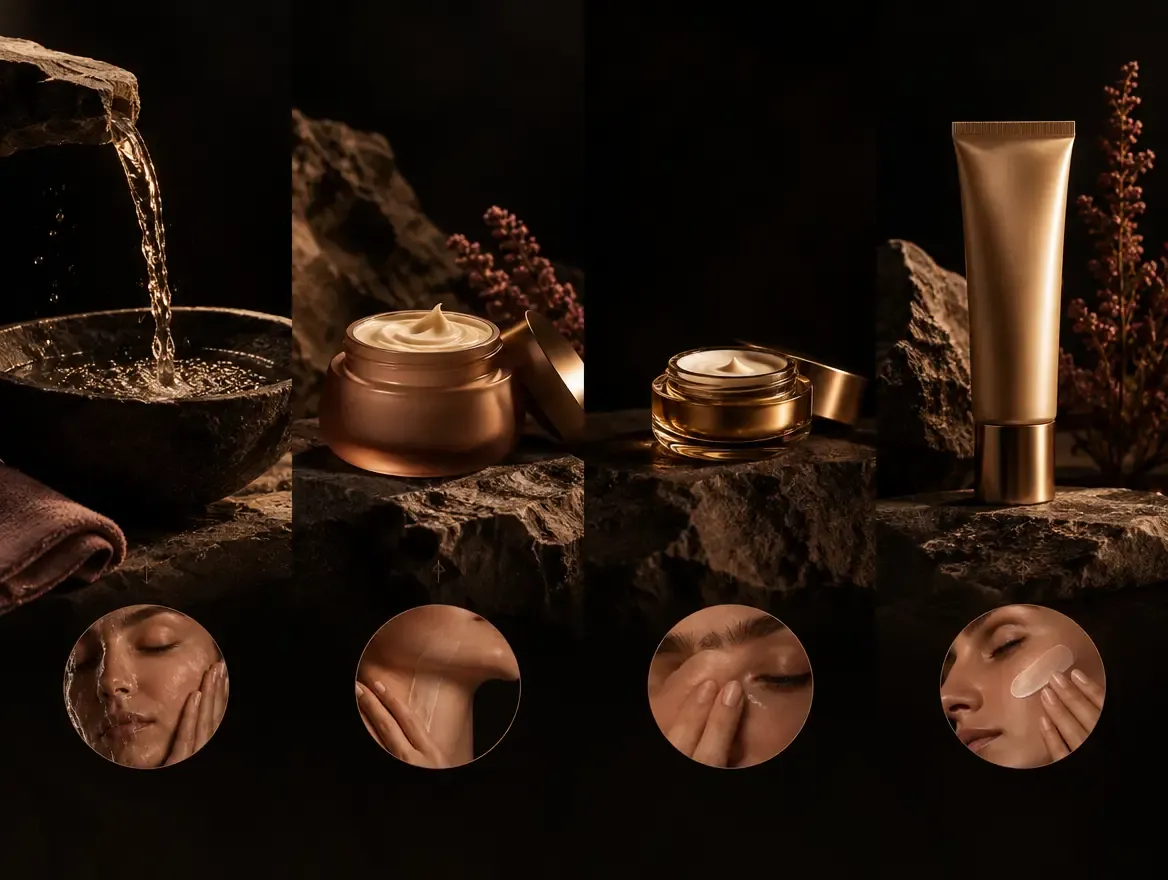
An eye cream fits after your face and neck cream, as the last targeted step in the evening. The routine is simple: cleanse gently, apply the face and neck cream, then tap The Eye Crème around the eye area with your ring finger. By day, finish with sunscreen.
The routine, step by step
Our framework is a simple routine for changing skin. Our core routine has 2 products: a face and neck cream and an eye cream. That is a range specification, not a clinical result.
- Cleanse gently. Use lukewarm water and a mild cleanser. Hot water and harsh cleansing strip comfort from skin that is already drier.
- Moisturise face and neck. The Peptide Crème is our face and neck cream, for morning and evening.
- Targeted eye care, if you want it. Tap The Eye Crème on with your ring finger, a few evenings a week at first.
- Protect daily. Broad-spectrum sunscreen whenever the UV index is 3 or above.
The ring finger is traditional advice for a reason: it is naturally the weakest finger, so it tends to press more lightly. Tap rather than rub, and do not pull the skin.
Do you need an eye cream at all?
Honestly, not everyone does. Some women find a comfortable face cream is enough around the eyes. Others like a dedicated product because the eye area feels different from the rest of the face. We cover that question in our guide, Do I Need an Eye Cream? Face Cream vs Eye Cream. If you decide you want one, add it as one considered step, not as the start of a longer shelf.
And if dark circles are your main concern, our piece Dark Circles in Your 50s (and 40s) looks at what is realistic. For the wider picture on dryness and comfort, see Menopause Skin Barrier Care.
What Should You Realistically Expect Over the Weeks?
Expect the eye area to feel more comfortable first, then look softer and smoother with consistent use. It will not erase lines or change how your face moves. Consistency matters more than layering more products, and judging by how your skin feels in the same light is the fairest test.
| Stage | What you may notice | What to do |
|---|---|---|
| First few weeks | The area may feel more comfortable and less tight | Keep to a few evenings a week, and watch for any irritation |
| After several weeks | Skin may look smoother or fresher, and makeup may sit better | Increase gradually only if skin stays calm |
| Ongoing | A steady, softer look that depends on your skin and habits | Keep the routine short, and keep wearing sunscreen |
These stages are a guide to how to think about it, not a promised timeline. Skin changes at its own pace, and nobody can honestly tell you the exact week you will notice something.
What will not happen
- Lines will not disappear.
- Your expressions will not freeze or soften.
- A cream will not replace sunscreen, sleep or hydration.
- More product will not mean faster results. It usually means more irritation.
How to judge it fairly
Take a photo in the same light, at the same time of day, before you start. Take another after several weeks. Notice how the skin feels as well as how it looks. If it feels more comfortable and looks a little fresher, the step is earning its place. If it is irritating or you see no difference you care about, stop. That is a perfectly good outcome too.
This is also why every order comes with a 60 day money back guarantee. You can try the texture and the routine on your own skin without the pressure of getting it wrong.
The Question Worth Asking About Any Peptide on a Label
The more useful question is not whether a peptide works in a study, but whether the whole formula suits your skin and your routine. A named ingredient is a reason to read the label, not a reason to buy. We think most women are better served by fewer steps and honest language.
Truff'elle began because founder Sabina Kelley reached her forties and found her skin becoming drier and less comfortable. The luxury products she had relied on for years no longer felt right, and the shelf of options did not seem made for changing skin. She worked with Melbourne cosmetic chemist Raniya M. Bodoci to build a deliberately small range around bio-fermented Australian black truffle: one face and neck cream and one eye cream, with no extra steps added for the sake of a bigger collection.
The numbers that describe that decision are not results. They are choices: 2 products in the core routine, 1 hero ingredient, and 0 clinical percentage claims. That is our own range specification and brand positioning, not clinical data. We set it out because it tells you how we think about the ingredient on your label.
Consider a woman standing in front of three eye creams. Each lists a peptide. Each quotes a different percentage from a different study. The percentages cannot be compared, because they measure different things in different conditions. The more useful questions are quieter ones:
- Does the list include something likely to irritate skin that is already drier?
- Does the brand tell me how to introduce it?
- Will this be one step, or the start of five?
- Does it describe how skin looks and feels, or promise a number?
That is why we hold three positions that many in beauty do not. Changing skin is usually better served by fewer, well-chosen steps added one at a time. Research on an extract is not a promise from a finished jar. And how your skin feels today matters more than an age printed on a jar.
If that sounds like how you want to shop, The Eye Crème is designed to be one considered step. Introduce it slowly, protect your skin by day, and judge it by how your eyes feel and look after several weeks. You can explore it at the Truff'elle Eye Cream page. Check the current ingredient list there, patch test first, and add it for the years it changes your skin, not for a promise on a label.
References
- Blanes-Mira C. et al., A synthetic hexapeptide (Argireline) with antiwrinkle activity, International Journal of Cosmetic Science, 2002
- Jean Hailes for Women's Health, Menopause information
- SunSmart, Sun protection and the UV index
- ARPANSA, Australian Radiation Protection and Nuclear Safety Agency, ultraviolet radiation information