Dull skin in menopause is usually a drier, rougher surface that reflects less light, not just a build-up of dead cells. The most reliable fix is gentle exfoliation once or twice a week at most, plus consistent daily moisture and sunscreen. Adding more products or scrubbing harder tends to make changing skin more irritated, not brighter.
If your skin has started to look flat or tired, the instinct is to do something bigger. Scrub harder, or buy the new brightening product everyone is talking about. For most women in perimenopause and menopause, neither is the answer. The dullness is often tangled up with dryness and discomfort, and more steps tend to make that worse.
This guide explains why skin loses its glow through this stage, how to exfoliate without damaging your barrier, why moisture does most of the work, and how to keep actives apart around the eyes. You will also get a simple week of skincare you can start tomorrow, and a clear list of when to see a GP or dermatologist.
Key Takeaways
- Dull skin in perimenopause and menopause is often about dryness and a rougher surface, not only dead skin.
- Exfoliate gently and rarely: a soft cloth with cleanser, or a mild exfoliant you already trust, once or twice a week.
- Stinging, tightness and redness mean you have done too much. Stop and go back to basics.
- Consistent moisture, morning and evening, is the step that makes skin look smoother and more even.
- Keep exfoliants away from the eyes, and skip The Eye Cream on exfoliation nights while you are starting out.
- Wear daily sunscreen, and see a GP or dermatologist for persistent irritation or sudden changes.
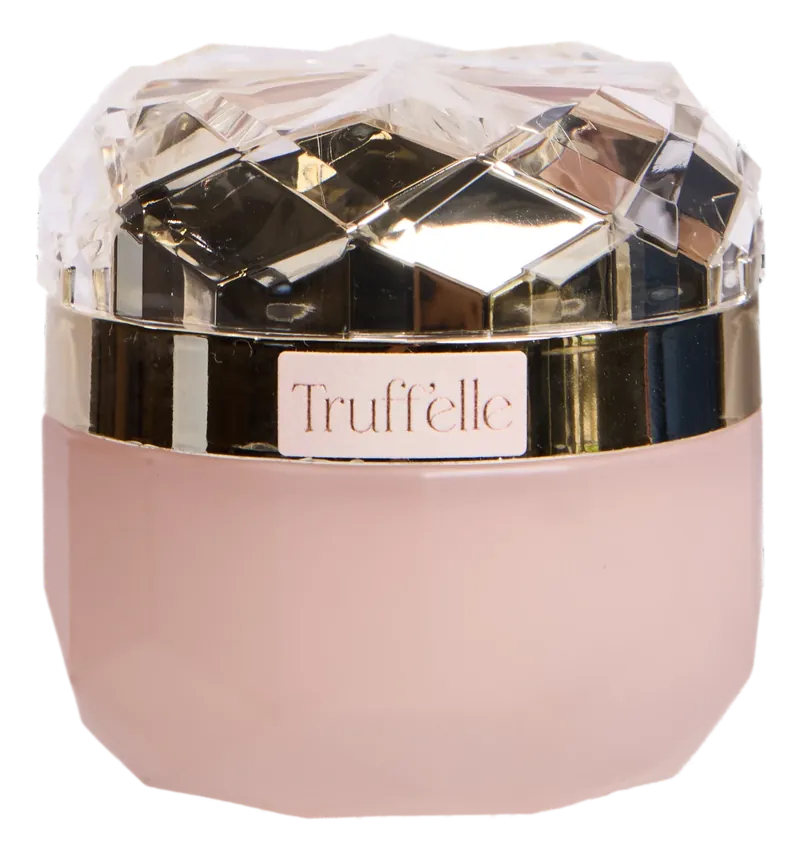
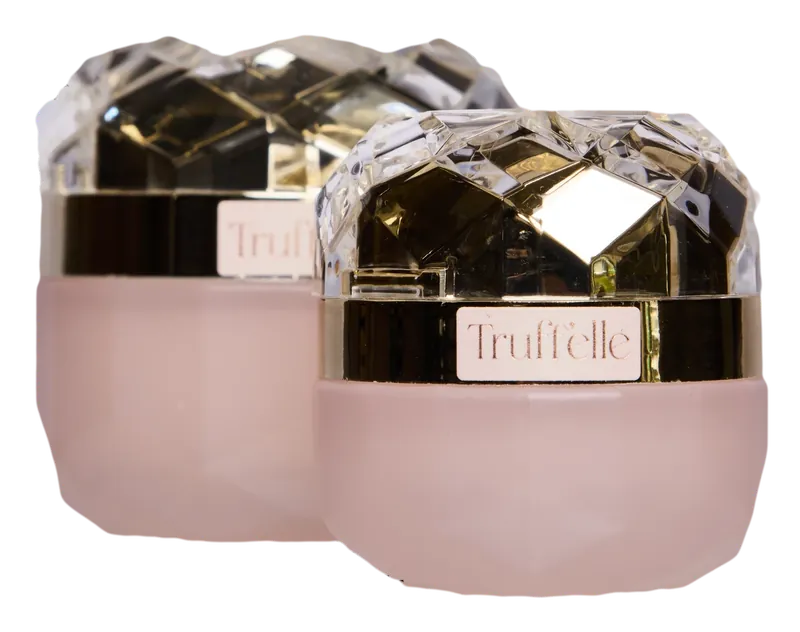
The Peptide Crème to renew, hydrate, strengthen and protect. The Eye Crème for fine lines and tired looking eyes. Or both together in the Black Diamond Duo.
Summary Table
| Step | What it does for dull skin | How often | Main caution |
|---|---|---|---|
| Gentle cleanse | Removes the day without stripping | Morning and evening | Lukewarm water, not hot |
| Gentle exfoliation | Softens the rough surface that scatters light | Once or twice a week at most | Patch test first; stop if skin stings or feels tight |
| The Cream | Keeps skin moisturised, smoother and more comfortable | Morning and evening | Contains fragrance (Manuka honey), so patch test |
| The Eye Cream (optional) | Targeted eye care | Evening, introduced gradually | Contains retinol; avoid on exfoliation nights when starting |
| Daily sunscreen | Protects skin and your exfoliation efforts | Every morning | Broad-spectrum, applied before going outside |
Why does skin look dull in perimenopause and menopause?
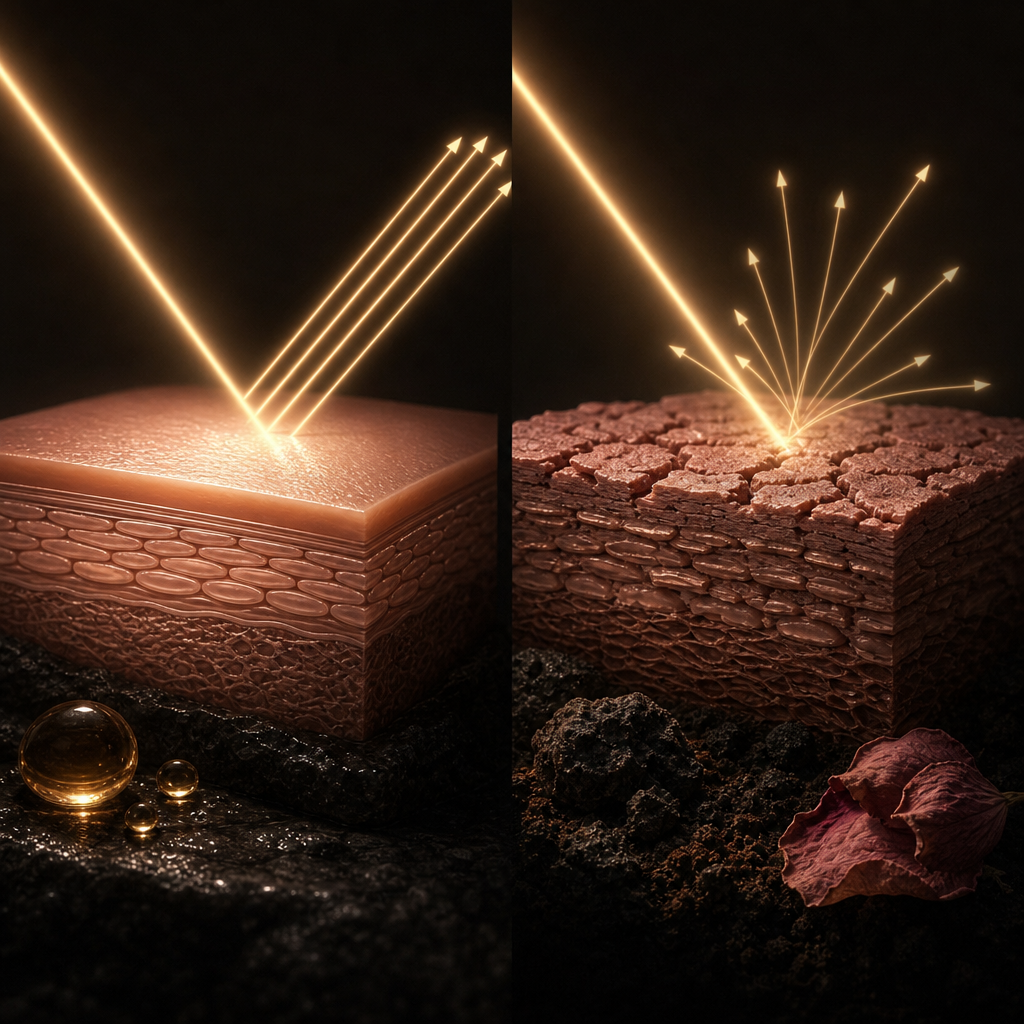
Skin looks dull in perimenopause and menopause mainly because a drier, rougher surface scatters light instead of reflecting it evenly. As oestrogen levels change, skin often holds less moisture and feels less comfortable. Flat, tired-looking skin is frequently a comfort problem first and a dead-skin problem second.
Think of the difference between clear glass and frosted glass. Both are made of the same material. The frosted one scatters light because its surface is uneven. Dry skin behaves the same way. Tiny dry flakes and rough patches break up the light, so your face looks flatter even when nothing is wrong underneath.
Health information from organisations such as Jean Hailes for Women's Health and Healthdirect lists dry skin among the common changes of menopause. Perimenopause can start years before your final period, so perimenopause dull skin can show up while your cycle still feels fairly regular. That catches many women off guard. They assume they are too young for it.
A few other things stack on top of the hormonal shift:
- Disrupted sleep. Night sweats and hot flushes can leave you tired, and skin often looks it.
- Hot showers. Long, hot water feels good but dries the skin surface further.
- A routine built for a different skin. Products chosen years ago for oilier or more resilient skin can feel harsh now.
- Years of sun exposure. Australian sun leaves its mark, and it shows more once skin is drier.
The point is that dullness rarely has a single cause. That is why a single product rarely fixes it. It is also why we start with how your skin feels today, rather than an age or a label. Two women of the same age can be in very different places.
If you want a fuller picture of the signs that your skin is asking for less, our post Menopause Skin Barrier Care: 7 Signs Your Skin Needs a Simpler Routine covers it in detail.
How should you exfoliate menopausal skin gently?
Gentle exfoliation for menopausal skin means once or twice a week at most, using a soft cloth with your usual cleanser or a mild exfoliant you already know suits you. Stop at the first sign of stinging, tightness or redness. Less often works better than harder.
A quick note on honesty: Truff'elle does not sell an exfoliant. Exfoliation is an optional step in this routine, and you can use whatever gentle product you already own and tolerate. We are not going to name one, because the right choice depends on your skin and what it has handled well in the past.
Two gentle ways to do it
A soft cloth with your cleanser. This is the lowest-risk option. Wet a soft, clean cloth with lukewarm water, apply your usual cleanser and move the cloth in light, slow circles over your face and neck. Rinse, pat dry and moisturise straight away. There is no need to press. The cloth does the work through its texture alone.
A mild exfoliant you already trust. If you prefer a leave-on or rinse-off exfoliant, choose one you have used before without a reaction, and follow its directions. Start at the lowest strength and the lowest frequency. Avoid anything gritty with sharp or uneven particles, because rough particles can create tiny abrasions on skin that is already dry.
Either way, keep it to the face and neck and keep it well away from the eye area.
Patch test first
Before you use any exfoliant on your whole face, test it. Apply a small amount to a discreet spot, such as behind the ear or along the jawline. Leave it as the product directs, then wait and watch. If the spot stays calm over a day or two, you can try it on a small area of the face before using it more widely.
This is part of what we call one change at a time. Patch test before first use. Introduce one new product at a time. Give it several weeks and note how your skin feels in the same light. Stop if irritation occurs, and seek advice for anything persistent. It feels slow. It is also the only way to know which change actually helped.
Signs you are overdoing it
Over-exfoliation can look like dullness, which is how many women end up in a cycle of scrubbing more to fix what scrubbing caused. Watch for:
- Stinging when you apply products that were comfortable before
- Tightness after cleansing that does not ease once you moisturise
- Redness or a flushed look that lingers
- A shiny, tight or waxy surface rather than a soft one
- Rough, flaky patches that appear or get worse
If you notice any of these, stop exfoliating completely. Cleanse gently, moisturise and wear sunscreen until your skin feels settled again. Then, if you want to return to exfoliating, go back to once a week.
Why is moisture the real brightness step?
Moisture is the brightness step because well-moisturised skin looks smoother and more even, and smoother skin reflects light better. A comfortable cream used every morning and evening usually does more for flat skin than an extra product. The Cream is Truff'elle's face and neck cream, built around bio-fermented Australian black truffle.
It is tempting to treat dullness as something that needs removing. Often it is the opposite. Skin that feels dry and rough needs something put back, and it needs it consistently. Moisture is not glamorous, but it is the step that changes how skin looks and feels day to day.
The Cream is a face and neck cream for morning and evening. We describe it in terms of how skin feels and looks: moisture, comfort and a softer feel. It is built around one hero ingredient, bio-fermented Australian black truffle, and it was formulated in Melbourne with cosmetic chemist Raniya M. Bodoci. The formulation approach is called Master Key. That is our name for how we choose and combine ingredients and shape the feel of the finished cream. It is an approach, not a proven mechanism or a guaranteed result.
There is one practical caveat. The Cream contains fragrance (Manuka honey). If your skin is sensitive or reactive, patch test first, exactly as you would with any new product. If you would like to try the texture before committing, there is a smaller Discovery size with the same formula.
What to look for in a moisturiser for dull mature skin
Whatever you choose, a moisturiser for dull mature skin should pass a few simple tests:
- It feels comfortable straight after applying and an hour later
- It does not sting, even on slightly tired skin
- It sits well under sunscreen in the morning
- You will actually use it twice a day, because consistency beats a perfect formula used sporadically
Apply it to the face and neck after cleansing, while skin is still a little damp. Use enough to cover the area without leaving a heavy film. If you are unsure about amount, our post How Much Face Cream to Use walks through it. And if the colder months leave your skin feeling tighter, Menopause Skincare in Winter covers what to adjust.
A realistic expectation matters here. Moisture will not erase every line or restore the skin you had at thirty. What it can do is make skin feel more comfortable and look smoother and more even, which is most of what women mean when they ask for a glow.
How do you keep actives apart around the eyes?
Keep exfoliants well away from the eye area, and do not use The Eye Cream on exfoliation nights while you are starting out. The Eye Cream contains retinol, so introduce it gradually and wear sunscreen every day. Two active steps on the same night is often where irritation begins.
The skin around the eyes is thin and reacts quickly. That is why the rule is simple: exfoliation is for the face and neck, and stays clear of the eye area completely. When you use a cloth, go around the eyes, not over them.
The Eye Cream is optional targeted eye care for evenings. It contains retinol, along with acetyl hexapeptide-8, sodium hyaluronate, caffeine and black truffle extract. Because retinol is an active, treat it with respect:
- Introduce it gradually. Begin with fewer evenings than you eventually plan to use, and build up as your skin stays comfortable.
- Keep it off exfoliation nights at first. Once your skin has settled over several weeks, you can decide whether it suits your routine on those nights. Until then, give the eye area a night off.
- Wear sunscreen by day. Retinol makes daily sun protection more important, not optional.
If you are unsure whether a retinol product is right for you, ask your pharmacist or GP before starting.
Why daily sunscreen belongs in a dullness routine
Sun exposure is a big part of why skin looks tired over time, and exfoliated skin deserves protection. According to Cancer Council's SunSmart programme (https://www.sunsmart.com.au/), sun protection is recommended whenever the UV index reaches 3 or above. In much of Australia that covers a large part of the year, and the free SunSmart app shows daily UV times for your location. Apply a broad-spectrum sunscreen every morning after your moisturiser and before you head out.
What does a simple week look like for duller days?
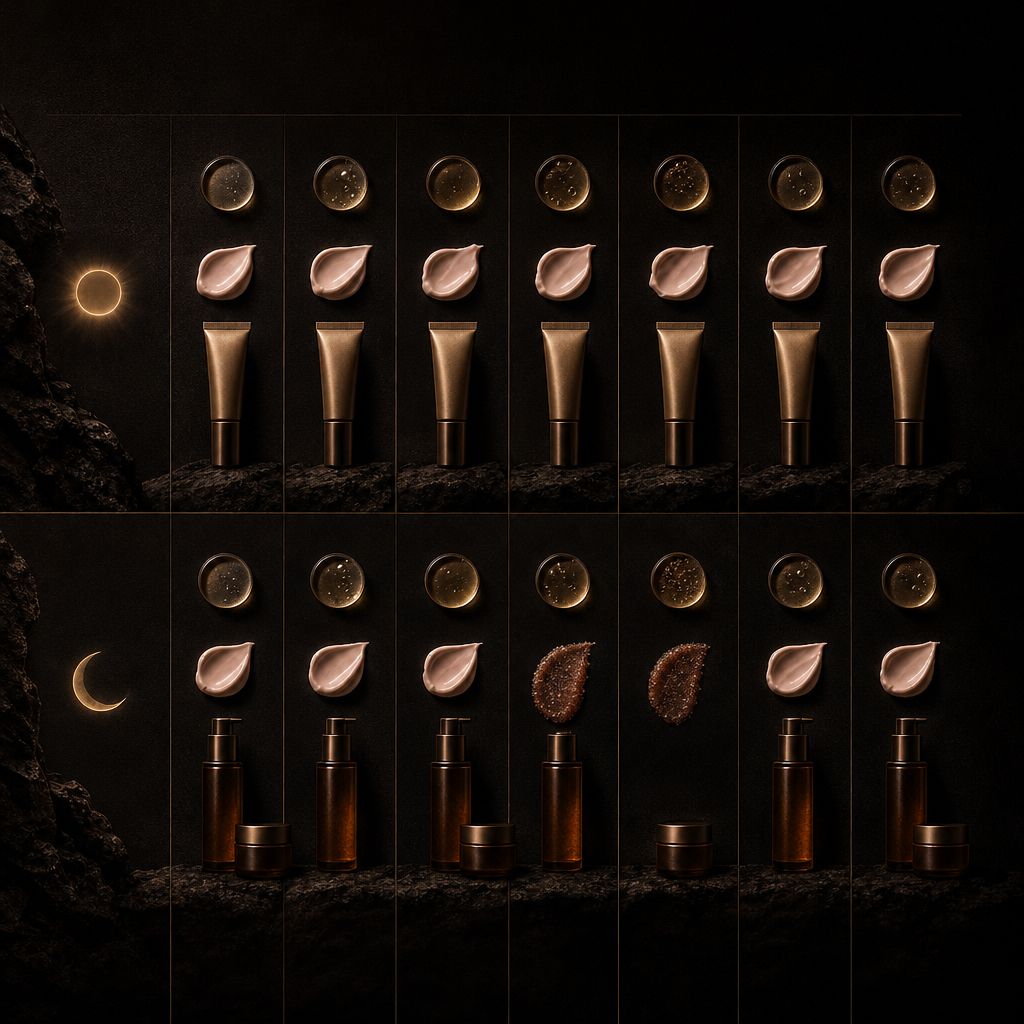
A simple week for duller skin is cleanse, The Cream and sunscreen in the morning, then cleanse, The Cream and The Eye Cream in the evening. Add gentle exfoliation on one or two evenings, and skip The Eye Cream on those nights while you are starting out.
This follows what we call a simple routine for changing skin. Cleanse gently with lukewarm water. Moisturise face and neck morning and evening. Add targeted eye care if you want it, introduced gradually. Protect daily with broad-spectrum sunscreen.
| Time | Most days | Exfoliation night (once or twice a week) |
|---|---|---|
| Morning | Cleanse gently, apply The Cream, then sunscreen | Same as other days |
| Evening | Cleanse gently, apply The Cream, then The Eye Cream | Cleanse with a soft cloth or use your mild exfoliant, then apply The Cream. Skip The Eye Cream while you are starting out |
A few notes to make it work:
- Pick your exfoliation nights and keep them fixed. Choosing two nights that are not back to back, or just one, keeps it from creeping up.
- Start with one night, not two. If your skin is calm after several weeks, you can reassess.
- Do not add anything else at the same time. If you start The Eye Cream, a new exfoliant and a new sunscreen in the same week, you will not know which one your skin dislikes.
- Judge results in the same light. Check your skin in the same spot, at the same time of day, so you are comparing like with like.
This routine has two core products from Truff'elle: The Cream and The Eye Cream. That is deliberate. It leaves room in your week, and your skin, for the one optional step that may help dullness: gentle exfoliation.
When should you see a GP or dermatologist?
See a GP or dermatologist if irritation persists after you simplify your routine, if your skin changes suddenly, or if you have questions about hormones. Dull skin alone is rarely urgent. Persistent redness, itching, new spots or sores that do not heal deserve a professional look.
Skincare can improve how skin feels and looks. It cannot treat a medical condition or change your hormones. Book an appointment if you notice:
- Irritation that does not settle after you stop exfoliating and strip your routine back
- Sudden changes, such as a new rash, widespread itching, or a rapid change in texture or colour
- Moles or spots that change, bleed or do not heal. Australia has a high rate of skin cancer, so any change is worth checking
- Questions about hormones, including whether menopause hormone therapy is right for you, which is a conversation for your doctor
You can find a dermatologist through the Australasian College of Dermatologists, and your GP can refer you. Bring a short list of the products you use and when you started each one. It helps more than you would expect.
Why we think changing skin needs fewer steps, not more
Our view is that skin in perimenopause and menopause is usually better served by fewer, well-chosen steps, added one at a time. The common advice is the opposite: stronger actives, more layers, more products. That advice ignores how skin can become drier and more reactive as oestrogen falls.
This is not just a position. It is how Truff'elle started. Founder Sabina Kelley reached her forties and found her skin changing. It was drier and less comfortable, and the routine and luxury products she had relied on for years no longer felt right. What she saw on shelves was a crowded collection of products that did not seem designed for changing skin.
Her response was to go smaller. Working with cosmetic chemist Raniya M. Bodoci, she built a deliberately focused range around bio-fermented Australian black truffle: one face and neck cream and one eye cream, with no extra steps added for the sake of a bigger collection.
Some numbers from our own range, which are specifications and not clinical results:
- The core routine is 2 products.
- There is 1 hero ingredient: bio-fermented Australian black truffle.
- The number of clinical percentage claims we make is 0.
That last one is a choice. We have not published clinical trial data, so we do not imply any. Research on an extract is a starting point for formulation, not a promise from a finished jar. Results depend on the whole formula, how you use it and who is using it. So we describe cosmetic benefits only: moisture, comfort, a softer feel, the appearance of fine lines. You can judge those yourself, which is why the Discovery size exists. Many women are asked to commit to full-size, premium-priced skincare before they know whether it suits their changing skin. A smaller size lets you decide by how your skin feels in daily use, not by what a label promises.
There is also a practical reason for the short routine. Every extra active is another thing that could irritate, and another thing to rule out when skin looks off. With two products, you always know what changed. It means a little more understanding and a little less complication, for the years it changes.
So if your skin looks flat, try this order. First, soften your cleansing and cool the water. Second, moisturise consistently for several weeks. Third, add gentle exfoliation once a week if you still want it. Only then consider anything new. And start with how your skin feels today, not what the label says about your age.
Make The Cream your consistent daily step
Keep exfoliation gentle and occasional, and let moisture do the daily work. If you would like a comfortable face and neck cream for morning and evening, meet The Cream, built around bio-fermented Australian black truffle. Start with the smaller Discovery size if you would like to try it first, and change one thing at a time.