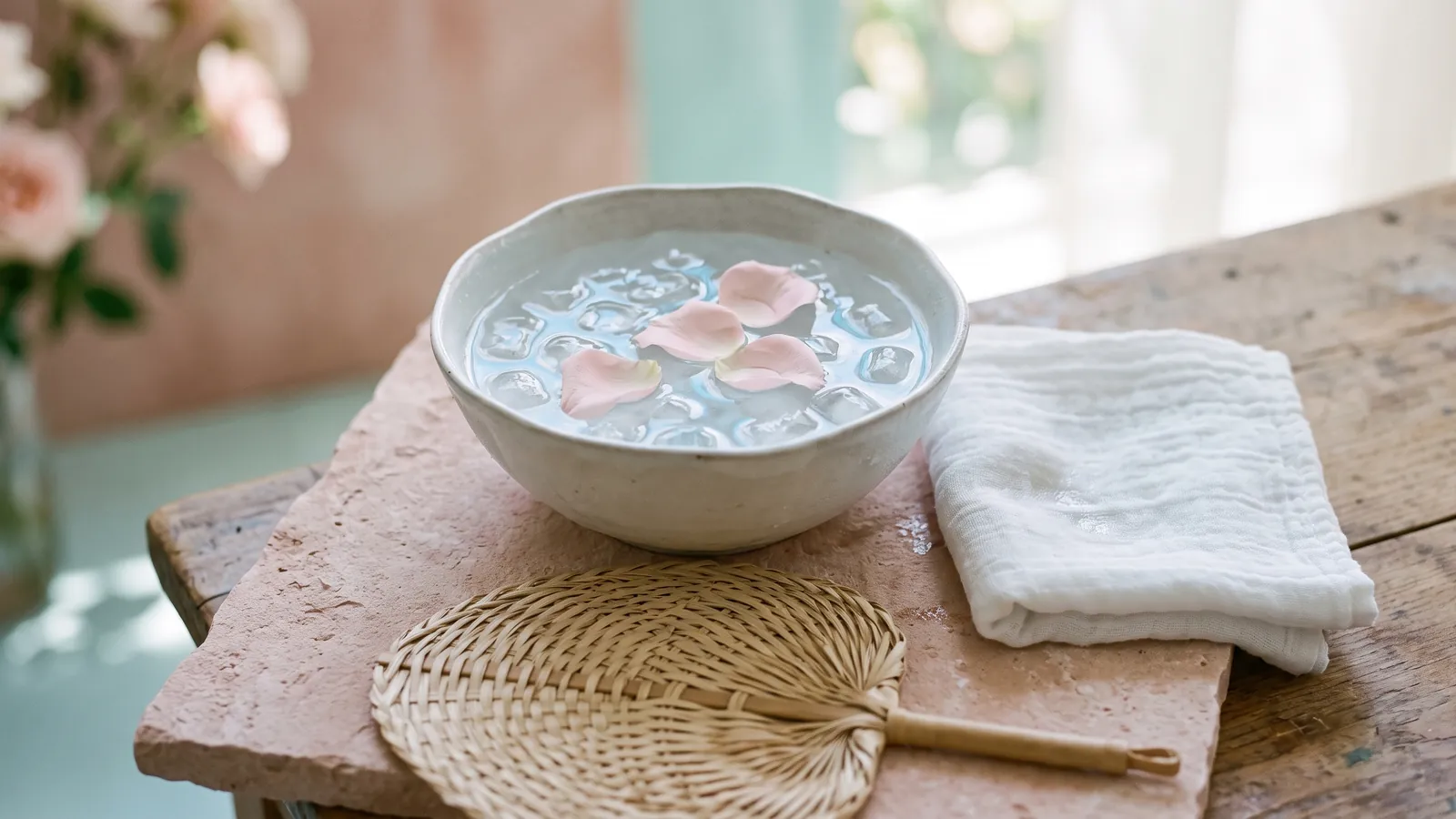
A hot flush does not ask whether you have just put on your moisturiser. It arrives mid-meeting, mid-sentence or at 3am, and it leaves your face warm, flushed and sometimes a bit damp. Then you wonder whether the cream you applied this morning is helping or making things worse.
This guide looks at how to keep your routine comfortable around flushes and night sweats: lighter layers, kinder cleansing, patience with new products, and the point where it is worth talking to a doctor.
What is happening in your skin during a flush
DermNet explains that flushing occurs because blood vessels in the skin dilate. When the nerves supplying those vessels drive the flush, sweating usually comes with it. That is the combination many of us know from menopause: heat, redness and then dampness.
Jean Hailes lists hot flushes and night sweats among the common menopausal symptoms, and notes that everyone's experience is different. Some women have mild symptoms or none at all, and others have severe ones. For the wider picture of skin changes, see our guide to perimenopause skin changes.
Lighter layers that sit well
When you run warm, a thick, tacky layer can feel suffocating. That does not mean skipping moisture, because menopausal skin tends to dry out. It means thinking about how much you apply and how long you wait between steps.
- Use a small amount and let each layer absorb before you add the next.
- Choose textures that feel comfortable when you are warm. A cream that glides on and sinks in is easier to live with than one that sits on top.
- Skip layers you do not need. Our skincare layering guide explains how to cut a routine back without losing the basics.
The Peptide Cream is a face and neck cream for day and night. The directions are to massage a small amount in with gentle upward strokes and let it absorb before the next layer, which suits a flush-prone routine. It contains fragrance (from Manuka honey), so patch test first if your skin tends to react.
A face cream for daily moisture, a targeted eye cream, or both together. Compare the sizes, ingredients and prices before you choose.
Keep products somewhere cool if you like
There is no rule here, just a preference. Some women keep their moisturiser in a cool drawer or the door of the fridge, because a cool cream feels pleasant on warm skin. If you try it, make sure the jar stays clean and the lid closes properly, and stop if the texture changes. Check the packaging for storage advice. Others prefer to leave everything on the bathroom shelf. Either is fine.
Cleansing after night sweats
Waking damp is not a sign your skin needs a deep clean. Hot water and strong cleansers can leave menopausal skin tighter and more irritated, and the American Academy of Dermatology recommends warm rather than hot water and a gentle cleanser, patting skin dry instead of rubbing.
A simple pattern works well:
- Rinse your face with lukewarm water, or use a gentle cleanser if you feel you need one.
- Pat dry.
- Apply your moisturiser while skin is still slightly damp.
A fresh pillowcase now and then helps, and so does a lighter blanket if you can manage it. Our morning routine and evening routine guides lay out each step.
Small habits that help between flushes
Some of the comfort comes from the day around your skin, not what you put on it. Dermatologists quoted by the American Academy of Dermatology suggest keeping showers and baths short and using warm rather than hot water, because long hot washes can dry skin further. Loose cotton clothing is kinder than tight or rough fabrics against dry, sensitive skin. A humidifier in the bedroom can help when the air is dry, as long as you clean it regularly.
None of this stops a flush, and it is not meant to. It simply stops the skin from being quite so dry and unhappy once the flush has passed. For skin that feels tight and itchy more generally, our guide to menopause dry skin goes further.
Resist adding new actives while you are flushing
When skin looks red, the instinct is to buy something to fix it. The trouble is that strong exfoliants and several new treatments at once can add to the redness, and you will not know which product caused it. If you want to introduce something new, add one product at a time and give it a few weeks.
Redness that lingers, spreads, burns or comes with bumps may be something other than a flush, such as rosacea (DermNet notes that rosacea is the most common skin condition linked with a tendency to flush easily). Ask your GP or a dermatologist rather than treating it yourself.
Makeup and sunscreen on flush-prone days
If you wear makeup, lighter formulas tend to sit better on warm skin than heavy ones, and a little blotting is kinder than reapplying layer on layer. Sunscreen still comes last in the morning routine. SunSmart advises covering up from UV whenever the UV index is 3 or more. Find a sunscreen texture you can bear on a warm day, because the one you will actually wear is the one that works.
When to talk to a doctor
Skincare can make you more comfortable, but it does not treat flushes themselves. Jean Hailes advises seeing a doctor if menopausal symptoms are affecting your daily life, and says no one should put up with symptoms that get in the way of their activities or quality of life. Whether to start or stop any medicine, including menopausal hormone therapy, is a conversation for you and your GP.
Your next step
Flushes come and go, and your skin does not need a new routine for every one of them. Look at what you apply on a flush-prone morning. Cut it back to cleanse or rinse, a small amount of moisturiser, and sunscreen, and see how your skin feels after a fortnight. If you would like a hand with your routine, write to us at hello@truffelleaustralia.com.au.