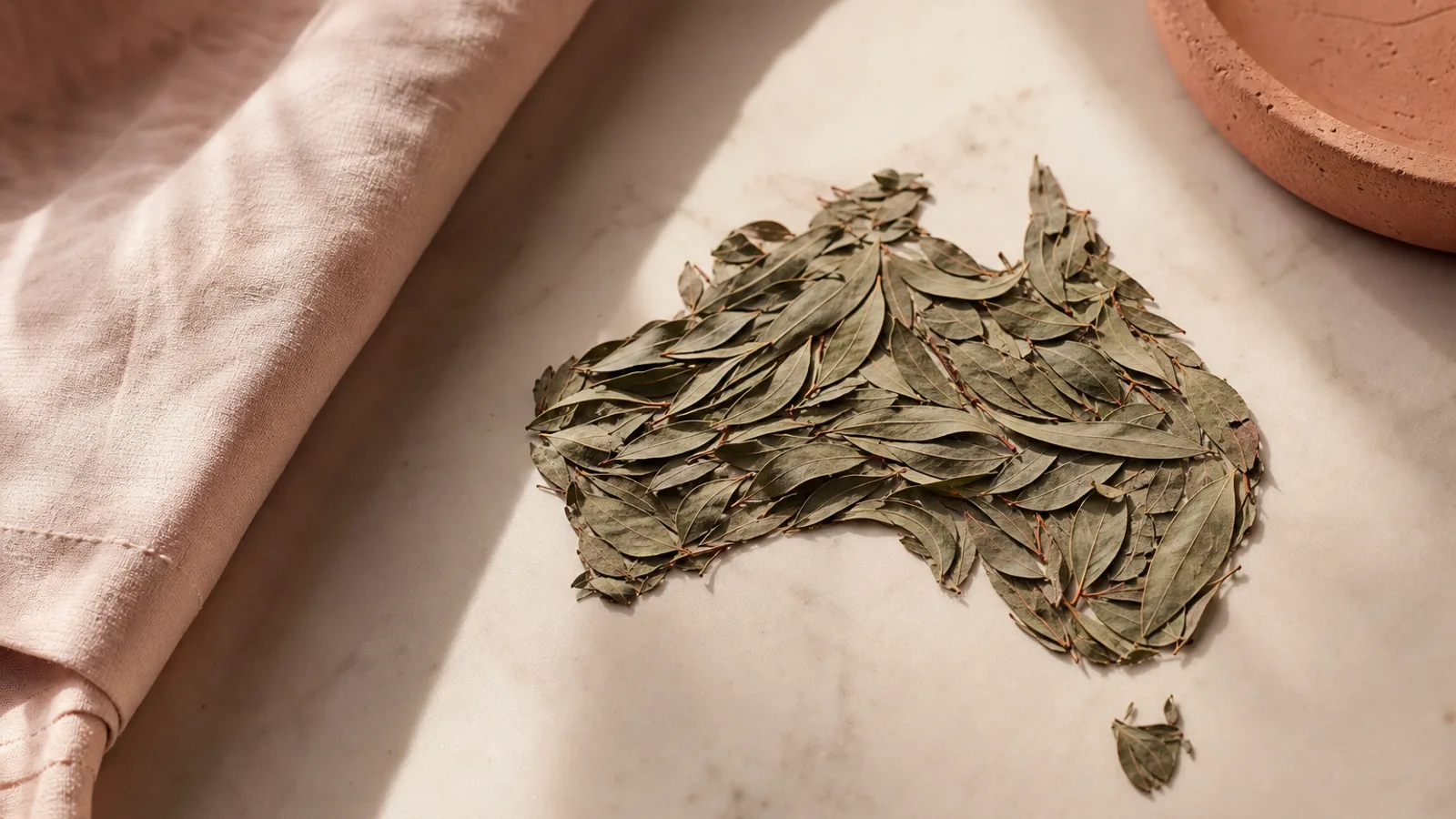
Australian-made or Australian-owned positioning

Australian-made or Australian-owned positioning

Australian-made positioning tells customers where a product underwent its last substantial change, while Australian-owned positioning tells them who controls the business. For a skincare brand built around local truffles and Australian bio-fermentation, Australian-made is usually the stronger lead claim. Use Australian-owned only when the ownership structure can be documented clearly and kept current.

Choosing between these claims is not a copywriting exercise. Each claim communicates something different, and both must be accurate under the Australian Consumer Law.

For Truffelle, the deeper question is how Australian provenance supports the product's reason for existing. A local origin claim becomes persuasive when it explains the ingredient rarity, formulation process and resulting product, rather than operating as a flag placed beside generic luxury language.

Key takeaways

The strongest position connects a verifiable origin claim with a commercially meaningful reason to care. Australian-made and Australian-owned can support each other, but they are not interchangeable. The lead message should reflect the part of the business that creates the clearest customer value and can be substantiated consistently.

  • Australian-made concerns where the product was fundamentally changed into its finished form.
  • Australian-owned concerns who owns or controls the business, not where its products are manufactured.
  • The Australian Made, Australian Grown logo is a licensed certification trade mark, not a decorative badge any business can adopt.
  • Truffelle's strongest provenance story is the connection between Barossa Valley Black Truffles, Australian bio-fermentation and finished skincare.
  • Ownership language should only appear after the current corporate structure has been checked and documented.
  • Origin positioning cannot replace efficacy evidence. Provenance should explain why the formulation is different.

Summary table

The practical choice depends on what the brand can prove and what customers need to understand. The following comparison separates product origin, business ownership and ingredient provenance so they do not become blurred into one unsupported impression.

Positioning optionWhat it communicatesEvidence requiredBest strategic useMain risk
Australian-madeThe finished product was fundamentally changed into its final form in AustraliaManufacturing records, formulation steps, batch records and supplier documentationLeading with local formulation and productionImplying every ingredient is Australian
Australian-ownedThe business is owned or controlled by AustraliansCurrent company, shareholder and control recordsSupporting trust in local commercial ownershipBecoming inaccurate after an ownership change
Australian-grownAn agricultural ingredient was grown in AustraliaFarm, harvest, chain-of-custody and supplier recordsEstablishing ingredient provenanceExtending the claim from one ingredient to the whole formula
Formulated in AustraliaFormulation work occurred in AustraliaDevelopment agreements and formulator recordsDescribing local intellectual inputAllowing customers to assume local manufacture
Australian ingredientsParticular ingredients originate in AustraliaIngredient-specific traceability recordsHighlighting hero ingredientsSuggesting all ingredients are local when they are not

What is the difference between Australian-made and Australian-owned?

Comparison of Australian-made product origin and Australian business ownership

Australian-made describes the origin of a product. Australian-owned describes the ownership of the organisation selling it. A product can be made in Australia by a foreign-owned company, while an Australian-owned company can import its finished products. Clear positioning keeps those separate facts visible rather than encouraging customers to infer one from the other.

Under the Australian Consumer Law, businesses must not make false or misleading representations about a product's place of origin. The ACCC's country-of-origin guidance explains how origin claims interact with legal tests and consumer impressions.

For non-food products, the central issue is generally whether the goods were last fundamentally changed in the country being claimed. Packaging an imported finished cream in Australia would not ordinarily make the cream Australian-made. Combining ingredients through a substantive local manufacturing process may support the claim, depending on what occurs and how the finished product differs from its imported inputs.

Australian-owned answers another question: where does business control sit? It says nothing by itself about ingredient origin, laboratory location, manufacturing or employment. The claim must reflect the actual ownership structure, not the founder's nationality, the location of the registered office or an Australian brand aesthetic.

This distinction matters because customers often read several implied claims into one phrase. A prominent Australian-owned statement beside images of local farmland could leave the overall impression that the product is also made from Australian ingredients. The ACCC considers the whole representation, including words, imagery, qualifications and omissions.

Which position should Truffelle lead with?

Truffelle should lead with a precise Australian-made and ingredient-provenance story if its manufacturing records satisfy the applicable origin test. This position is stronger than ownership alone because it connects directly to the product: Barossa Valley Black Truffles are harvested locally, then subjected to Truffelle's Australian bio-fermentation and formulation process.

The brand did not begin with a general desire to look Australian. I began developing Truffelle after entering my 40s and seeing changes in hydration, collagen and wrinkle depth that premium skincare did not adequately address. Those products felt like surface solutions. Their branding was luxurious, but their delivery systems did not answer the molecular problem I was trying to solve.

That led to growing Australian Black Truffles within a 35-million-year-old meteor crater in the Barossa Valley and investing privately in research and development. Working with biochemical engineer Raniya M. Bodoci, we developed Truffelle's patented bio-fermentation process to convert complex truffle compounds into bioavailable peptides.

This history gives Australian-made positioning a functional purpose. The local truffle is not an ornamental botanical added to justify a provenance claim. It is the starting material for the delivery system that defines the formulation.

Australian-owned can sit beneath that lead message if Truffelle's current legal and beneficial ownership records support it. It should not become the headline merely because customers respond positively to local ownership. The most defensible hierarchy is:

  • What the product is and where it is made.
  • What makes the local process materially different.
  • Where the hero ingredient was grown and harvested.
  • Who owns the business, where that fact is verified and relevant.

This order follows customer value. Product origin and process help explain what someone is buying. Ownership provides an additional reason to support the organisation.

How should Australian origin claims be substantiated?

Every origin claim should have an evidence file before it reaches packaging, advertising or a product page. That file should show the exact wording used, what an ordinary customer is likely to understand, and the records supporting the claim. Qualifications must be prominent enough to correct the overall impression, not buried in fine print.

Start by mapping the physical journey of the product. Record where ingredients are grown, extracted, fermented, blended, stabilised, filled, packaged and labelled. Do not assume the most technically impressive stage automatically determines the country-of-origin result. Assess the complete process and obtain legal advice where the manufacturing pathway is complex.

Truffelle should be able to connect each public statement to specific records, including:

  • Harvest and farm records for Barossa Valley truffles.
  • Chain-of-custody documentation between harvesting and fermentation.
  • Batch records showing where fermentation and formulation occurred.
  • Manufacturing agreements and facility information.
  • Ingredient specifications identifying local and imported inputs.
  • Company records supporting any Australian-owned claim.
  • An approval process for new packaging, retail listings and campaign copy.

The Australian Made, Australian Grown logo requires a licence from Australian Made Campaign Limited. The organisation explains that the logo is a registered certification trade mark with rules governing its use on the Australian Made logo information page.

A business may make an accurate written origin claim without displaying that logo, but it cannot reproduce the certification mark without approval. If Truffelle seeks a licence, the approved descriptor and product scope should be followed exactly. Approval for one product should not be treated as blanket approval for an entire catalogue.

Substantiation is also an ongoing task. Suppliers change, formulas are revised and ownership structures move. A claim that was accurate when packaging was approved can later become misleading. Origin evidence should therefore sit inside product governance, with reviews triggered by manufacturing, formulation, supplier or ownership changes.

How can provenance become part of the brand story?

Truffle harvest, fermentation and skincare concentrate process

Provenance becomes valuable when it explains product design rather than merely appealing to patriotism. Truffelle can connect the Australian landscape to a traceable sequence: rare truffles are harvested at peak potency, fermented locally and activated into a bio-concentrate intended for skin delivery. Each stage should advance the efficacy argument.

Truffelle calls this sequence The Bio-Fermentation Process:

Phase 01: The Harvest

Black truffles are hand-foraged at peak maturity from ancient meteor crater soil in the Barossa Valley. The brand describes them as buried diamonds because rarity matters here, but rarity alone is not enough. The harvest claim should remain tied to traceability, maturity and the role of the truffle in the final formula.

Phase 02: The Fermentation

The truffles undergo a 90-day biological breakdown. According to Truffelle's formulation records, this process generates new bioactive metabolites and reduces complex compounds below the 500 Dalton threshold. Truffelle describes this as the molecular gateway to the dermis.

This is where other creams end, we begin. Most luxury formulas focus on ingredient lists without adequately explaining whether the actives can reach the site where structural repair happens. A premium ingredient that remains on the outer skin can still condition the surface, but price and rarity do not prove dermal delivery.

Phase 03: The Activation

At the end of fermentation, the bio-concentrate reaches what Truffelle calls its peak molecular zenith and is prepared for formulation. Small seasonal batches are poured within 72 hours of fermentation completion to preserve batch-fresh potency, according to Truffelle's production protocol.

This process story gives meaning to Australian-made. Australia is not simply the address on the jar. It is where the earth's rarest actives are grown, processed and converted into Truffelle's defining formulation system.

How should efficacy claims support the positioning?

Origin attracts attention, but evidence must carry the efficacy argument. Australian-grown truffles and local production do not automatically prove hydration, elasticity or wrinkle benefits. Truffelle should present provenance and performance as connected but distinct claims, with each result attributed to the relevant study, trial or internal clinical reference.

Truffelle's clinical reference dossier reports increased hydration of +48%, increased elasticity of +35% and increased collagen production of +30%. It also records a 12.8% reduction in wrinkle depth over 42 days and a +0.39 mm increase in dermal thickness measured through ultrasound imaging over the same trial period.

These figures were supplied from Truffelle's own clinical reference materials. They should only appear in public marketing where the underlying reports, tested formulation, participant conditions and permitted claim wording have been reviewed. A raw result is not a licence to broaden the claim to every person, every product or every skin condition.

The mechanism should also be explained in plain language. Truffelle's Master Key framework contains three connected functions:

  • Barrier Fortification: Supporting the lipid matrix and ceramides to reduce moisture loss.
  • Microbiome Harmony: Using prebiotic peptides to support the skin's bacterial equilibrium.
  • Dermal Delivery: Creating sub-500 Dalton penetration intended to reach the dermis, where structural repair happens.

This is a stronger story than saying a cream is Australian, natural or luxurious. It gives the customer a logical chain from place to process, process to mechanism, and mechanism to measured outcome.

Care is still required around therapeutic language. Cosmetics and therapeutic goods are regulated differently in Australia. Claims about treating disease, altering physiological processes or repairing medical conditions may affect the product's regulatory position. Origin positioning does not remove that obligation.

What positioning mistakes should skincare brands avoid?

The most common mistake is allowing a true statement to create a broader false impression. A brand may accurately say that it was founded in Australia, yet surround that statement with imagery and wording that implies Australian manufacture. Accuracy at sentence level does not rescue misleading communication at page or campaign level.

Avoid these recurring errors:

Treating Australian-designed as Australian-made

Local product development can be valuable, but design and manufacture describe different activities. If a formula was developed in Australia and manufactured overseas, say exactly that. Do not shorten the story until its meaning changes.

Extending one ingredient claim across the whole product

A formula containing Australian truffle is not necessarily made entirely from Australian ingredients. Use wording such as "made with Barossa Valley Black Truffles" when that accurately reflects the evidence. Keep whole-product claims separate from ingredient-level claims.

Using ownership as a proxy for manufacturing

Australian-owned does not establish where production occurs. If both claims are true, state both. If only ownership is established, do not use factory, farm or laboratory imagery that suggests unsupported local manufacturing.

Making the flag the strategy

A flag can identify origin, but it cannot explain why a customer should choose the formula. Truffelle's advantage lies in the relationship between the Barossa harvest, bio-fermentation and molecular delivery. The origin cue should lead into that explanation.

Overloading the routine

More products do not necessarily create better outcomes. My position is that skin needs fewer, better actives, clinically dosed and delivered where repair happens. A verified customer, Victoria R., replaced a six-step routine with Truffelle products and reported softer fine lines around her eyes and a healthy bounce she had not seen since her twenties. That is customer experience, not a universal clinical promise, but it illustrates the value of formulation quality over routine complexity.

Provenance should pass the performance test

My test for Australian positioning is simple: if removing the place name leaves the product argument unchanged, provenance is probably decorative. Strong provenance should explain access to the raw material, control over processing or a meaningful formulation decision. Otherwise, it adds sentiment without adding evidence.

For Truffelle, the provenance-to-performance chain is unusually direct:

Place: Black truffles are grown and harvested in the Barossa Valley.

Material: Peak-maturity truffles provide the compounds used in the concentrate.

Process: The 90-day bio-fermentation process changes those compounds into bioavailable peptides, according to Truffelle's formulation records.

Mechanism: The finished concentrate is designed around sub-500 Dalton penetration rather than surface coating alone.

Evidence: Product claims are tied to Truffelle's clinical reference dossier and should be presented with appropriate scope and qualifications.

That is why I would not lead with Australian-owned positioning alone. Ownership can tell the customer whom they are supporting. It cannot explain why the skincare works. Australian-made positioning has greater strategic value when the Australian process is inseparable from the formulation itself.

This is also my disagreement with much of luxury skincare. Expensive ingredients and elaborate routines do not guarantee effective delivery. Many formulas remain surface solutions because the actives were never engineered to pass the skin barrier. For the woman who knows the difference, local origin matters most when it can be traced to molecular purpose.

How should Truffelle implement the positioning?

Truffelle should use one approved message hierarchy across packaging, product pages, retail listings, media materials and customer service. The wording can adapt to the channel, but the factual meaning must remain stable. Every claim should point back to an evidence owner and a current supporting document.

A practical hierarchy would begin with a precise origin statement, followed by ingredient provenance and process. Ownership can then appear in the company story once verified. The message could follow this structure without overstating the evidence:

  1. State where the finished product is made, subject to legal verification.
  2. Identify the Barossa Valley origin of the Black Truffles.
  3. Explain the Australian bio-fermentation process.
  4. Describe the intended delivery mechanism without implying guaranteed outcomes.
  5. Present appropriately qualified clinical results.
  6. Add Australian ownership only where current records support the wording.

Before publication, Truffelle should have its country-of-origin assessment and proposed packaging reviewed by an Australian consumer law adviser. This article provides strategic guidance, not legal advice.

To discuss Truffelle's provenance, formulation process or supporting evidence directly, visit the /contact page.

References

These sources establish the legal and certification context for Australian origin positioning. Product efficacy figures in this article come from Truffelle's own clinical reference dossier and are identified as such, rather than being presented as independent government or consumer-law findings.

Join the journal
Skincare science, ritual notes, and harvest updates.

One email a fortnight. Real research, never spam.

Frequently asked

Questions about this topic.

Is Australian-owned the same as Australian-made?

No. Australian-owned describes who owns or controls the business. Australian-made describes where the product was fundamentally changed into its finished form. An Australian-owned company can sell imported products, and an overseas-owned company can manufacture products in Australia.

Can a brand use the Australian Made logo without a licence?

No. The Australian Made, Australian Grown logo is a registered certification trade mark administered by Australian Made Campaign Limited. A business must apply, establish eligibility, pay the relevant licence fee and follow the approved conditions of use.

Does using Australian ingredients make a product Australian-made?

Not automatically. Ingredient origin and product origin are separate matters. An Australian ingredient can be included in a product manufactured overseas. An Australian-made product may also contain imported ingredients.

Can Truffelle say its products are Australian-made?

Only after its complete manufacturing process has been assessed against the applicable country-of-origin requirements. The claim should be verified for each product rather than assumed across the entire range.

Which claim matters more to skincare customers?

Australian-made is usually more useful when local production creates a meaningful product difference. Australian-owned can strengthen trust, but it does not explain formulation quality.

How often should origin claims be reviewed?

Review origin claims whenever the formula, manufacturing location, supplier network, packaging or ownership structure changes. Existing retailer listings and campaign materials should be included in that review.

Written by
Sabina Kelley
Editorial team, Truffëlle Journal
Turn insight into results

Build your ritual with formulas created to restore barrier strength, support collagen, and improve skin resilience.

Join the Inner Circle.

10% off your first order. Priority batch access. Unsubscribe anytime.

Award-Winning Skincare
Arte of Beauty Gold Winner 2026Gold · Best Facial Moisturiser
Arte of Beauty Awards 2026
Arte of Beauty trophyArte of Beauty 2026
Organic Beauty Award Verified MemberOrganic Beauty Award · Verified
2026 Organic Beauty Award FinalistFinalist · 2026
Organic Beauty Awards
60-Day Money Back
Australian Made
No PFAS · No Endocrine Disruptors
Free Worldwide Shipping
Batch-Fresh Potency