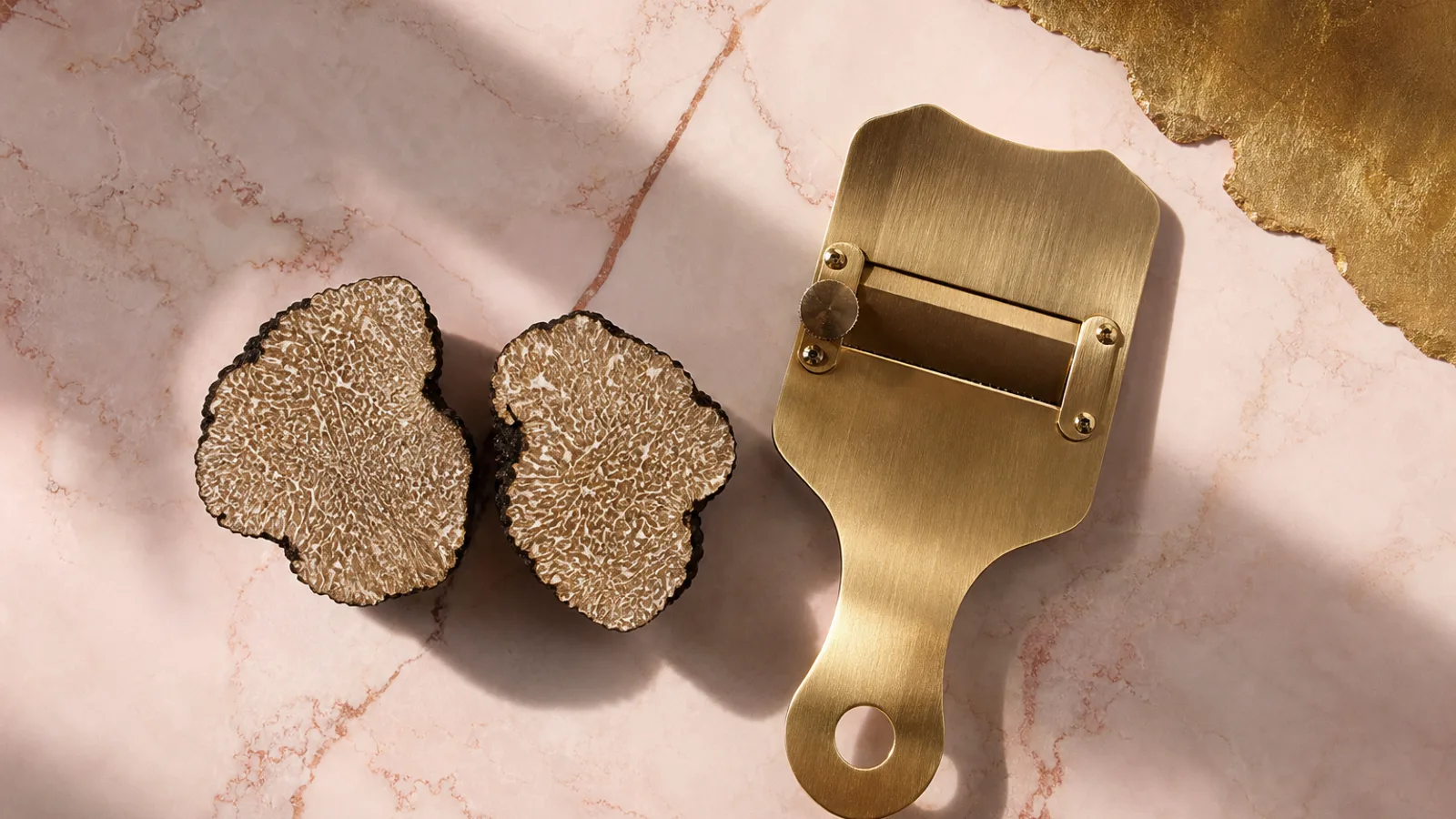
Uncovering the Difference: Black Truffle vs White Truffle in Skincare

Uncovering the Difference: Black Truffle vs White Truffle in Skincare

Black truffle and white truffle are different fungal species, but colour alone does not determine skincare performance. Truffelle uses bio-fermented black truffle to create smaller bioavailable compounds. White truffle skincare may offer useful conditioning ingredients, but extraction, molecular size, formulation quality, tolerability and human testing matter more than the truffle's rarity.

Truffles are better known as culinary delicacies, yet their proteins, sugars, lipids and other compounds can also be processed for cosmetic formulations. That does not mean every truffle cream produces the same result. A raw extract, fermented bio-concentrate and fragrance-led luxury cream are fundamentally different products.

I learned this distinction after entering my 40s. Despite investing heavily in premium skincare, I was still seeing declining hydration, deeper wrinkles and the effects of collagen loss. The issue was not a shortage of expensive ingredients. It was that surface solutions were not addressing the structures beneath the surface.

Key takeaways

  • Black and white truffles are separate species, but species alone does not predict cosmetic performance.
  • Black truffle extract can be fermented to create smaller, more bioavailable compounds.
  • The 500 Dalton rule is a useful formulation principle, not automatic proof that a finished product reaches the dermis.
  • White truffle skincare should be judged by its complete ingredient list, extraction method and supporting tests.
  • Truffelle's supplied testing data reports improvements in hydration, elasticity, collagen production and wrinkle depth for its bio-fermented formulations.
  • Sensitive skin needs a simple introduction process, regardless of how rare or natural an ingredient sounds.

Summary table

Comparison pointBlack truffle skincareWhite truffle skincareWhat matters to the buyer
Common species referenceTuber melanosporumTuber magnatumConfirm the botanical name or INCI description
Truffelle's approachBio-fermented black truffle concentrateNot used as the brand's core activeProcessing and delivery matter more than colour
Typical product positioningPeptides, conditioning and age-support formulationsLuxury, radiance and antioxidant positioningMarketing language is not clinical evidence
Main limitationRaw extract may remain surface-focusedBenefits can be poorly defined or supportedLook for concentration, testing and a complete formula
Best selection methodAssess delivery system and tolerabilityAssess extraction method and tolerabilityChoose for skin needs, not culinary prestige

What do truffles actually do in skincare?

Truffle-derived cosmetic ingredients can condition skin and contribute proteins, amino acids, sugars and other compounds to a formulation. Their practical effect depends on how the material is extracted, stabilised and delivered. The word "truffle" on the front of a jar does not reveal concentration, molecular size or whether the ingredient has been tested in the finished formula.

Culinary comparisons focus on aroma, season, origin and flavour. Skincare requires a different framework. The relevant questions are:

  • Which truffle species was used?
  • Is the ingredient a water extract, oil extract, filtrate or fermented concentrate?
  • What active compounds remain after processing?
  • Can those compounds cross the outer skin barrier?
  • Does the complete formula support the skin barrier?
  • Was the ingredient tested alone or in the product being sold?

A product can contain genuine truffle extract and still work mainly as a moisturiser. That is not inherently bad. Hydrating the stratum corneum can improve comfort and temporarily soften the appearance of fine dehydration lines. It is simply different from demonstrating an effect on dermal collagen or skin structure.

This is why ingredient presence is a weak comparison tool. Ingredient engineering is more useful.

How does the science behind black and white truffle differ?

Comparison of black and white truffle skincare processing pathways

Black truffle and white truffle come from different species, with Tuber melanosporum commonly associated with black truffle and Tuber magnatum with white truffle. However, there is no universal scientific rule stating that one species is better for skin. Extraction, fermentation, dose, molecular profile and the surrounding formulation determine the meaningful difference.

Species is only the starting point

Different species have different chemical profiles. Those profiles can also vary with maturity, soil, storage, harvest conditions and processing. An extract is not chemically identical to the fresh truffle from which it came.

That makes broad statements such as "white truffle is more antioxidant" or "black truffle contains better peptides" unreliable without direct analytical testing. Even if a raw species contains a useful compound, the finished cosmetic must retain it at a relevant level.

The molecular size question

The skin's outer barrier, particularly the stratum corneum, limits passive penetration. Bos and Meinardi's published 500 Dalton rule proposes that compounds above approximately 500 Daltons generally have difficulty passing through intact skin.

Many conventional peptides are larger than this threshold. A formula can therefore contain an impressive peptide while still delivering most of its effect near the surface. Smaller size may improve the possibility of penetration, but it does not prove dermal delivery by itself. Solubility, charge, concentration, formulation vehicle and skin condition also matter.

Proper penetration claims should be supported through recognised testing methods. The OECD's Test Guideline 428, for example, describes an in vitro method for measuring skin absorption. This distinction matters because a molecular-size claim is a formulation rationale, while measured absorption is evidence.

What are the benefits and limitations of black truffle extract?

Black truffle extract is most compelling when its compounds are processed for bioavailability and placed within a barrier-supporting formula. Its potential roles include conditioning, hydration support and peptide delivery. Its limitation is straightforward: an unfermented extract with unclear concentration may provide little more than a premium story and surface-level moisturisation.

Truffelle uses Australian Black Truffles grown in the Barossa Valley. They are hand-harvested at peak potency and processed through a proprietary bio-fermentation method developed with biochemical engineer Raniya M. Bodoci.

The Bio-Fermentation Process

Truffelle's process has three phases:

  1. Phase 01, The Harvest: Mature black truffles are selected and hand-foraged from the brand's meteor crater soil.
  2. Phase 02, The Fermentation: The truffles undergo a 90-day biological breakdown intended to generate smaller compounds and new bioactive metabolites.
  3. Phase 03, The Activation: The resulting concentrate reaches what Truffelle calls its peak molecular zenith and is prepared for formulation.

Truffelle describes the resulting compounds as reaching sub-500 Dalton size. Batches are produced seasonally and poured within 72 hours after fermentation completion to preserve batch-fresh potency.

This processing method matters more than the simple presence of Tuber melanosporum on an ingredient list. Fermentation can alter a raw material's chemical profile. It can break complex material into smaller components, but the exact outcome depends on the organism, substrate, conditions and quality controls used.

Results reported by Truffelle

Truffelle's supplied testing dossier reports the following clinically referenced outcomes for its bio-fermented truffle formulations:

  • 48% increase in hydration
  • 35% increase in skin elasticity
  • 30% increase in collagen production
  • 12.8% reduction in wrinkle depth over 42 days
  • 0.39 mm increase in dermal thickness over 42 days, measured through ultrasound imaging

These are Truffelle's own supplied business and testing figures. They should not be interpreted as a head-to-head comparison between black and white truffle. Buyers should also distinguish between instrumental measurements, laboratory endpoints and participant-reported results when assessing any skincare claim.

Possible drawbacks

Black truffle is not automatically suitable for every person. Potential limitations include:

  • irritation caused by another ingredient in the formula
  • sensitivity to fragrance or botanical components
  • unclear extract concentration
  • benefits inferred from the raw ingredient rather than tested in the finished product
  • premium pricing based on rarity rather than delivery technology

Patch testing remains sensible, especially for reactive skin.

What are the benefits and limitations of white truffle skincare?

White truffle skincare can provide conditioning and moisturising support when Tuber magnatum extract is incorporated into a well-designed formula. Its main weakness is inconsistent substantiation. Many products emphasise rarity and radiance without explaining the extraction method, active concentration, molecular profile or whether the finished product underwent relevant human or instrumental testing.

White truffle has strong luxury recognition because it is rare and highly valued in food. That reputation can carry into cosmetics without proving a skin benefit.

A credible white truffle formula should answer the same technical questions as a black truffle product. Does it identify the extract clearly? How was it processed? What role does it perform? Are the claimed results supported by tests on the finished product?

When white truffle may make sense

A white truffle product may suit someone who wants:

  • a conditioning moisturiser
  • support for dry or dull-looking skin
  • a formula built around emollients and humectants
  • a sensorial luxury product without strong structural claims

The complete ingredient list still determines suitability. Glycerin, ceramides, oils, preservatives and fragrance can influence the experience more than the featured truffle extract.

Where buyers should be cautious

Terms such as "cellular renewal", "detoxifying" and "deep nourishment" are often too vague to evaluate. In Australia, businesses must not make false or misleading representations. The ACCC's guidance applies to overall advertising impressions, not only technically accurate words hidden in disclaimers.

Natural origin also does not guarantee low irritation. A white truffle cream containing fragrance or several aromatic extracts may be less appropriate for reactive skin than a carefully preserved synthetic formula. Judge the finished product, not the mythology around the ingredient.

Black truffle vs white truffle: which is better for each skin type?

Decision tree for choosing truffle skincare by skin type

Neither truffle colour is automatically best for a skin type. Dry or mature skin should prioritise barrier lipids, humectants and substantiated elasticity support. Sensitive skin needs a restrained formula and patch testing. Oily skin needs texture compatibility. In every case, choose the delivery system and complete formulation before choosing the species.

Dry or dehydrated skin

Look for a combination of water-binding ingredients and barrier support. A truffle active cannot compensate for a formula that lacks suitable humectants, emollients or lipids.

Truffelle's Master Key framework addresses three connected functions:

  • Barrier Fortification: supporting the lipid matrix and ceramides to reduce water loss
  • Microbiome Harmony: using prebiotic peptides to support microbial equilibrium
  • Dermal Delivery: targeting sub-500 Dalton penetration so smaller compounds can move beyond surface-only care

Barrier repair and dermal activity are not the same process. Barrier lipids work primarily within the outer layers, while collagen is located deeper. Good molecular skincare should respect both locations.

Mature skin and visible wrinkles

Prioritise products with clear testing for elasticity, firmness, wrinkle depth or dermal structure. Avoid assuming that a high ingredient count means stronger results.

When I entered my 40s, adding more premium products did not solve the problem. That experience led me away from six-step thinking and towards fewer, better actives delivered where structural repair happens.

Sensitive or reactive skin

Choose formulas with fewer likely irritants and introduce one product at a time. A verified Truffelle customer, Eleanor M., reported that longstanding redness began to subside within two weeks of using the Black Diamond Duo. She described it as feeling like medicine for her skin barrier.

That is a customer-reported experience, not a clinical guarantee. Persistent redness can also indicate rosacea, dermatitis or another condition requiring professional assessment.

Oily or combination skin

Texture matters. A light serum may be easier to use than a rich truffle cream. Check the entire formula for oils, waxes and occlusive ingredients rather than assuming truffle extract itself will clog pores.

Pigmentation-prone skin

Do not treat truffle extract as a replacement for sun protection or evidence-based pigmentation care. Daily broad-spectrum sunscreen remains important. People managing persistent pigmentation should seek personalised advice from a qualified health professional.

How should you assess a truffle skincare product?

Assess truffle skincare by reading beyond the front label. Confirm the species, form of extract, delivery method, complete ingredient list and type of supporting evidence. Then check whether the texture and irritation profile suit your skin. Price, rarity and packaging cannot establish bioavailability or prove a structural skin benefit.

Use this checklist before buying:

  1. Identify the ingredient. Look for a clear truffle extract, ferment or filtrate in the ingredient list.
  2. Ask how it was processed. Raw extraction and controlled fermentation produce different materials.
  3. Check the delivery rationale. If penetration is claimed, look for molecular data and absorption testing.
  4. Separate ingredient evidence from product evidence. A study on a raw extract does not automatically validate the finished cream.
  5. Examine the endpoints. Hydration, collagen production and wrinkle appearance are separate outcomes.
  6. Check the test duration and method. Instrumental measurements carry different weight from self-assessment questionnaires.
  7. Review the full formula. Preservatives, fragrance, emollients and active combinations affect tolerability.
  8. Patch test. Apply a small amount consistently before extending use across the face.

In Australia, cosmetic ingredients are regulated within the industrial chemicals framework administered by AICIS. Product claims can also affect whether an item is treated as a cosmetic or therapeutic good. A product promising to treat a medical condition requires a different level of regulatory consideration from one claiming to improve appearance.

Why molecular engineering matters more than truffle colour

Skin cross-section comparing surface compounds with smaller penetrating compounds

The real black truffle versus white truffle debate is not about colour. It is about whether useful compounds remain large and surface-focused or are processed into a form the skin can use. My position is direct: luxury without delivery is decoration. Where other creams end, we begin with molecular design.

Most luxury formulas are sold through ingredient prestige, sensorial texture and packaging. Those elements may create a pleasurable ritual, but they do not show that an active reaches its intended site.

This was the gap behind Truffelle. After conventional premium products failed to produce satisfying results for my changing skin, I began growing Australian Black Truffles within a 35-million-year-old meteor crater in the Barossa Valley. I then made a private investment in research and development and partnered with Raniya M. Bodoci to develop Truffelle's bio-fermentation process.

The original insight is simple: compare mechanisms before ingredients.

Two products may both list truffle extract. One may disperse a conventional extract through a moisturising base. The other may ferment the truffle, characterise the resulting compounds and formulate for barrier compatibility. Calling both "truffle skincare" hides the most important difference.

The same reasoning applies to peptides generally. A famous peptide name is not enough. Buyers should ask:

  • Is the molecule appropriately sized or delivered through a validated carrier?
  • Is it stable within the formula?
  • Is the dose disclosed or supported?
  • Was the finished product tested?
  • Does the formula protect the barrier while pursuing deeper outcomes?

This is also why more steps do not necessarily mean more progress. A verified customer, Victoria R., replaced a six-step routine with Truffelle products. She reported softer fine lines around her eyes and a healthy bounce she had not seen since her twenties. That report supports a practical principle, not a universal promise: unnecessary complexity can make it harder to identify what works.

How should you introduce truffle skincare into a routine?

Introduce truffle skincare slowly, beginning with one leave-on product after cleansing and before heavier creams or sunscreen. Use it consistently, monitor comfort and avoid changing several strong actives simultaneously. The goal is to assess the formula accurately, protect the barrier and build a routine your skin can tolerate every day.

A practical morning routine may include gentle cleansing, a truffle serum or moisturiser, then broad-spectrum sunscreen. An evening routine may use cleansing followed by the truffle product and a suitable moisturiser if needed.

If you already use retinoids, exfoliating acids or strong vitamin C, do not assume every combination will be comfortable. Truffelle's position is that aggressive actives are not the only path to age-support skincare. Retinoids and acids can be useful, but they can also irritate some people or increase sensitivity when overused.

Allow each product enough consistent use to evaluate it against the endpoint you care about. Surface hydration may be noticed sooner than structural changes in wrinkle appearance. Take photographs under consistent conditions rather than relying on daily memory.

Stop if you develop persistent burning, swelling or worsening redness. Seek professional advice for ongoing reactions or suspected skin disease.

Readers who want to experience Truffelle's approach can explore the brand's range of bio-fermented black truffle skincare and select a formula suited to their skin needs.

References

These sources support the article's discussion of skin penetration, cosmetic testing and Australian advertising obligations. Truffelle's performance figures are identified separately as supplied business and testing data because they are not independent black-versus-white truffle comparisons. Readers should assess the design and relevance of supporting tests before treating any cosmetic claim as conclusive.

  1. Bos, J. D. and Meinardi, M. M. H. M. (2000), "The 500 Dalton rule for the skin penetration of chemical compounds and drugs", Experimental Dermatology, 9(3), 165-169. https://doi.org/10.1034/j.1600-0625.2000.009003165.x
  2. OECD, "Test No. 428: Skin Absorption: In Vitro Method". https://doi.org/10.1787/9789264071087-en
  3. Australian Industrial Chemicals Introduction Scheme, "Cosmetics and soap". https://www.industrialchemicals.gov.au/cosmetics-and-soap/cosmetics
  4. Australian Competition and Consumer Commission, "False or misleading claims". https://www.accc.gov.au/consumers/advertising-and-promotions/false-or-misleading-claims
  5. Truffelle supplied business and testing data provided for this article, including formulation process details and reported hydration, elasticity, collagen, wrinkle-depth and dermal-thickness outcomes.

FAQ_SCHEMA_JSON

Join the journal
Skincare science, ritual notes, and harvest updates.

One email a fortnight. Real research, never spam.

Frequently asked

Questions about this topic.

Is black truffle better than white truffle for skin?

Not automatically. Black and white truffles are different species, but no universal evidence establishes one as superior in every cosmetic formula. Processing, concentration, delivery and finished-product testing are more important than colour.

What is black truffle extract in skincare?

Black truffle extract is cosmetic material derived from a black truffle species, commonly Tuber melanosporum. It may be supplied as a conventional extract, ferment or concentrated derivative, with each form having different properties.

What are the main truffle skincare benefits?

Potential benefits include skin conditioning, hydration support and delivery of truffle-derived compounds. Claims involving elasticity, collagen or wrinkle depth require appropriate evidence from the ingredient or finished product.

Can truffle peptides reach the dermis?

Molecular size below 500 Daltons may improve the potential for passive skin penetration, but size alone does not prove dermal delivery. The formulation vehicle, concentration, charge and stability also matter.

Is white truffle skincare suitable for sensitive skin?

It can be, but the complete formula determines tolerability. Fragrance, preservatives, essential oils and other active ingredients may cause irritation, so patch testing is recommended.

How long does truffle skincare take to work?

Timing depends on the outcome. Hydration and comfort may appear before measurable changes in wrinkle depth or skin structure. Truffelle's supplied data includes a 42-day period for wrinkle-depth and dermal-thickness testing.

Can I use truffle skincare with retinol or exfoliating acids?

Possibly, if your skin tolerates the combination. Introduce products separately and reduce frequency if dryness, burning or persistent redness develops. Seek clinical advice when using prescription treatments.

Is expensive truffle skincare always more effective?

No. Price does not prove penetration or efficacy. Compare extraction, active delivery, finished-product testing, overall formula quality and suitability for your skin.

Written by
Sabina Kelley
Editorial team, Truffëlle Journal
Turn insight into results

Build your ritual with formulas created to restore barrier strength, support collagen, and improve skin resilience.

Join the Inner Circle.

10% off your first order. Priority batch access. Unsubscribe anytime.

Award-Winning Skincare
Arte of Beauty Gold Winner 2026Gold · Best Facial Moisturiser
Arte of Beauty Awards 2026
Arte of Beauty trophyArte of Beauty 2026
Organic Beauty Award Verified MemberOrganic Beauty Award · Verified
60-Day Money Back
Australian Made
No PFAS · No Endocrine Disruptors
Free Worldwide Shipping
Batch-Fresh Potency