
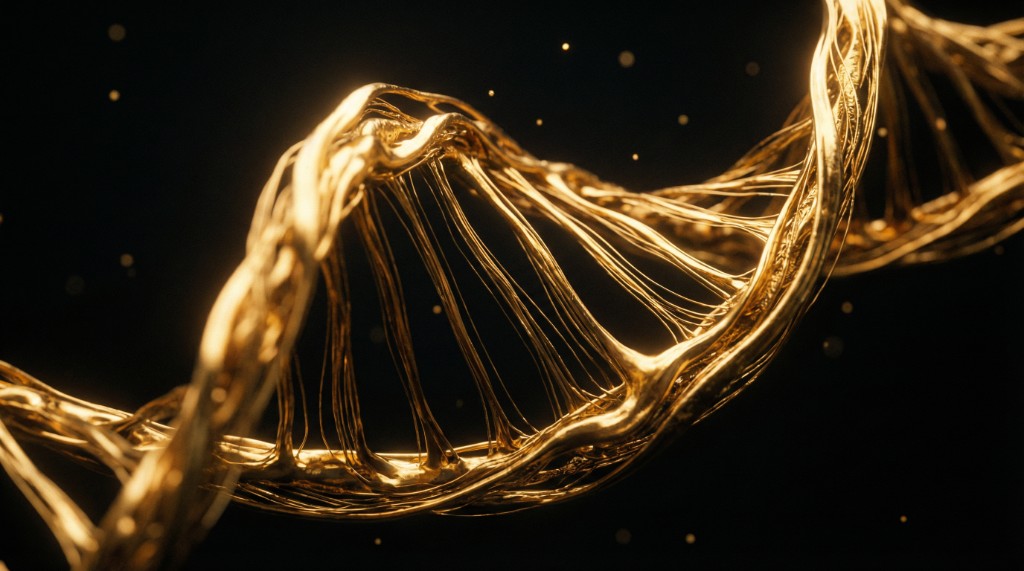
What if we could influence how our skin ages, not just by protecting it from external aggressors, but by communicating directly with our genes? This is the revolutionary promise of epigenetic skincare, a new frontier in anti-ageing science that is changing the way we think about skin health. By targeting the mechanisms that control gene expression, epigenetic skincare offers the potential to “reprogram” the skin’s ageing process and to restore its youthful vitality.
Our genes are not our destiny. While our DNA provides the blueprint for our bodies, it is the epigenome that determines which genes are switched on and which are switched off. The epigenome is a complex system of chemical tags that are attached to our DNA. These tags can be influenced by a variety of factors, including our diet, our lifestyle, and our environment. In other words, our choices can have a direct impact on how our genes are expressed [1].
The Epigenetics of Skin Ageing
As we age, our epigenome can become dysregulated, leading to changes in gene expression that contribute to the signs of ageing. For example, the genes that are responsible for producing collagen and elastin may be switched off, while the genes that are responsible for producing inflammatory molecules may be switched on. This can lead to a loss of firmness and elasticity, the formation of wrinkles, and a dull, lacklustre complexion [2].
A New Approach to Anti-Ageing
Epigenetic skincare is a new approach to anti-ageing that is designed to target the epigenome and to restore a more youthful pattern of gene expression. This can be achieved through the use of ingredients that have been shown to influence the chemical tags that control gene expression.
Key Mechanisms of Epigenetic Skincare:
| Mechanism | Description |
|---|---|
| DNA Methylation | This is a process by which methyl groups are added to the DNA molecule, which can switch genes off. Certain skincare ingredients can help to inhibit this process, allowing beneficial genes to remain active. |
| Histone Modification | Histones are proteins that help to package the DNA into a compact structure. Modifications to the histones can either loosen or tighten this structure, making it easier or harder for genes to be expressed. |
| microRNA Regulation | microRNAs are small molecules that can regulate gene expression by binding to messenger RNA and preventing it from being translated into a protein. |
The Truff’elle Advantage: Modulating Gene Expression for Youthful Skin
At Truff’elle, our research into gene expression has revealed that our bio-fermented truffle extract acts as a biological switch. It has been shown to modulate the skin’s genetic behaviour, effectively “turning off” the genes responsible for the enzymes that degrade collagen and elastin, and “turning on” the genes for the skin’s internal hydration channels. This is the science of epigenetic skincare in action, and it is just one of the ways that we are working to restore your skin’s youthful vitality from the inside out.
References
[1] Horvath, S. (2013). DNA methylation age of human tissues and cell types. Genome biology, 14(10), R115.
[2] Noroozi, R., Pisarek-Pacek, A., Wysocka, B., Ghavami, S., Łos, M. J., & Ghavami, S. (2025). Facial skin aging: an integrative analysis of genetics, epigenetics, and lifestyle factors. GeroScience, 1-24.